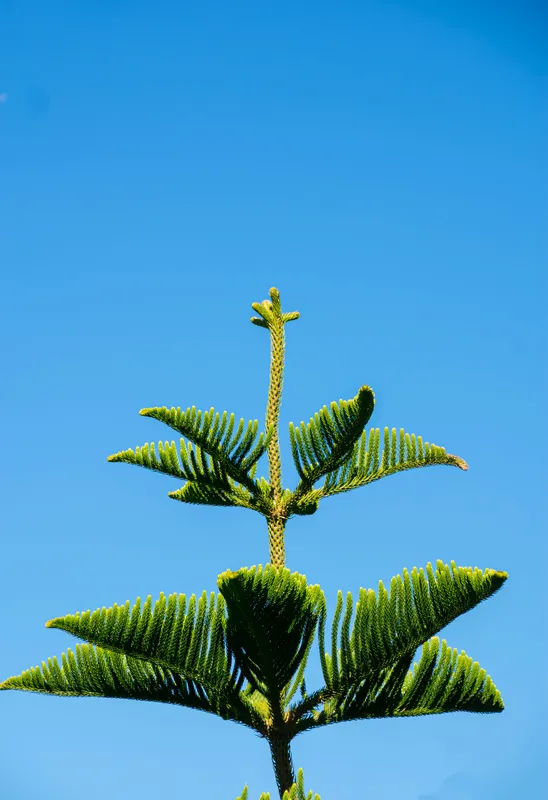
A Norfolk Island pine needs a place to spread its branches, not just a place to set its pot. The small tree on a holiday table can eventually occupy a substantial corner of a bright room. Before bringing one home, look beyond the empty spot on the mantel and choose where it can keep growing after the decorations come down.
Araucaria heterophylla is an evergreen conifer from Norfolk Island, with a straight trunk and distinctive tiers of branches. It is not a cold-hardy pine for planting in a northern yard. NC State’s plant profile describes both its island origin and its use as an indoor tree. A snowy porch that suits a cut Christmas tree is not a suitable winter home for this living one.
Choose the light before choosing the display
Start near a bright window. An east- or west-facing window is a useful option; a bright southern exposure may also work. Look at the light that reaches the foliage, not merely whether the room has a window somewhere. A deep alcove can look beautifully lit to a person while leaving the tree far from useful daylight.
Iowa State’s care guidance recommends bright light and turning the pot weekly. Give it a small turn so the same side does not always face the glass. Leave room for the branch tips to clear curtains, furniture and the window itself, and position the pot where you can still reach the soil to check it.
Aim for a comfortably cool, stable room. Iowa State gives 55–70°F as a suitable range. Do not interpret that as a reason to put the tree against freezing glass or beside a frequently opened winter door. Equally, avoid a hot radiator or a heating outlet blowing directly through the foliage. Check the plant’s immediate surroundings, especially when the heating season starts.
Water the root ball and empty the cover pot
Feel the surface of the potting mix. When it becomes dry, water thoroughly, let excess water drain and empty the saucer. Do not let the whole root ball become parched between waterings, and do not keep adding water to mix that is already wet. A finger on the surface and a glance into the saucer tell you more than a repeating weekly reminder alone.
Decorative wrapping can hide the problem. Lift a nursery pot out of its foil or closed cover before watering, let it drain, then check that the cover contains no collected water before replacing it. Make this easy to do from the beginning. If the tree becomes too awkward to lift, arrange a draining container and accessible saucer rather than relying on careful guesses about how much water will fit.
The Royal Horticultural Society recommends a well-drained container mix and less water in winter, keeping the mix just moist. That means checking and adjusting as growth slows, not deliberately drying the pot to a crisp. Use a pot with drainage holes; a closed decorative bowl by itself gives surplus water nowhere to escape.
Keep the top; allow the tree to get larger
The central upright shoot helps create the tree’s layered shape. Do not cut it off to make a tall plant fit beneath a shelf. RHS cautions that pruning can permanently spoil the form, and that a cutting from a horizontal side branch will not develop into an ordinary upright tree. This is a poor candidate for routine haircut-style size control.
Plan to move the plant to a larger space as it grows. If the only available location has a low ceiling or constant foot traffic brushing the branches, choose a smaller plant for that spot instead. The pot is only part of the footprint: measure the spread of the foliage and the height above it before rearranging furniture.
Iowa State horticulturist Cynthia Haynes notes that Norfolk Island pines do not need repotting every year. When roots have crowded the container and repotting is needed, move up modestly and use a well-drained commercial potting mix. A much bigger decorative planter is not an automatic improvement. Keep the draining inner pot manageable and follow the steps in repotting without stress if you need help assessing the roots.
Feed during active spring and summer growth with a suitable houseplant fertilizer at its labeled dilution and interval. Withhold feeding during the winter slowdown. Extra fertilizer is not a substitute for light, and a struggling tree needs its conditions checked before you try to encourage more growth.
Investigate browning before changing everything
Brown tips and disappearing lower branches do not identify one cause by themselves. Iowa State lists dry air, inadequate light and excessively dry soil among possible contributors. NC State specifically notes that prolonged very low light can cause lower branches to drop. First check how far the plant sits from the window, whether the root ball has dried out, and whether water is trapped below the pot.
If the room is very dry, a maintained humidifier can help raise humidity. Follow its cleaning instructions and avoid dampening nearby walls or furniture. The houseplant humidity guide explains how to assess the room before buying equipment. Humidity will not correct a dark location or roots left standing in water.
Also inspect stems and foliage rather than assuming every change comes from watering. Cornell Cooperative Extension’s Norfolk pine sheet identifies scale and mealybugs as possible pests. Look closely for attached bumps or white cottony clusters. Separate an affected plant from others and identify the pest before selecting a treatment; the early pest signs guide can help with that inspection.
For a holiday display, use only lightweight decorations that the branches can support, then remove them promptly afterward, as Haynes advises. Leave the upright tip unweighted. Once the ornaments are packed away, return the tree to its bright growing position and keep the saucer within reach.
Sources
- Araucaria heterophylla (North Carolina Extension Gardener Plant Toolbox). Accessed October 4, 2026.
- How do I care for a Norfolk Island pine? (Iowa State University Extension and Outreach). Accessed October 4, 2026.
- Araucaria heterophylla (Royal Horticultural Society). Accessed October 4, 2026.
- Norfolk Island Pine - The Other Living Christmas Tree (Iowa State University Extension and Outreach). Accessed October 4, 2026.
- Norfolk Island Pine Basic Plant Care (Cornell Cooperative Extension of Oneida County). Accessed October 4, 2026.