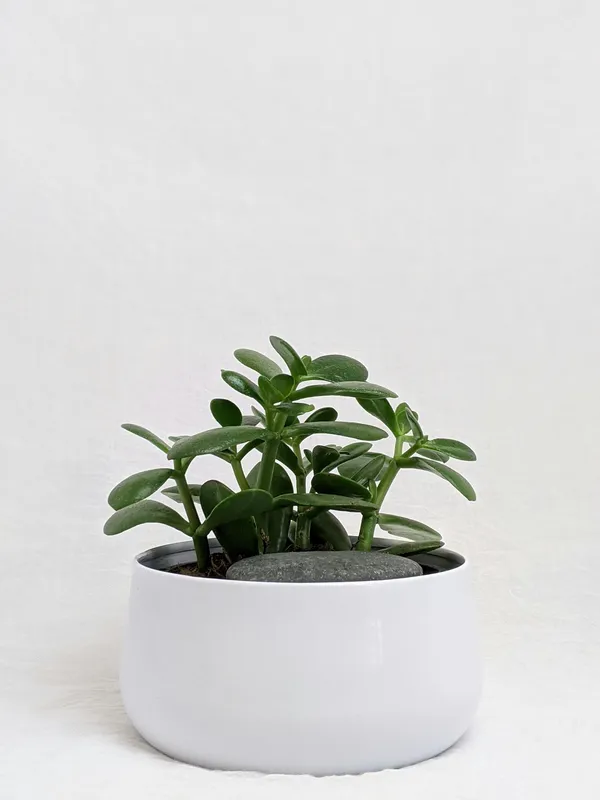
A jade plant’s weight is part of its appeal: plump leaves, thick branches and, eventually, a trunk that looks like a little tree. That same weight can become a problem when stems stretch toward a distant window. Start with a bright position and a stable pot, then let the root zone dry between drinks.
The familiar oval-leaved jade is Crassula ovata, a succulent shrub from southern Africa. Check the botanical name when buying: “money plant” is used for several unrelated houseplants. NC State’s profile describes thick, branching stems and fleshy leaves; cultivars such as ‘Gollum’ have a different leaf shape without being a different care category.
Put light before pruning
Give jade a place close to a bright window. Wisconsin Extension recommends four or more hours of direct sun for compact growth, while noting that the plant can survive in bright indirect light. A sunny window filtered by a porch or a tree may deliver much less light than its direction suggests.
Increase exposure gradually when moving a plant from a dim shop or room. A sudden move into intense outdoor sun can scorch leaves. If jade spends summer outside, bring it in before frost and inspect it for pests first. Keep foliage clear of cold window glass.
Long gaps between leaves and weak, leaning stems are reasons to reassess the position. Cutting a stretched plant shorter will not solve the light shortage. Improve the growing conditions before shaping it, then judge the new growth rather than expecting old bare stretches to fill immediately.
Give the roots a full drink, then a dry interval
Check the mix before reaching for the watering can. A dry surface can sit over a damp center, so feel below the top layer and consider how heavy the pot remains. If the root zone is still damp, wait. A fixed “every two weeks” instruction cannot account for a large plastic pot, a small clay pot and a cool winter window.
When the mix has dried, water thoroughly and let the excess run out. Empty the saucer after drainage; if the plant lives inside a decorative cover pot, take the nursery pot out for watering. University of Minnesota Extension advises thorough watering followed by drying, rather than repeated shallow sprinkles.
In darker months, expect longer intervals. Jade still needs water, but a slowly growing plant uses less. Do not keep adding a small splash because the calendar says it is watering day. Check the pot and leaves together: sustained shriveling in dry mix needs a different response from soft foliage above wet roots.
Choose a pot you can drain and support
Use a container with a real drainage hole and a free-draining cactus or succulent mix. The RHS plant profile recommends cactus compost and strong light. A heavy decorative bowl without an outlet does not become a suitable growing pot simply because jade tolerates dry conditions.
Test stability before returning a large plant to a shelf. Set it on a level surface where neither a curtain nor a passing sleeve will catch the branches. Lift it by the pot, supporting its base, rather than by a woody-looking stem; succulent branches can snap.
A jade does not need a larger pot every year. Consider repotting when crowding, poor mix or instability creates a real problem, preferably as new growth begins. Keep the new container close to the root ball’s size. For the practical steps, use the houseplant repotting guide.
Shape gradually and feed modestly
Early spring is a useful time to shorten an awkward branch. With clean, sharp shears, cut just above a node or branching point, keeping enough leafy growth to support recovery. New York Botanical Garden recommends removing no more than about a third of the growth when shaping. Stand back between cuts; it is easier to remove another branch later than to replace one you wanted to keep.
Healthy trimmings can become new plants. Follow the separate jade propagation guide for letting cut surfaces heal and starting cuttings. Do not put a suspect, rotting branch into the same propagation tray as healthy material.
Feed during active spring and summer growth with a suitable fertilizer used at its labeled dilution. Pause when growth slows in winter. More fertilizer cannot replace light or repair damaged roots, and it is unnecessary to push a resting plant into soft growth. Check whether a new potting mix already contains fertilizer before adding another dose.
Read damage in context
A few old lower leaves dropping is different from a sudden shower of leaves. Look at the whole plant and recent changes before choosing a treatment.
- Wrinkled leaves and dry mix: check how long the root ball has been dry, then water thoroughly if needed.
- Soft growth and persistently wet mix: check drainage and inspect for root or stem decay. Do not keep watering a collapsing plant; the root-rot guide explains what to examine.
- Rough, corky patches: NYBG describes a form of water-related leaf damage in which blisters dry into scabs. Spots can have other causes, so a patch alone does not establish a diagnosis.
- White cottony clusters or insects at leaf joints: isolate the pot and identify the pest. NC State lists mealybugs, scale, mites and aphids among possible problems. Use the pest inspection guide before choosing a treatment.
Small white or pink flowers are possible on mature jades, but indoor blooming is uncommon. Healthy leaves and supported branches are better everyday measures of success than a promise of winter flowers.
Keep jade away from pets that chew plants. ASPCA lists it as toxic to cats and dogs, using the older name Crassula argentea. If a pet eats it, contact a veterinarian promptly. Clear fallen leaves and pruning scraps as carefully as you place the pot.
Sources
- Jade Plant, Crassula ovata (University of Wisconsin–Madison Extension). Accessed October 14, 2026.
- Crassula ovata (North Carolina Extension Gardener Plant Toolbox). Accessed October 14, 2026.
- Cacti and succulents (University of Minnesota Extension). Accessed October 14, 2026.
- Crassula ovata (Royal Horticultural Society). Accessed October 14, 2026.
- Jade Plant (Crassula ovata) (New York Botanical Garden). Accessed October 14, 2026.
- Jade Plant (ASPCA Poison Control). Accessed October 14, 2026.