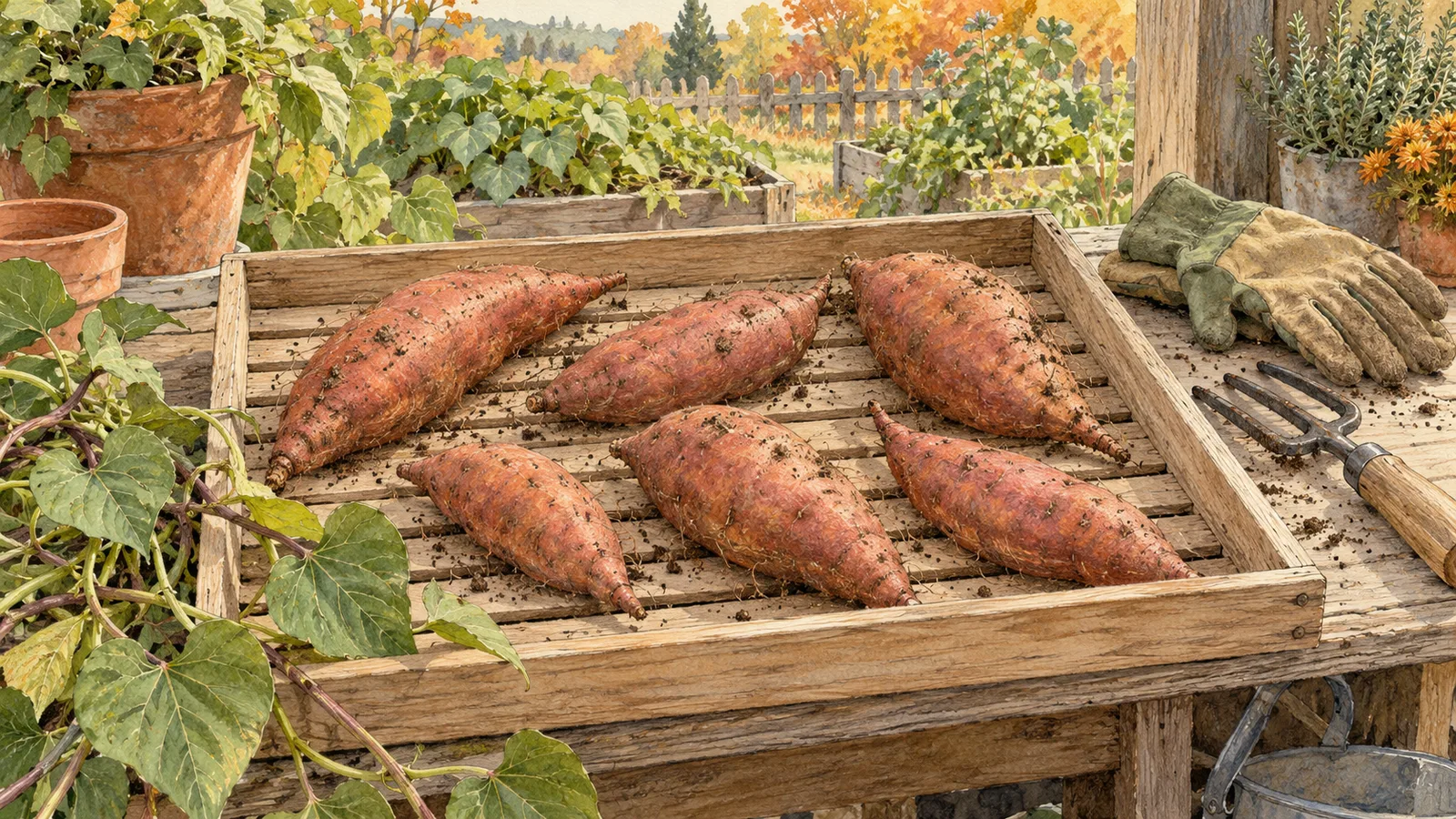
A garden fork can uncover a beautiful sweet potato and scar it in the same movement. The roots are easy to bruise when freshly dug, and their next home matters almost as much as the harvest itself. Set out shallow trays and choose a protected place for them before you start clearing the vines.
These are the enlarged storage roots of Ipomoea batatas, rather than the tubers of ordinary potatoes or true yams. This guide is for a food crop grown for its roots. Keep the cultivar name and planting date with the harvest so you can compare how it performs in your garden next season.
Let root size and cold weather set the date
The days-to-harvest figure on the slip supplier’s label is a useful starting point. It is not a signal that every root will be ready on the same morning. Sweet potatoes keep enlarging while growing conditions suit them. The University of Missouri’s harvest guidance explains that usable size, rather than a single moment of ripeness, determines harvest.
Gently explore beside one plant as the expected harvest window approaches. If the roots are a useful size, you can begin lifting them. Small roots are not automatically failures, and a few very large roots do not mean the rest of the bed has reached the same size. Check more than one plant before deciding to leave the whole crop longer.
Plan to finish before frost and freezing weather. Do not wait for the leaves to die as you might with another crop. If frost catches the vines first, Maryland Extension recommends digging the roots immediately. If that is impossible, remove the dead vines and cover the rows with loose soil as temporary protection. That buys time to harvest; it is not a winter-storage method.
Loosen the soil around the roots
Cut away enough vine growth to see where you are working. Start the fork or spade well out from the plant’s base, then loosen the soil and work inward carefully. Lift the surrounding soil rather than spearing directly beneath the stem. Expose roots gradually with your hands, and support each one as you free it. Pulling hard on a vine can leave damaged roots hidden in the ground.
Soil that falls apart readily makes this easier than large, hard clods. Work slowly when roots disappear beneath a clod; break the soil away instead of levering against the root. Keep a tray within reach so each root makes one short trip from the bed to its resting place. Do not toss the harvest into a bucket or rub the skins clean.
Brush away only loose clumps gently. Do not wash the roots before curing or storage. Leave the thin skin intact and save thorough cleaning for the kitchen. The Maryland home-garden guide specifically cautions against both rubbing the skin and washing at this stage.
Sort before filling the storage trays
Separate sound roots from ones with fresh cuts or substantial bruising. Keep the damaged group visible and use suitable, sound portions promptly rather than expecting those roots to keep with the best of the crop. Curing can help small harvest wounds heal; it cannot make a rotting root sound again.
Remove roots with soft decay or other suspicious deterioration. Minnesota Extension’s postharvest guidance emphasizes sorting throughout handling because one diseased item can affect others in the bin. If a problem appears widespread, take photographs and ask your local Extension service for help before saving roots for planting or long storage.
Label separate varieties now, while you still remember which row was which. A label on the tray is more useful than relying on skin color after several weeks. Record obvious damage and the harvest date, too.
Give curing its own warm stage
Curing encourages wound healing and changes that improve sweetness. It needs warmth and humidity, followed by a different storage environment. Alabama Extension recommends 85°F (29°C), 90–95% relative humidity and four to seven days. These are controlled curing conditions, not a description of an ordinary October garage.
Use a thermometer and humidity meter beside the roots to find out what your space actually provides. Spread a small harvest in a single layer on a clean screen or ventilated tray. Keep air moving around it and protect it from rain and animals. Roots are still living tissue and need oxygen; high humidity does not mean sealing them in an airtight plastic bag or soaking them.
At home, matching a commercial curing room can be difficult. Maryland Extension describes a warm covered porch or garage as a way to achieve partial curing in suitable weather. A cold porch does not become suitable because it has a roof. If you cannot provide a stable warm space, ask local Extension about a practical arrangement for your climate and plan to use the crop sooner rather than promise yourself months of storage.
Move the cured roots somewhere cooler
After curing, aim for 55–60°F (13–16°C) in a dark, ventilated storage space. Iowa State gives a storage humidity range of 85–90%. Use breathable boxes, baskets or slatted crates, keeping roots accessible for inspection. A household refrigerator is too cold for long-term storage of whole raw sweet potatoes.
Check the location as the season changes. A basement beside a furnace can be too warm; an unheated shed may become too cold. Warm storage encourages sprouting, while excessive cold can damage flavor and flesh. Take out deteriorating roots promptly and check their neighbors. Published storage lives of several months assume suitable roots and controlled conditions, not every home cupboard.
Once the bed is clear, decide how to protect the soil. A suitable cover crop or leaf mulch can help you leave it covered until the next planting. Keep the harvest notes with your soil-test records, so next year’s decisions begin with what the garden actually produced.
Sources
- Sweet Potato Harvest, Curing and Storage (University of Missouri). Accessed October 12, 2026.
- Growing Sweet Potatoes in a Home Garden (University of Maryland Extension). Accessed October 12, 2026.
- Harvesting and Curing Sweet Potatoes (Alabama Cooperative Extension). Accessed October 12, 2026.
- How do I harvest and store sweet potatoes? (Iowa State University Extension). Accessed October 12, 2026.
- Postharvest handling of fruit and vegetable crops in Minnesota (University of Minnesota Extension). Accessed October 12, 2026.