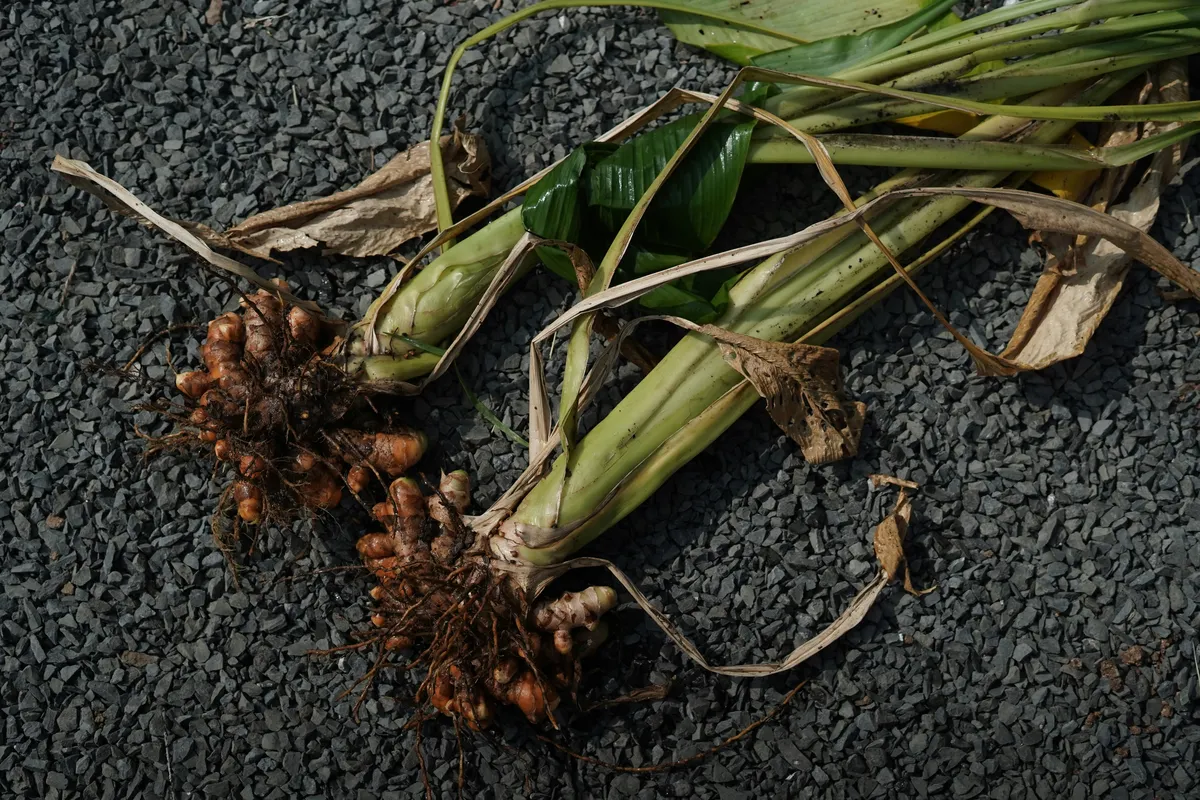
Turmeric (Curcuma longa) is a tropical, rhizomatous plant grown for the orange flesh inside its underground stems. Plants of the World Online accepts Curcuma longa as the botanical name and describes it as a rhizomatous geophyte associated with seasonally dry tropical conditions.
For a home grower outside a warm climate, the central challenge is time. Turmeric needs months of warmth to build a useful rhizome crop. A container makes it possible to start the plant early, move it when temperatures change, and empty the root zone at harvest, but it does not turn turmeric into a quick windowsill herb.
Decide whether the season is long enough
A turmeric plant can be attractive before harvest, with broad leaves that resemble a small canna. The food crop develops below the surface, however, so foliage size alone does not show how much rhizome has formed.
University of Idaho Extension describes an eight- to ten-month growing period for culinary rhizomes and notes that container culture still requires good drainage and ample light. In a short-season region, plan to start indoors while the weather is cool, move the container outdoors only after conditions are reliably warm, and protect or bring it back inside before cold weather.
Treat any month count as a planning range rather than a harvest guarantee. Planting-stock size, cultivar, temperature, light, container volume, nutrition, water, and the point at which dormancy begins can all change the result. If the available indoor light and warmth cannot support active growth at both ends of the season, grow turmeric as an experiment rather than counting on a large harvest.
Start with sound planting rhizomes
Use firm rhizomes with visible buds and no soft areas, mold, dark lesions, or off odors. Specialty planting stock offers a clearer disease history than an unlabeled grocery rhizome. Grocery turmeric may sprout, but its cultivar, storage treatment, disease status, and remaining vigor are usually unknown.
University of Florida IFAS Extension advises inspecting planting rhizomes for disease or discoloration and explains that imported food rhizomes can carry greater pathogen risk. Its production guide describes seed pieces roughly two to three inches long, weighing about one to two ounces, with at least two buds. Those are commercial guidance points, not a reason to cut every small home rhizome.
If a large cluster must be divided, use a clean, sanitized knife, cut at natural joints, and allow cut surfaces to dry before planting. Discard suspect pieces instead of placing them beside healthy stock. Do not use an archived, cooked, shriveled, or moldy rhizome as planting material.
Choose a wide container that drains
Turmeric spreads horizontally and becomes top-heavy. A wide, stable pot is more useful than a narrow decorative vessel. It needs unobstructed drainage holes and enough room to water the full root zone without leaving the rhizome in standing water.
UF/IFAS reports one seed rhizome per five-gallon container as one production option, while three are commonly grown in a 15-gallon nursery container. The same guide notes that about eight inches of potting-medium depth can support the crop’s relatively shallow roots, although a deeper, heavier container may resist tipping better.
For one home plant, use those figures as a defensible starting point and adjust for the actual container shape. Fill it with fresh container medium containing coarse material for both drainage and water retention. Do not use dense garden soil in a pot. Leave headspace below the rim so the medium can be watered thoroughly without washing out.
University of Georgia Extension recommends rich, loamy container soil, upward-facing buds, and spacing that gives expanding rhizomes room. The article groups ginger and turmeric, so use its home-growing advice alongside the more turmeric-specific UF/IFAS guidance rather than assuming the two crops behave identically.
Pre-sprout only if warmth is controlled
Pre-sprouting can recover growing time in a cool climate. Place healthy rhizomes on or just into a clean, lightly moist medium in a warm location. Check them weekly. The goal is warmth plus moderate moisture, not a sealed, waterlogged bag.
UF/IFAS reports commercial pre-sprouting near 82°F, with shoots often appearing after one to two months, and warns that excess moisture or temperatures above 86°F can promote rot. Home temperatures are less controlled, so do not treat that schedule as a deadline. If a rhizome softens or develops mold, separate and discard it.
Once buds and roots are active, handle them carefully. Plant the rhizome about two inches deep, or follow the supplier’s instructions for a tissue-culture start. If orientation is clear, point buds upward. Water the medium, allow it to drain, and keep it warm while growth establishes.
Supply light without overheating the plant
NC State Extension lists full sun to partial shade, moist but well-drained soil, and container use for turmeric. That broad range reflects different climates. A plant in mild morning sun may tolerate more direct light than one exposed to intense afternoon heat on a reflective balcony.
Indoors, use the brightest practical window or a properly installed grow light. Increase light gradually when moving a plant outside so leaves formed indoors are not suddenly scorched. Protect the container from cold nights and strong wind. A warm root zone supports growth, while temperatures near frost can end the season.
Watch the plant rather than following a fixed sunlight slogan. Pale, stretched growth can indicate insufficient light. Bleached or papery patches after a move can indicate excess exposure. Wilting at midday may reflect heat or dry medium, but persistent wilting in wet soil can point to damaged roots.
Water evenly and feed from evidence
During active growth, water deeply enough to wet the root zone, then let excess drain. Check the medium before watering again. The aim is consistent access to moisture while preserving air around the roots. Avoid permanent saturation and repeated severe drought.
Container material, plant size, wind, heat, and potting mix determine how quickly the pot dries. A calendar cannot account for those variables. If water runs straight down the sides of a dry root ball, rewet the medium gradually rather than repeatedly flooding one channel.
Turmeric has a meaningful nutrient demand, but UF/IFAS notes that formal nutrient recommendations for the crop are limited and presents its fertilizer rates as guidance. For a home container, account for fertilizer already present in the potting mix, follow the product label, and reduce or stop feeding as active growth ends. More fertilizer is not a substitute for light, warmth, root space, or drainage.
Read dormancy correctly
Shorter days and cooler temperatures can trigger yellowing and dormancy. A gradual late-season decline is different from a single yellow leaf during active growth. When the whole plant naturally declines, reduce irrigation because a dormant rhizome uses less water. Continuing a summer watering pattern after the foliage dies can keep the container unnecessarily wet.
Early yellowing deserves a condition check. Review drainage, root-zone moisture, cold exposure, nutrition, and visible pest or disease signs before choosing a correction. Do not diagnose every yellow leaf as overwatering, and do not add fertilizer automatically.
Common failure patterns include:
- Rhizome never sprouts: planting stock may be nonviable, cold, damaged, or rotting. Verify warmth and moisture without digging it up repeatedly.
- Soft rhizome or sour-smelling medium: isolate the pot, inspect drainage, and discard decayed material. Reusing wet contaminated mix risks another loss.
- Tall, weak foliage: increase usable light gradually and check that neighboring plants are not shading it.
- Leaf-edge scorch: check sudden sun exposure, drought, excess fertilizer salts, heat, and wind rather than assuming low humidity is the only cause.
- Small harvest: consider season length, planting-stock size, container volume, light, water, and nutrition together.
Harvest when the crop and conditions agree
For mature rhizomes, wait until the plant has completed a long growth period and the foliage naturally yellows and dies back. UF/IFAS reports about seven months for winter-harvested turmeric in its Florida production system, while colder-region home guidance often plans for eight to ten months. The local season and desired maturity matter more than one universal date.
Stop heavy watering before harvest so the medium is workable. Tip a container onto a clean surface, separate the rhizome cluster without cutting blindly through it, and discard any rotten sections. Set aside only sound, disease-free pieces with viable buds if replanting is planned.
Turmeric stains skin, fabric, porous counters, and cutting boards. Use washable tools and protect surfaces. Staining is a handling issue, not evidence that a rhizome is unsafe.
Clean and store it as produce
Brush away loose medium, then wash harvested rhizomes under clean running water. FDA produce-safety guidance advises washing produce under running water rather than using soap, detergent, or commercial produce wash. Clean hands, knives, boards, and work surfaces before handling it. Cut away damaged or bruised areas and discard rotten produce.
Refrigerate clean turmeric for short-term use or use a tested preservation method from an Extension food-preservation resource. Do not rely on a gardening article for canning, medicinal dosing, or supplement advice.
A practical first-container plan
- Obtain one firm, disease-free planting rhizome with visible buds.
- Choose a stable draining container around five gallons and fresh, coarse container medium.
- Pre-sprout only if a warm, clean, moderately moist setup can be maintained.
- Plant about two inches deep after cold risk has passed or keep the container warm indoors.
- Provide strong light, acclimating foliage before full outdoor exposure.
- Water from the medium’s condition, not a fixed weekday, and fertilize according to the mix and product labels.
- Protect the plant from cold and allow natural late-season dormancy.
- Harvest after a sufficiently long season, then wash and handle the rhizomes as fresh produce.
Turmeric rewards planning more than constant intervention. A suitable container cannot replace a long warm season, but it makes that season easier to manage and turns harvest into a straightforward final step rather than a search through compacted garden soil.
Sources
- Curcuma longa L. (Plants of the World Online, Royal Botanic Gardens, Kew). Accessed August 25, 2026.
- Ginger, Galangal, and Turmeric Production in Florida (University of Florida IFAS Extension). Accessed August 25, 2026.
- Curcuma longa (NC State Extension Gardener Plant Toolbox). Accessed August 25, 2026.
- Growing Ginger and Turmeric at Home (University of Georgia Extension). Accessed August 25, 2026.
- Fruits, Vegetables and Herbs: Turmeric (University of Idaho Extension). Accessed August 25, 2026.
- Selecting and Serving Produce Safely (U.S. Food and Drug Administration). Accessed August 25, 2026.