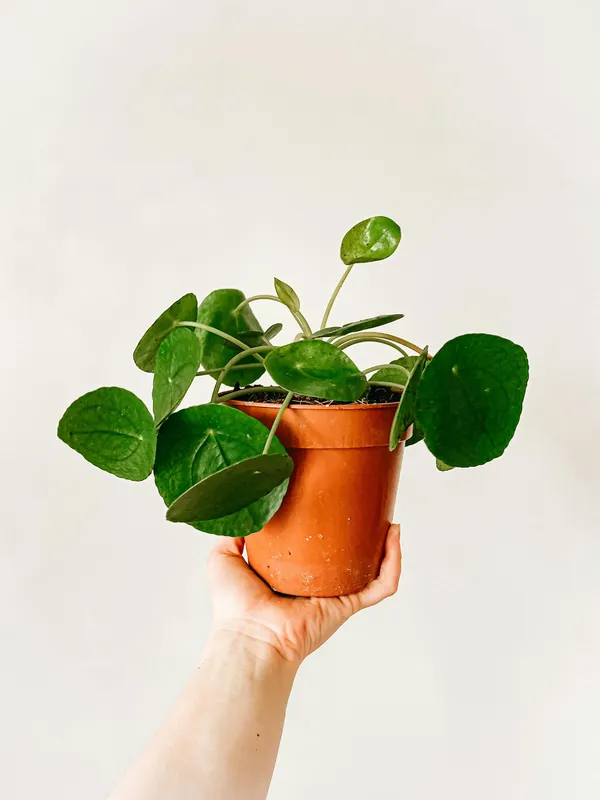
A full tatsoi rosette spreads close to the soil, its spoon-shaped leaves arranged almost like petals. You can wait for that broad circle, or start harvesting while the leaves are small. Decide which harvest you want before filling a bed: a dense patch for young leaves and a row of whole plants need different amounts of space and time.
Tatsoi belongs to Brassica rapa, the same species as bok choy. Its low, clustered form is described in the RHS rosette pak choi profile. Do not expect the large upright stems of gai choy mustard. The rosette itself is the crop.
Choose the harvest, then mark out the space
For baby leaves, sow a short strip that you can reach across comfortably. Plan to cut young foliage before neighboring plants need room to form broad rosettes. Johnny’s baby-leaf brassica guidance includes tatsoi and uses a dense sowing pattern specifically for this purpose. Do not copy a baby-leaf seed rate and then leave every plant to reach full size.
For whole rosettes, use the mature-plant spacing on your seed packet and thin accordingly. Mark that spacing before sowing so the eventual plants have a place to spread. If the packet only describes baby-leaf production, seek the supplier’s full-size guidance before planning a row of large plants.
You can try both in one bed: reserve a small strip for early leaves and a separate row for rosettes. Label the two areas with the sowing date and intended harvest. That makes it easier to see which crop is ready without accidentally cutting the plants you meant to leave.
Give an autumn crop time to grow
Choose a locally recommended cool-season planting window. The Kansas City Community Gardens tatsoi sheet gives spring and late-summer dates for its area; those dates are not a calendar for every climate.
Shortening days matter even when autumn stays warm. Minnesota Extension’s August 2026 vegetable update explains that crop growth slows markedly below roughly ten hours of daylight. Its protected-growing examples also distinguish the time needed for baby leaves from full-size tatsoi. A small seedling surviving cold weather is not the same as a harvestable plant continuing to grow quickly.
Work backward from your local fall growing window and the harvest stage on the packet. If there is little growing time left, plan a modest baby-leaf crop or save seed for the next suitable window. Do not count on a cover to supply missing daylight. For repeated sowings, keep each patch small enough to harvest promptly and stop when the local season no longer supports another crop.
Sow shallowly and watch the surface
Choose full sun and fertile soil that holds moisture while draining well, as the RHS recommends. A bed that remains puddled after watering needs attention before sowing. Tatsoi can also grow in containers; allow for the spread of the plants you intend to keep.
Sow about ¼ inch deep, following Johnny’s tatsoi-inclusive baby-leaf guidance. Water gently so the small seeds stay where you placed them. Kansas City Community Gardens advises keeping the surface moist during germination, then checking the top inch of soil as young plants grow. Check the actual bed rather than watering by the day of the week.
Keep the seed packet beside your planting notes. Record when seedlings emerge as well as when you sowed: a days-to-harvest figure may begin at emergence, and a figure for small leaves does not promise a full rosette on the same date.
Protect the first leaves
Flea beetles can pepper young brassica leaves with small holes. Seedlings have little foliage to spare, so inspect them as soon as they appear. Minnesota Extension’s flea-beetle guidance describes the jumping adults and the round or irregular feeding holes they leave.
Fit a suitable insect barrier over the planting from sowing, secure its edges and check beneath it. Rotation matters: a cover over a bed where pests are already present can trap them with the crop. Beetles can also enter while a cover is lifted. Repair gaps and identify any continuing damage rather than assuming the barrier makes inspection unnecessary.
As the rosette fills out, look under outer leaves and into the dense center. Minnesota’s vegetable update recommends checking older foliage and dense canopy areas for disease. Work among plants when leaves are dry, visit healthy areas before diseased ones, and clear spent or diseased crop debris. Avoid handling every healthy plant after touching a suspect patch.
Cut cleanly, then chill the leaves
For baby leaves, use a clean sharp knife once the foliage reaches the size you want. Johnny’s gives roughly 3–6 inches as a baby-leaf harvest range. Cut above the basal growing point if you want regrowth; cutting through the base ends that opportunity. Assess the new leaves before planning another cut. Season, variety and plant condition affect how soon, or whether, another useful harvest follows.
For a whole rosette, cut at the base and lift it clear of the soil into a clean container. Treat that plant as a single harvest. Keep gritty outer leaves and loose soil out of the clean harvest container as you work.
Refrigerate promptly at 40°F (4°C) or below. Kansas City Community Gardens advises waiting to wash tatsoi until use. Then follow the FDA’s produce-handling guidance: rinse under plain running water, use no soap or produce detergent, and keep greens and their utensils separate from raw meat. Discard rotten leaves. Washing reduces surface contamination but does not make spoiled produce safe to eat.
Sources
- Brassica rapa var. rosularis – rosette pak choi (Royal Horticultural Society). Accessed September 24, 2026.
- Growing Tatsoi (Kansas City Community Gardens). Accessed September 24, 2026.
- Baby-Leaf Brassica Greens – Key Growing Information (Johnny's Selected Seeds). Accessed September 24, 2026.
- Weekly vegetable update – August 6, 2026 (University of Minnesota Extension). Accessed September 24, 2026.
- Flea beetles (University of Minnesota Extension). Accessed September 24, 2026.
- Selecting and Serving Produce Safely (U.S. Food and Drug Administration). Accessed September 24, 2026.