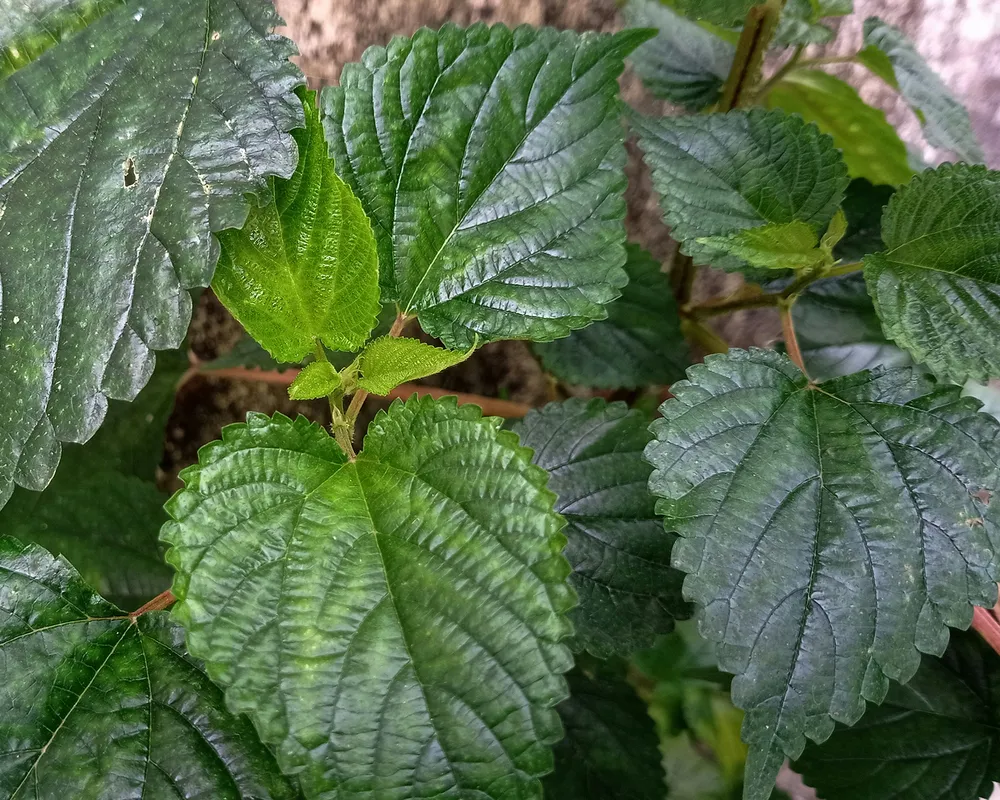
The first flower spike changes the meaning of a shiso plant. Until then, the gardener is growing tender leaves. After flowering begins, the same plant is preparing to scatter a large crop of seed. That shift matters because Perilla frutescens readily escapes cultivation in parts of the United States. A container is useful, but its rim cannot catch every ripe seed. The grower still has to notice the plant’s seasonal turn and act before seed matures.
Shiso is an annual herb with fragrant, deeply serrated foliage. Green, red, and bicolor selections can differ in aroma, leaf size, and kitchen use. The names “shiso,” “perilla,” and “beefsteak plant” also overlap in catalogs and gardens. Start with a sealed packet or nursery label that gives Perilla frutescens and identifies the selection as edible. A roadside volunteer or an ornamental lookalike is not a responsible substitute.
Begin with permission, not a seed packet
The North Carolina Extension Gardener Plant Toolbox classifies perilla as invasive in North Carolina and notes invasive listings in other states. University of Vermont Extension warns that shiso self-seeds readily and recommends removing the flowers before they set seed.
State rules and local ecological risks are not uniform. Check the current state invasive-plant list and ask the local Extension office about culinary perilla before buying it. If the plant is prohibited or discouraged in the area, grow a different herb. A purchase from an out-of-state seller does not make the plant locally appropriate.
Where shiso is permitted, decide at the start that flowers will be removed. Do not rely on the container alone for containment. Seed can fall beside the pot, travel in discarded mix, or remain in a flower head moved to the compost pile. Keep the pot away from storm drains and natural areas, collect clippings, and follow local advice for disposing of material that may already contain seed.
Let the frost date choose the starting method
The Kansas Garden Guide recommends starting perilla indoors four to six weeks before the last frost and transplanting after frost danger has passed. That indoor lead is useful where the warm season is short. Direct sowing after cold risk has ended is simpler where summer is long enough, although germination may take time.
For an indoor start, use fresh seed-starting medium and clean containers. Follow the packet’s depth and temperature directions because seed lots and selections can differ. Moist medium supports germination; waterlogged medium does not improve it. Once seedlings emerge, place them under strong overhead light so they develop sturdy stems instead of leaning toward a distant window.
Thin crowded seedlings while they are small. One vigorous plant is a better container crop than a dense cluster competing for root room, light, and air. Before transplanting outdoors, expose seedlings gradually to brighter light and moving air over several days. Protect them from both frost and a sudden first afternoon in intense sun.
Buying a transplant skips germination but not identification. The label should state the edible selection and expected size. Pass over plants with soft stems, stagnant water around the roots, widespread stippling, webbing, sticky residue, or an off odor. A compromised plant is not improved by an immediate harvest.
Build the pot for repeated cutting
Shiso is grown for a sequence of leaves rather than one final fruit. Give a single plant enough root room and enough exposed canopy to replace what is cut. The pot should be stable, have clear drainage holes, and hold fresh commercial container mix. Dense garden soil can drain poorly in a container even when it performs well in the ground.
Set a transplant at approximately its previous depth. Water across the surface until the root ball is fully moistened, let the excess escape, and empty any saucer. A shallow splash encourages false confidence because the upper surface may look damp while much of the root mass remains dry.
University of Georgia Cooperative Extension describes perilla as adaptable to full sun or partial shade. In practice, the container’s surroundings modify that range. A bright open garden and a paved balcony reflecting afternoon heat are not equivalent. Provide substantial direct light, then use the new growth as evidence. Long spacing between leaves and a stem leaning toward light suggest the location is too dim. Pale, bleached patches appearing immediately after a move suggest the transition was too abrupt.
Read leaf production before changing care
Water demand rises as the plant fills the pot and summer weather becomes hotter or windier. Feel below the surface and learn the weight of the watered container. When the upper root zone begins to dry, soak the whole root ball and allow it to drain. Repeated severe wilting interrupts leaf production, while constantly saturated mix restricts air around roots.
There is no useful universal interval. A mature plant in sun can use water far faster than a young plant during cool, cloudy weather. Pot material and root density also change drying time. A calendar reminder can prompt an inspection, but it should not make the decision.
Check whether the potting mix already contains fertilizer. If additional feeding is needed during active growth, choose a product labeled for edible container herbs and apply the measured label rate. Pale foliage can result from root stress, pests, or inadequate light as well as nutrition, so inspect those conditions before assuming a deficiency.
Leaf damage should also be identified before treatment. Fine stippling with webbing, irregular chewing holes, wet spreading lesions, and bleached sun injury do not share one remedy. Use a pest-control product only when its label permits the edible crop, application site, and harvest interval. An improvised kitchen mixture has no automatic claim to safety or effectiveness.
Cut to keep the plant in its leaf-producing phase
Kansas State’s guide suggests beginning harvest when perilla is about eight inches tall. Height is only a starting signal; the plant should also be established and producing healthy new leaves. Take individual mature leaves or pinch a tender tip just above a leaf pair. Buds below the cut can then extend into side shoots.
Think of each cut as a trade. The kitchen gains leaves, while the plant loses some of the surface that powers its next growth. Spread the harvest around the canopy and leave enough healthy foliage for recovery. Pause after transplanting, during drought or extreme heat, and whenever pests or disease have slowed new growth.
Harvest quality changes with age. Young, undamaged leaves are usually the most useful at the table. Old leaves can become tougher, and a plant that has shifted heavily into flowering may devote less growth to tender foliage. The best response is timely harvest and flower removal, not a late surge of fertilizer.
Flowering turns harvest into containment work
Inspect the upper nodes as days shorten and the plant matures. A flower spike is the point to decide whether the plant will remain for a little longer or the season will end. Snip the entire spike before seed forms. Recheck because side branches can flower after the main tip is removed.
If a flower head may already contain seed, bag it before cutting and do not scatter it on the way to disposal. Examine the surface around the pot as well as the plant. At season’s end, collect fallen material and avoid dumping used mix into woodland, roadside, streamside, or other natural ground.
Taking the plant indoors does not erase this responsibility. It may delay frost, but winter window light is often too weak for the compact leaf growth expected outdoors. Extra water or fertilizer cannot make up for missing light. In most climates, treating shiso as a summer annual gives a clearer cycle: sow, establish, cut leaves, stop flowering, and close the season before seed falls.
Wash a delicate leaf without adding new hazards
Cut only sound leaves with clean hands or clean snips. Do not use foliage exposed to pet waste, floodwater, an unidentified spray, or a pesticide not labeled for edible shiso. Put the harvest directly into a clean container instead of resting it on potting mix or a garden work surface.
Under U.S. Food and Drug Administration guidance, clean hands and utensils come first, followed by a thorough rinse beneath running water. Do not apply soap, detergent, or commercial produce wash to the leaves. Wash shiso close to the time it will be used, drain it carefully, and refrigerate it promptly if necessary. Keep it apart from raw meat and any board or tool that touched it.
Shiso’s defining gardening problem is not complicated indoor care. It is the narrow window between having enough foliage to harvest and allowing a vigorous annual to reproduce where it may not belong. The indoor herb garden guide is a better starting point for herbs meant to remain inside, while garlic chives offer a different perennial growth cycle for an outdoor kitchen garden.
Sources
- Shiso - Perilla frutescens (North Carolina Extension Gardener Plant Toolbox). Accessed September 8, 2026.
- Herbs in Southern Gardens (University of Georgia Cooperative Extension). Accessed September 8, 2026.
- Spice Up Your Garden With Asian Flavors (University of Vermont Extension). Accessed September 8, 2026.
- Kansas Garden Guide (Kansas State University Research and Extension). Accessed September 8, 2026.
- Selecting and Serving Produce Safely (U.S. Food and Drug Administration). Accessed September 8, 2026.