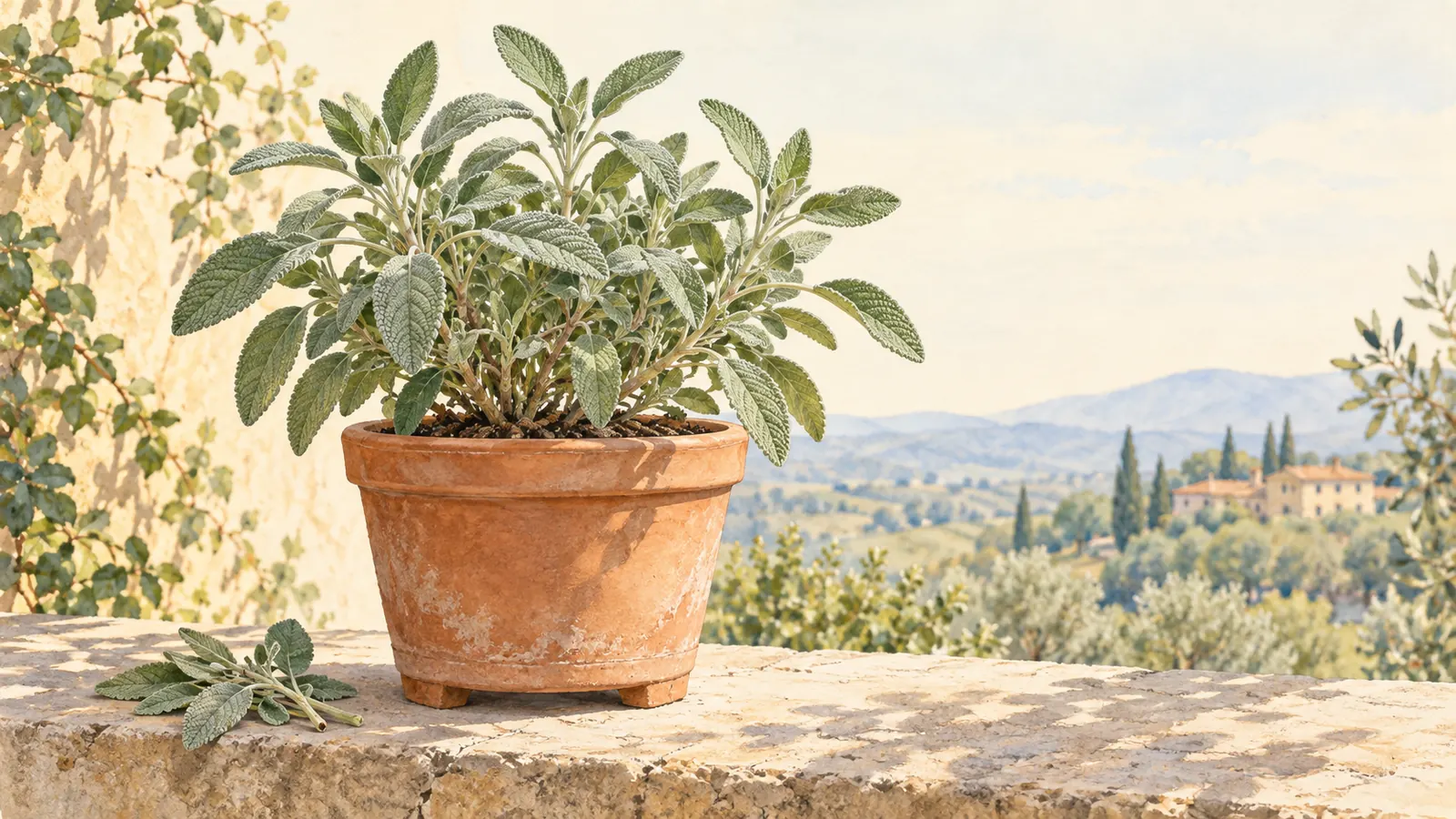
A few sage leaves can carry a whole pan of browned butter or a tray of roasted squash. You do not need a large herb bed to keep them within reach. A sunny pot can hold a useful plant, provided its roots have somewhere for excess water to go.
Think of sage as a small woody shrub. Give it room to branch, take modest harvests while it settles in, and decide where the pot will spend winter before cold weather makes that decision for you.
Buy the sage you want to cook with
Look for a nursery label that says Salvia officinalis, also called common or culinary sage. The word “sage” appears on several different plants; a familiar common name alone is not enough to choose leaves for dinner. Buy a plant sold for culinary use and keep its identification tag.
Ordinary gray-green sage is a useful starting point. If space is tight, Wisconsin Extension describes ‘Compacta’ as a smaller form. Purple and variegated varieties offer different foliage, but their winter hardiness can differ from the straight species. Check the particular cultivar rather than borrowing a zone rating from another pot.
A young plant gets you to a usable harvest sooner than starting with seed. Seed is still an option if you enjoy raising herbs: Wisconsin recommends starting it indoors six to eight weeks before the average last frost, or sowing outdoors around that date. Expect a period of growing the plant before supplying the kitchen. For a named variety, buy a plant or a correctly identified cutting; seedlings may not reproduce its traits.
Put sunlight on the leaves and drainage under the roots
Choose a spot with roughly six or more hours of direct sun. Watch it through the day: a bright-looking balcony behind an overhang may receive much less direct light than the open edge. NC State’s plant profile describes sage as a sun-loving herb that dislikes wet, poorly drained soil.
The RHS recommends a container at least 12 inches wide and deep, with drainage holes. Use a freely draining container potting mix; the RHS suggests a soil-based potting compost with added horticultural grit. Do not pack the base of the stems deeply below the surface. Set the plant near its original growing depth and water it in.
Give sage its own pot if the alternative is a crowded mixed planter. That lets you move it toward better light, inspect the soil and water without making the same decision for every neighboring herb. Leave space around the foliage so air can move between this pot and the next. A cluster of herbs should still have visible gaps as the plants grow.
Spring is a good time to establish sage. Acclimatize a plant raised indoors before leaving it outside, and use local frost conditions to guide the move. A nursery plant bought in autumn needs an immediate winter plan; its small pot is temporary accommodation.
Water the pot, not the calendar
Established sage tolerates some dryness, but that does not make a container self-watering. Check the mix regularly during warm weather. Water when it is drying, then let the excess escape freely. The aim is a root zone with moisture and air, rather than a pot kept saturated or left dry until the plant collapses.
Lift a small pot after watering and again as it dries to learn the difference in weight. Feel the mix as well as looking at its surface. If water collects inside a decorative outer container, empty it. These checks tell you more than assigning sage the same watering day every week.
Feed sparingly. Minnesota Extension’s herb guidance warns that overly rich conditions encourage lush growth at the expense of aroma. Check whether the potting mix already contains fertilizer, then follow the product’s container-herb directions when additional feeding is needed. Fertilizer will not correct a shaded position or blocked drainage.
Harvest around the plant
Take a few young leaves or short shoots from an established plant, leaving plenty of leafy growth behind. Harvest lightly in the first year, as NC State advises. If one small stem holds most of the available leaves, let that plant grow before treating it as a regular kitchen supply.
Use clean scissors for shoots, and spread the cuts around the plant. In spring, a light trim can encourage branching. Stay in the leafy growth: cutting down into old bare wood is risky because those stems may not produce new shoots. An aging plant with a bare center is often better replaced than repeatedly cut harder.
For leaves you will not use immediately, small bundles can be air-dried in a dark, dry place with good airflow. Minnesota recommends storing dried herbs in airtight containers away from heat and light. Label the jar so the leaves remain identifiable after their fresh shape and color have changed.
Decide what winter means for this pot
A hardiness rating for a plant in the ground is not a promise for its roots above ground. Illinois Extension explains that container roots experience colder conditions and suggests selecting plants hardy about two zones colder than the local zone when overwintering them outdoors. Treat that as a starting point, with the cultivar and exposure still in view.
Where sage is hardy, a sheltered location and insulation around the container can help. Sinking a suitable pot into well-drained ground is another option. Keep drainage open and check moisture through winter; protection from rain should not become months without water. Our guide to overwintering container perennials covers the broader choices.
If you bring a small sage indoors, give it strong light. A dim kitchen shelf is unlikely to maintain compact growth; Minnesota notes that indoor herbs may need supplemental light. Take fewer leaves while growth is slow. If there is no suitable winter space, growing sage for one season and replacing it in spring is a reasonable use of a pot, too.
Sources
- How to Grow Sage (Royal Horticultural Society). Accessed September 22, 2026.
- Sage, Salvia officinalis (University of Wisconsin–Madison Extension). Accessed September 22, 2026.
- Salvia officinalis (North Carolina Extension Gardener Plant Toolbox). Accessed September 22, 2026.
- Growing herbs in home gardens (University of Minnesota Extension). Accessed September 22, 2026.
- Overwintering potted plants (University of Illinois Extension). Accessed September 22, 2026.