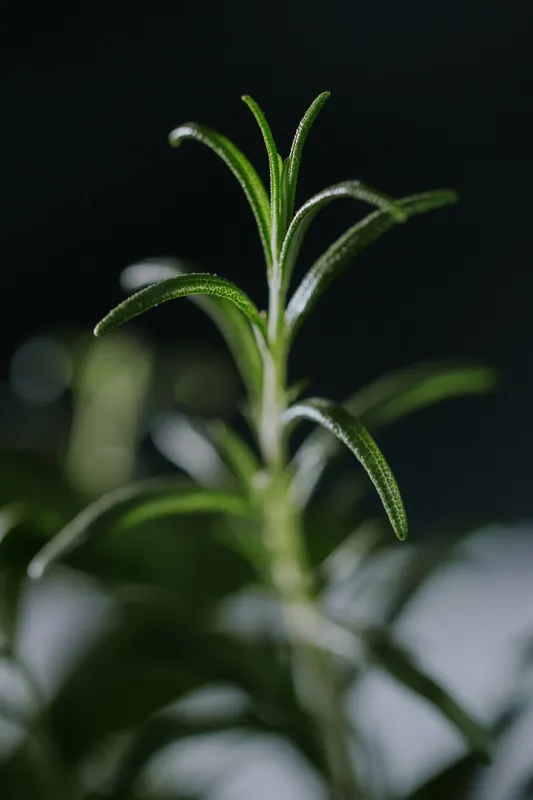
Rosemary is easier to keep indoors when the goal is realistic. A plant that spends winter in a bright, cool room may remain healthy and provide occasional sprigs. The same plant may not produce vigorous, grocery-bunch growth through months of weak daylight.
The accepted botanical name is Salvia rosmarinus. The familiar name Rosmarinus officinalis remains common in books, nursery catalogs, and older Extension pages. Kew’s rosemary profile and the University of Wisconsin–Madison overview connect those names to the same woody, evergreen member of the mint family.
That woody growth matters. Rosemary is not a soft annual herb that can be repeatedly restarted on a dim kitchen sill. It comes from sunny, well-drained conditions, develops a substantial root system, and usually performs better outdoors during the warm season. Indoor success depends on preserving that basic pattern as closely as the home allows.
Start with a clear indoor goal
Choose one primary goal before buying equipment or moving a large plant:
- Overwinter an outdoor container. Keep the plant alive until it can return outside after cold weather.
- Maintain a small culinary plant. Take light harvests while accepting slow winter growth.
- Grow actively under lights. Provide enough intensity, duration, air movement, and root space for continued growth.
These goals require different levels of light and care. A plant being held through winter does not need to be pushed with frequent fertilizer. A plant expected to grow steadily needs more than ambient room brightness.
Illinois Extension describes rosemary as a tender perennial in cold regions and recommends container culture when the plant will move indoors. Its guidance also notes that low-light winter growth is limited. That is a useful baseline: survival can be a successful outcome even when harvests are modest.
Give rosemary the brightest practical light
Place rosemary at the brightest unobstructed window available. Watch how the sun actually reaches the plant after nearby buildings, trees, screens, and short winter days are considered. Rotate the pot occasionally if growth leans strongly toward one side, but do not move it between dim and intense conditions every few days.
Iowa State University Extension identifies light as a common indoor limit and notes that rosemary may need supplemental lighting. A grow light should be installed according to its manufacturer’s coverage, height, and electrical-safety instructions. Leaf response matters more than a universal distance copied from another fixture.
Possible signs that light is inadequate include:
- long, weak spaces between leaves;
- pale new growth;
- stems bending toward the window;
- persistently wet potting mix because the plant is using little water;
- little recovery after a light harvest.
Move an outdoor plant into stronger indoor light gradually if its previous placement was shaded. When returning it outside, acclimate it in stages as well. Leaves formed indoors can scorch if they move directly into intense sun.
For a broader setup comparison, use the indoor herb garden guide to evaluate windows, timers, and separate containers before adding more species.
Use a stable pot and an airy root zone
Choose a container with unobstructed drainage holes and enough weight to support a top-heavy woody plant. A decorative cachepot can hide a nursery pot, but it should never trap drainage water around the roots. Empty it after watering.
North Dakota State University Extension recommends a commercial potting mix, a draining container, and a pot large enough for the roots to expand. Those are starting principles, not instructions to move every rosemary plant immediately into an oversized pot.
Repot when roots densely circle the root ball, water rushes through without wetting the mix, or the plant becomes unstable. Move up one practical container size and keep the stem at its previous depth. A very large volume of unused mix can stay wet longer than the active roots can manage.
Use fresh container medium rather than garden soil. The mix should absorb water, drain freely, and retain air after watering. If an older mix has collapsed into a dense mass or pulls away from the pot wall, root-zone repair may matter more than another watering adjustment.
Water from evidence, not a fixed day
Check the root zone before watering. Feel the mix below the dry surface, lift the pot to learn its lighter and heavier states, or use a clean wooden skewer as a repeatable comparison. Then water the entire root ball until excess drains, and discard water left in the saucer or cachepot.
NDSU suggests watering when the upper layer of mix is dry and allowing the container to drain. The exact interval changes with light, temperature, plant size, pot material, root density, and indoor airflow. A small terracotta pot near a bright window may dry much faster than a large glazed pot across the room.
Do not respond to every brown tip by adding water. Both dry roots and damaged, oxygen-poor roots can lead to wilt or browning. Check the mix, drainage, and recent care before choosing a response.
| What you observe | What to verify first | Safer next step |
|---|---|---|
| Dry mix throughout; pot feels unusually light | Whether water reaches the full root ball | Water slowly and thoroughly, then let it drain |
| Wet mix several days after watering | Light, pot size, blocked drainage, compacted mix | Pause watering and correct the limiting condition |
| Wilt while mix is wet | Root condition and temperature stress | Avoid adding more water; inspect the root zone if decline continues |
| Brown foliage near a vent or cold pane | Airflow, temperature, and root moisture together | Move the plant away from the extreme while keeping strong light |
Manage the move indoors before problems compound
Inspect leaves, stem junctions, the pot rim, and drainage holes before bringing a plant inside. Remove dead material and clean the outside of the container. Keep the newcomer separate from established indoor plants while monitoring it, because pests can be easier to contain before pots are grouped.
Make the move before frost, using the plant’s cold tolerance and the local forecast rather than a single national date. Wisconsin Extension recommends bringing potted plants inside before the first frost and emphasizes full sun, drainage, light feeding, and air circulation.
Indoor heat can create a difficult combination: warm leaves, dry air, and weak winter light. If possible, use a bright location that is not directly over a radiator or beside a repeated cold draft. Do not crowd foliage against the glass. Provide space for air movement without aiming a strong fan continuously at the plant.
Feed lightly and harvest conservatively
Fertilizer cannot replace light. During slow winter growth, repeated feeding can leave salts in the potting mix or encourage weak growth. If the plant is actively growing under adequate light, use a product labeled for edible container herbs and follow its directions. Reduce or pause feeding when growth slows.
Penn State Extension’s indoor-herb guidance treats light, drainage, temperature, watering, and restrained fertilization as a connected system. Diagnose that system before changing one input aggressively.
Harvest healthy green tips with clean scissors. Take small amounts from several stems instead of cutting one side bare, and leave enough leafy growth for the plant to recover. Illinois Extension notes that tender tips can be cut as needed and that pruning can encourage a compact form. Wisconsin Extension advises limiting each harvest and avoiding deep cuts into old woody stems unless the plant is being shaped.
Wash harvested rosemary under running water before culinary use and discard material with pest residue, rot, or an unknown spray history.
Read decline as a combination of clues
Rosemary symptoms rarely prove one cause by themselves.
- Weak, stretched growth often points first to inadequate light.
- Yellowing with persistently wet mix raises concern about excess moisture or poor root aeration.
- Crisp foliage with a very light pot supports a dry-root explanation.
- Sudden browning after a move can involve sun, cold, heat, or root disturbance.
- Fine stippling, webbing, sticky residue, or visible insects calls for close inspection and identification before treatment.
- Patchy gray or decaying tissue deserves isolation and a closer look at moisture and air circulation.
Remove only clearly dead material while investigating. If a pesticide is needed, confirm that the exact product is labeled for the identified pest, for rosemary or edible herbs, and for the intended indoor setting. Follow every label direction, including harvest restrictions.
Decide in spring whether the setup worked
A rosemary plant that reaches spring with healthy stems and some new growth has done what an overwintering plant needed to do. Increase water only as light and active growth increase. Resume fertilizer only when the plant is using resources steadily.
Move the pot outside gradually after frost risk has passed and temperatures are suitable. Start in sheltered light, then increase sun exposure over several days or longer as the plant responds. The next indoor season will be easier if notes record the window, lighting, watering clues, pest observations, and the week growth slowed.
Indoor rosemary is not maintenance-free, but the decision process is straightforward: provide strong light, keep the root zone airy, water from observation, harvest lightly, and accept slower winter growth.
Sources
- Rosemary (Royal Botanic Gardens, Kew). Accessed August 25, 2026.
- Rosemary (Illinois Extension). Accessed August 25, 2026.
- Rosemary, Salvia rosmarinus (= Rosemarinus officinalis) (University of Wisconsin–Madison Division of Extension). Accessed August 25, 2026.
- Field to Fork Rosemary (North Dakota State University Extension). Accessed August 25, 2026.
- Can I Grow Herbs Indoors over the Winter? (Iowa State University Extension and Outreach). Accessed August 25, 2026.
- Growing Herbs Indoors (Penn State Extension). Accessed August 25, 2026.