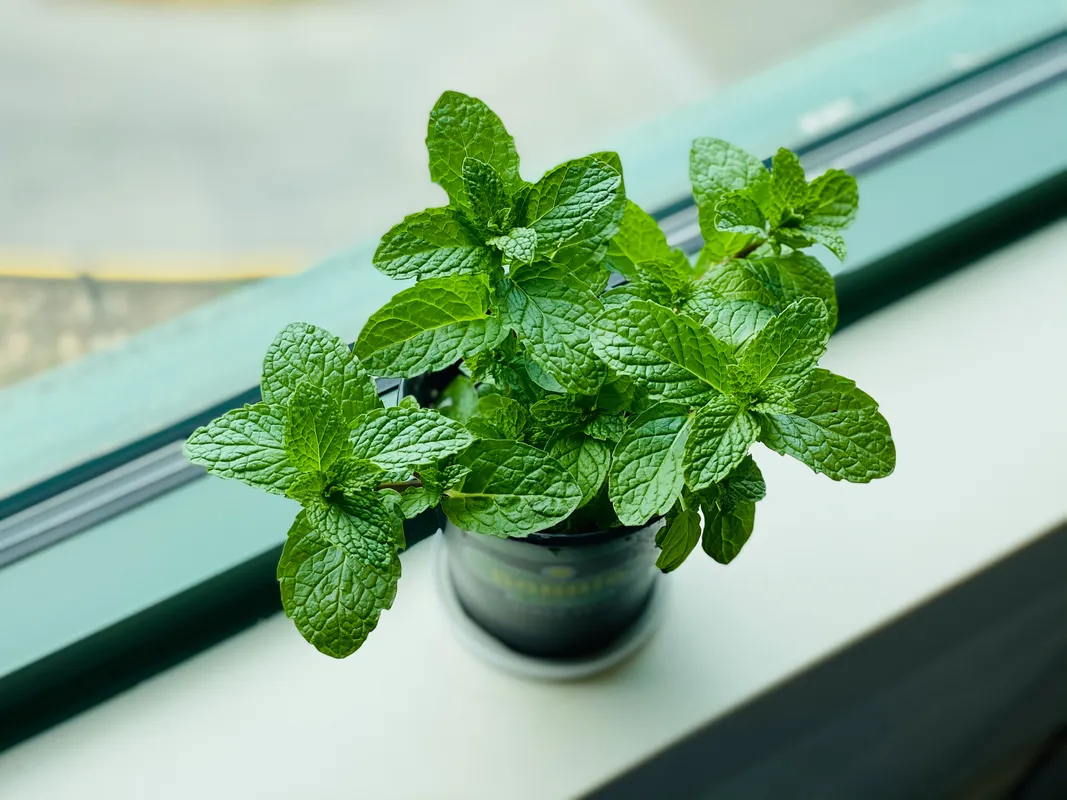
A mint pot belongs close enough to the kitchen that taking a few leaves is easy. Giving it a container of its own also saves a much larger job later: digging mint out of a bed where it has threaded through neighboring plants.
Start with a culinary plant you can identify, keep the pot above ground, and make checking its edges part of watering. Mint grows vigorously, but a useful pot still needs moisture, light and occasional renewal.
Buy a named culinary mint
Spearmint (Mentha spicata) is a practical choice for cooking. Peppermint (Mentha × piperita) has a different flavor, so choose a plant whose scent you enjoy and keep its nursery label. A common name containing “mint” is not enough to identify something for the kitchen.
The RHS mint guide specifically warns that pennyroyal, Mentha pulegium, is harmful if eaten. Buy a correctly named plant sold for culinary use from a reputable nursery; do not taste an unidentified garden escape to work out what it is.
A young plant or division from a known culinary mint gives you a predictable starting point. Utah State Extension notes that mints hybridize readily, so seedlings may not reproduce the parent variety. Seed is an option, but it is a less direct route when you want a particular flavor.
Keep the pot separate from the bed
Choose a container with working drainage holes and enough room for the rootball to expand. Set it on paving or another surface where you can see the base and surrounding growth. Small pot feet can make the bottom easier to inspect; they do not make the plant escape-proof.
Illinois Extension recommends containers above ground. It cautions that a bottomless container sunk into a bed may fail to contain mint. Underground stems can spread beyond the area you meant to give it, and removing every piece afterward is difficult.
Leave an accessible gap between the pot and nearby soil or planters. Check for shoots creeping over the rim or growth emerging underneath, and trim back anything approaching another planting. Do not let a trailing stem disappear behind the pot for a season. If mint has already escaped, trace and remove the spreading stems as thoroughly as you can, then watch for regrowth.
Give different mint varieties separate pots too. You will be able to keep their labels with them, harvest the one you intended and divide each plant without untangling a mixed clump.
Plant for drainage, then choose the light
Use a container potting mix that holds moisture while letting excess water drain. Garden soil dug from a bed can pack poorly in a pot; Illinois Extension’s container guidance recommends well-aerated growing media. Moisten the mix before planting, settle it around the rootball and leave some space below the rim for watering.
Water thoroughly after planting. If a saucer is necessary to protect the surface beneath the pot, empty it after watering. A sealed decorative outer pot needs the same attention: lift out the inner container, let it drain, and check that water has not accumulated around its base.
Spearmint can grow in sun or partial shade. NC State’s plant profile lists both, along with moist, well-drained conditions. Begin with a place that receives useful daylight and some direct sun. On a hot exposed patio, a location with afternoon shade can make moisture easier to manage. Deep shade is a different situation; a pot hidden beneath a dense shelf of other plants may produce weak, stretched growth.
Check the mix before reaching for water
Feel just below the surface rather than judging only by the color of the top. Keep the mix evenly moist without leaving it continuously saturated. A small terracotta pot in wind can dry much faster than a larger plastic one in shade, so a fixed weekly watering appointment is unreliable.
If the leaves droop, inspect the mix first. Dry roots need water; already-wet roots do not need another soaking merely because the leaves look tired. Check drainage, heat exposure and the condition of the plant before repeating the same treatment.
Use fertilizer modestly during active growth, following a product label suitable for container herbs and accounting for any feed already in the mix. Minnesota Extension advises light feeding for herbs. Extra fertilizer is not a remedy for too little light or persistently wet roots.
Check leaf undersides while watering. Rust can produce raised spots that become orange or brown; Utah State recommends watering practices that avoid leaving the foliage wet overnight. Persistent spotting, stunting or dieback deserves identification before treatment. Keep an affected pot apart from healthy herbs and use local Extension help rather than trying a kitchen mixture on leaves you plan to eat.
Harvest tips, and renew the crowded clump
Once the plant is growing actively, snip young shoot tips as you need them, leaving foliage for continued growth. Regular small harvests encourage a compact plant. Use clean cutting tools and wash the harvested leaves under running water before using them.
A container eventually becomes crowded. In spring or early autumn, lift the clump and divide it into smaller rooted sections. The RHS advises removing old dead material from the center and repotting healthy divisions. Keep a useful section in refreshed potting mix; you do not have to keep moving the entire rootball into ever-larger pots. Label any divisions you share.
Decide where it will spend winter
Mint is a herbaceous perennial, so outdoor stems can die back as the season ends without the whole plant necessarily dying. The exposed roots in a pot still need protection appropriate to your climate. Ground hardiness is not a guarantee of survival on a windy balcony.
Illinois Extension’s overwintering guidance describes sheltered, insulated groups of containers and cool unheated storage as options for potted perennials. Choose an approach suited to your mint and local winter, and check moisture during dormancy. A protected pot should not be forgotten until spring; it can still dry out.
For a pot staying outside, use the fuller container overwintering guide to plan protection before a freeze. If you bring a small plant indoors for leaves, give it a sunny window or suitable grow light and adjust watering to its slower growth. The indoor herb guide helps you assess that space before moving the pot.
Sources
- How to Grow Mint (Royal Horticultural Society). Accessed October 7, 2026.
- How to Grow Mint in Your Garden (Utah State University Extension). Accessed October 7, 2026.
- Mint (University of Illinois Extension). Accessed October 7, 2026.
- Mentha spicata (North Carolina Extension Gardener Plant Toolbox). Accessed October 7, 2026.
- Helpful tips for creating a successful container garden (University of Illinois Extension). Accessed October 7, 2026.
- Growing herbs in home gardens (University of Minnesota Extension). Accessed October 7, 2026.
- Overwintering potted plants (University of Illinois Extension). Accessed October 7, 2026.
- Selecting and Serving Produce Safely (U.S. Food and Drug Administration). Accessed October 7, 2026.