A dark smear at the base of a pruning blade is easy to overlook when there is one more stem to cut. Stop there before moving to the next plant. Sap, soil and bits of tissue can travel with the shears, and a blade that looks tidy can still carry organisms you cannot see.
Give the job two stages: remove the debris, then disinfect the cleaned cutting surfaces. A quick splash over a gummy blade skips the part that lets the disinfectant reach the metal.
Set up beside the work
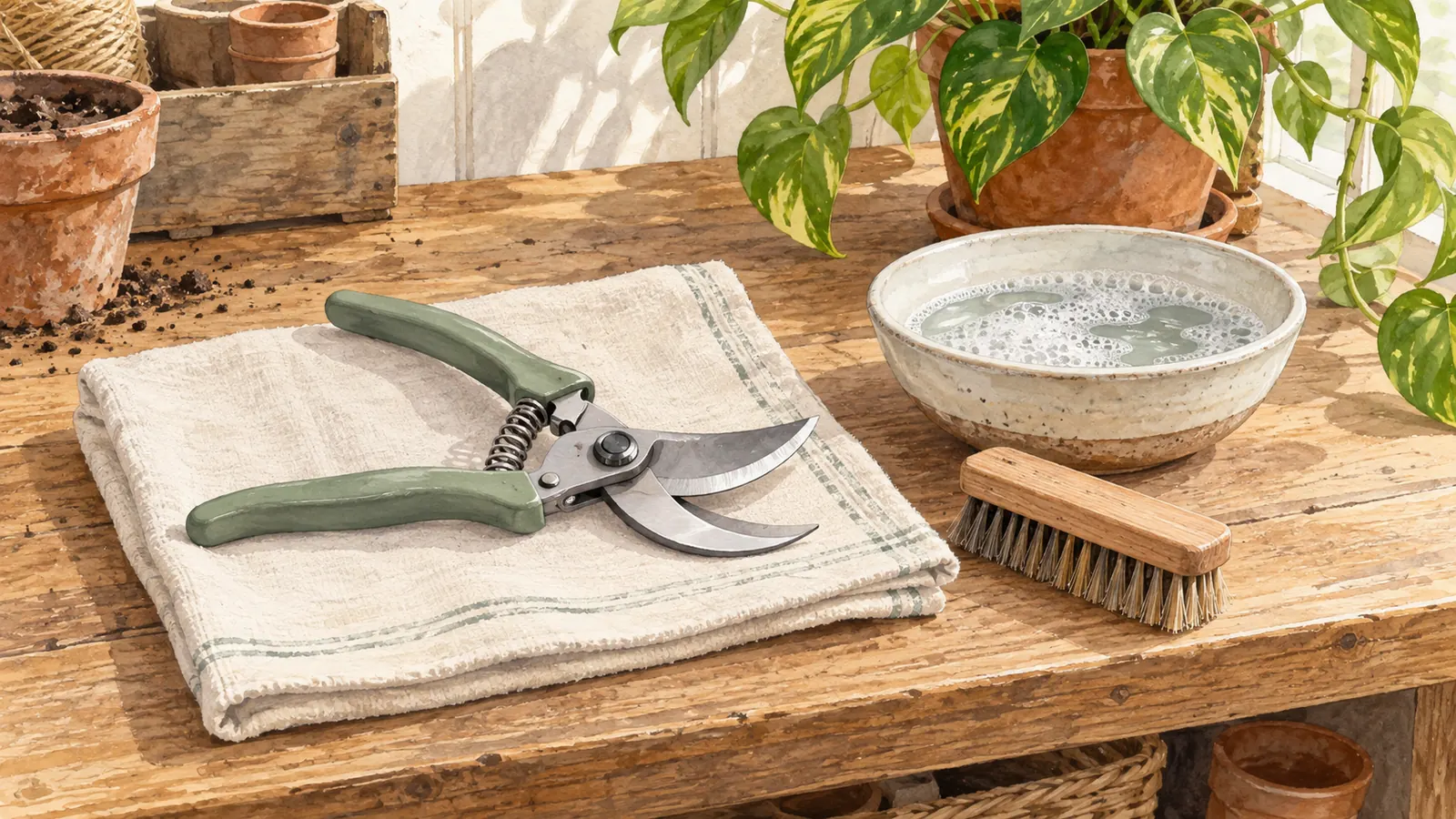
Put a brush, cloth, soapy water and your chosen disinfectant within reach before pruning. Keep a separate clean, dry place for the finished tool. This makes the pause between plants manageable; it is harder to maintain the habit when the cleaning supplies are across the house.
Minnesota Extension recommends cleaning and disinfecting tools before use, after working on an infected plant and before moving to another, and after using them at another garden. Borrowed shears deserve attention before they join your own collection.
When removing diseased tissue, Iowa State Extension advises disinfecting at least between plants, ideally between cuts. Follow any more specific guidance for the disease involved. Cleaning the tool reduces one route of spread; it does not diagnose a leaf spot or cure an infected plant.
Wash off what you can see
Open manual shears carefully and keep your fingers away from the cutting edges. Brush away loose soil and plant fragments, then use soap and water to remove grime and sap. Pay attention to the area near the pivot, where residue can collect. Work with the tool’s instructions if it needs to come apart; forcing a spring or fastener is unnecessary for an ordinary surface cleaning.
Rinse off the loosened debris and soap, then dry the tool. Check both sides of the blades in good light. A patch that still looks coated needs more cleaning before disinfection. Use a fresh part of the cloth rather than spreading the same sticky smear around. The Royal Horticultural Society’s tool-care guide also reminds gardeners to disinfect the cleaning brush or cloth; do not return a finished blade to dirty equipment.
This wash is for the tool. Do not use the disinfectant or dirty wash water on leaves, potting mix or roots. For dusty foliage, use the separate houseplant-leaf cleaning guide.
Alcohol is convenient, with limits
For routine hand-pruner disinfection, Iowa State recommends wiping or dipping the cleaned cutting surfaces in 70% isopropyl rubbing alcohol, used without dilution. A prolonged soak is unnecessary. Read the label, wet the surfaces deliberately and let them dry before putting the tool away.
Alcohol is flammable. Keep it away from flames, heaters and sparks, and follow the label’s handling and protective-equipment directions. Never mix disinfectants. Keep the supply capped and out of children’s reach when it is not in use.
Alcohol is not reliable against every plant pathogen. Iowa State specifically advises against relying on it for pruning apple trees infected with fire blight. If a tree has suspected fire blight, obtain disease-specific pruning and disinfection guidance before continuing. A routine houseplant cleanup should not become the treatment plan for an orchard disease.
Choose a cleaner for the job and the blade
More aggressive is not automatically better. Minnesota Extension warns that bleach can corrode cutting tools and leave pits or nicks. Household disinfectant wipes also vary in their active ingredients, and Iowa State notes that their effectiveness against plant pathogens is not equally well established.
If a disease-specific recommendation calls for another product, use the exact formulation, dilution and wet contact time in that guidance and the product label. Do not transfer instructions from one bottle to another just because both say “disinfectant.” A household surface claim does not promise control of every plant disease.
Finish with a dry, freely moving tool
Minnesota’s pruning-tool maintenance guide explains why drying and lubrication matter, especially with carbon steel. After cleaning and disinfection, let the shears dry thoroughly, including around the pivot and spring. Apply a light coating of a lubricant suitable for the tool, following its maker’s directions. Wipe away excess before storage.
Avoid vinegar as a routine tool treatment; it can contribute to corrosion. If the blades are nicked, badly rusted or no longer move properly, deal with that damage before the next pruning session. Disinfection cannot repair a cutting edge, and sharpening needs to respect the blade’s existing bevel and coating.
Open and close the handles carefully to distribute lubricant through the pivot. The RHS recommends this small maintenance step; a sticky hinge should be checked before you reach for a living stem.
Store the shears dry, with the safety catch secured if fitted. Before taking pothos cuttings or trimming damaged roots during a root-rot inspection, bring the cleaning supplies back out with the tool. The next plant should get a clean blade, not the residue from the last job.
Sources
- Clean and disinfect gardening tools and containers (University of Minnesota Extension). Accessed September 21, 2026.
- How do I sanitize my pruning shears? (Iowa State University Extension and Outreach). Accessed September 21, 2026.
- Caring for winter pruning tools (University of Minnesota Extension). Accessed September 21, 2026.
- Cleaning hand tools (Royal Horticultural Society). Accessed September 21, 2026.