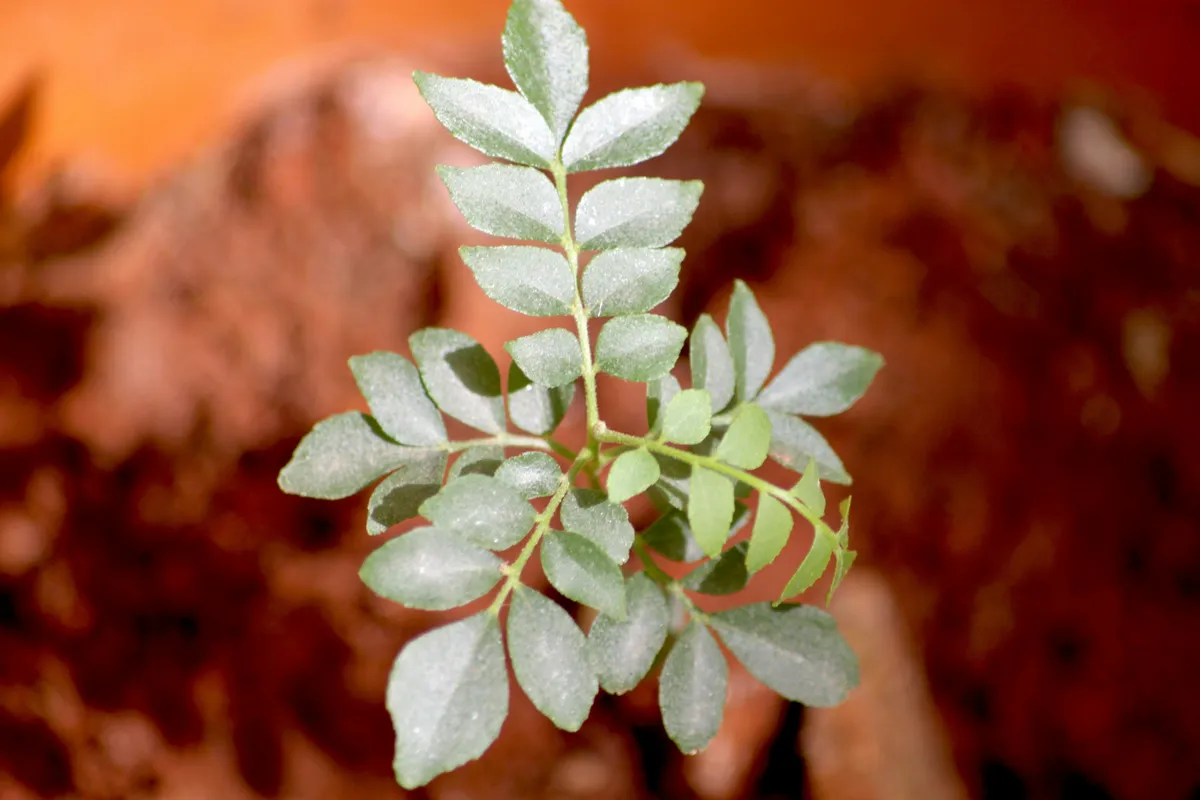
Before choosing a pot for a curry leaf tree, find out where the plant came from. Curry leaf belongs to the citrus family and can host Asian citrus psyllid, the insect that spreads citrus greening disease. A cheap cutting carried across a state line may therefore be a much worse start than a modest nursery plant bought within the local permitted area. Sourcing is not paperwork added to the care plan. It is the first part of the care plan.
The culinary species is Bergera koenigii, still widely listed under the older name Murraya koenigii. University of California Agriculture and Natural Resources uses both names. Neither curry powder nor the gray-leaved ornamental called curry plant, Helichrysum italicum, comes from this tree. A useful label should identify the botanical species and say that it is being sold for culinary use.
The purchase can affect plants far beyond your kitchen
The USDA Animal and Plant Health Inspection Service maintains current information about citrus greening, Asian citrus psyllid, and regulated areas. Check that information and the destination state’s agriculture department before ordering, mailing, sharing, or personally transporting a curry leaf plant or propagation material. Restrictions can differ by location and change over time.
Buying locally from a reputable nursery inside the permitted distribution area is the simplest responsible option. Ask whether the tree was sold as an edible crop and whether it received any systemic pesticide that affects harvest. A clean-looking plant is not a substitute for following movement rules because psyllid eggs and young insects can be difficult to see.
Still inspect the tree before it joins the garden. Look along new shoots and leaf undersides for insects, sticky residue, raised scales, cottony material, or fine webbing. Keep a new arrival apart from citrus relatives while observing it. If an insect resembles Asian citrus psyllid or a regulated pest is suspected, leave it in place and contact the state plant-health authority rather than carrying the specimen elsewhere for identification.
Plan for a tree that changes rooms twice a year
In a cold-winter climate, the container has two jobs. It must support a woody plant through summer growth, and it must remain practical to move before frost. A wide base helps prevent a leafy canopy from tipping, while open drainage holes let the entire root ball be watered without leaving it submerged. Wheels or a fitted plant caddy may be more useful than an oversized decorative pot.
Move up in pot size gradually. A small root system surrounded by a large volume of unused mix can stay wet for too long. Repot when roots densely occupy the container, the root ball no longer wets evenly, or the tree has become unstable. Use fresh commercial container mix rather than garden soil, keep the lower trunk above persistently damp material, and leave enough space below the rim to water slowly across the surface.
A cachepot can hide the nursery container, but it can also hide standing water. Take the inner pot out for watering or check the bottom afterward, then discard the runoff. The same rule applies to a saucer: it protects the surface beneath the tree; it should not become a shallow pond.
Summer is when the tree earns its place
Warm weather and abundant light support the shoots that later provide a harvest. UC Agriculture and Natural Resources describes a range from full sun to partial shade and advises protection from intense summer sun where scorching is likely. University of Florida IFAS Extension recommends a sheltered, sunny position in its regional guidance. Local heat, reflected light, wind, and the tree’s previous exposure explain why the best position is not identical in every garden.
After frost danger has passed and nights are reliably warm, introduce an indoor tree to outdoor conditions in stages. Start with bright shade or gentle morning sun. Increase direct exposure as the existing leaves adjust. A sudden move from window light to a paved south-facing patio can burn foliage even though new, acclimated growth may tolerate that location later.
Watch the response rather than trying to force a predetermined summer schedule. Compact new shoots and normal leaf color suggest the position is productive. Long, pale growth points to inadequate usable light. Bleached patches after a move may signal excessive exposure or an abrupt transition. A wall can radiate heat after sunset, and wind can make the same pot use water much faster than it did indoors.
Feed during active growth only. Choose a fertilizer labeled for edible container plants, account for any nutrients already in the potting mix, and use the rate printed on the product. More fertilizer cannot replace light, and unneeded salts remain concentrated in a container.
Read the pot before reaching for the watering can
UC Agriculture and Natural Resources recommends a well-drained root zone and some drying between waterings. The useful test occurs below the decorative surface. Feel the upper root zone, compare the pot’s weight with its weight after watering, and notice whether water still penetrates the root ball. When that upper zone has begun to dry, wet the mix thoroughly and let the excess escape.
“Some drying” does not mean waiting until the whole root mass is hard and desiccated. It also does not mean adding a small sip whenever the surface changes color. A tree in leaf outdoors may use water quickly; that same tree may use little after it comes inside and stops growing. Pot material, root density, temperature, and moving air all change the interval.
Do not diagnose a yellow leaf with the watering can alone. Saturated roots, severe drying, low light, pests, a cold transition, and ordinary aging can overlap in appearance. Check the moisture history and inspect the whole plant before changing care. When a stressed tree has several possible problems, correct the clearest one and wait for evidence from the next growth rather than repotting, pruning, and fertilizing on the same day.
Winter is a holding pattern, not a second summer
Bring the tree under protection before frost. Curry leaf may shed foliage in cooler conditions, and Iowa State University Extension and Outreach includes it among tender perennial herbs that can be overwintered indoors. Leaf loss after the move is not, by itself, proof that the branches are dead or that the roots need more water.
Inspect the leaf bases, undersides, stems, pot rim, and drainage area before the tree comes inside. Remove dead material and isolate the plant from the main collection for observation. Then place it in the strongest suitable light, away from cold glass and hot vents. A correctly positioned grow light can supplement a short winter day.
As growth slows, the root ball will usually dry more slowly. Lengthen the interval between thorough waterings instead of reducing each watering to a splash. Pause routine feeding when the tree is not producing new growth. The winter objective is to keep roots and viable stems healthy until warmth and light return, not to demand a continuous crop of fresh shoots.
In spring, reverse the move with the same care. Wait for suitable temperatures and reacclimate leaves to sun. Tender foliage produced behind glass is not prepared for an immediate full day outdoors.
Every harvest is also a pruning cut
The leaves are borne along compound leaf stalks, so harvest changes the shape and working canopy of a small tree. Wait until the plant is established and growing actively. With clean snips, take a short leafy sprig or tip above a useful node and distribute cuts around the canopy. Repeatedly emptying one branch creates a lopsided plant; stripping a young tree removes the leaves it needs to replace the harvest.
Pause when the tree is newly repotted, pest-damaged, shedding leaves, or dormant. Iowa State notes that fresh curry leaves retain more culinary character than dried leaves, while UC Agriculture and Natural Resources suggests freezing as a storage option. That makes a few timely summer harvests more sensible than weakening the tree for a small winter cutting.
The edible guidance here applies to the leaves. University of Florida IFAS Extension advises against eating the berries because the seed is considered toxic and recommends keeping them away from children and pets. Remove fallen fruit where access is a concern. Edible leaves do not make every part of the plant edible.
Keep a food plant on a food-safe care record
Once leaves are intended for the kitchen, every spray and soil treatment matters. Use only products whose labels permit the crop, application location, and required interval before harvest. A treatment labeled for an ornamental shrub is not automatically acceptable on foliage that will be eaten. If the nursery cannot clarify a prior systemic treatment, delay or avoid harvest according to reliable label or Extension guidance.
Cut leaves into a clean container, away from potting mix, pet waste, and dirty tools. U.S. Food and Drug Administration guidance calls for clean hands and utensils and a thorough running-water rinse. Soap, detergent, and commercial produce wash should not be used. Refrigerate the leaves promptly when they are not needed at once, and keep them separate from raw meat.
A curry leaf tree is not just a generic herb in a larger pot. Its citrus-family pest risk shapes the purchase, its woody canopy makes each harvest a pruning decision, and its tropical rhythm divides the year into an outdoor growth season and an indoor holding season. If that seasonal migration fits the household, the container lemongrass guide and pandan guide cover two other warm-climate ingredients, each with a different growth habit and winter tradeoff.
Sources
- Curry Leaf (University of California Agriculture and Natural Resources). Accessed September 8, 2026.
- The Reasoning for the Seasoning - Curry Leaf (University of Florida IFAS Extension). Accessed September 8, 2026.
- Growing, Harvesting, and Drying Herbs (Iowa State University Extension and Outreach). Accessed September 8, 2026.
- Citrus Greening and Asian Citrus Psyllid (USDA Animal and Plant Health Inspection Service). Accessed September 8, 2026.
- Selecting and Serving Produce Safely (U.S. Food and Drug Administration). Accessed September 8, 2026.