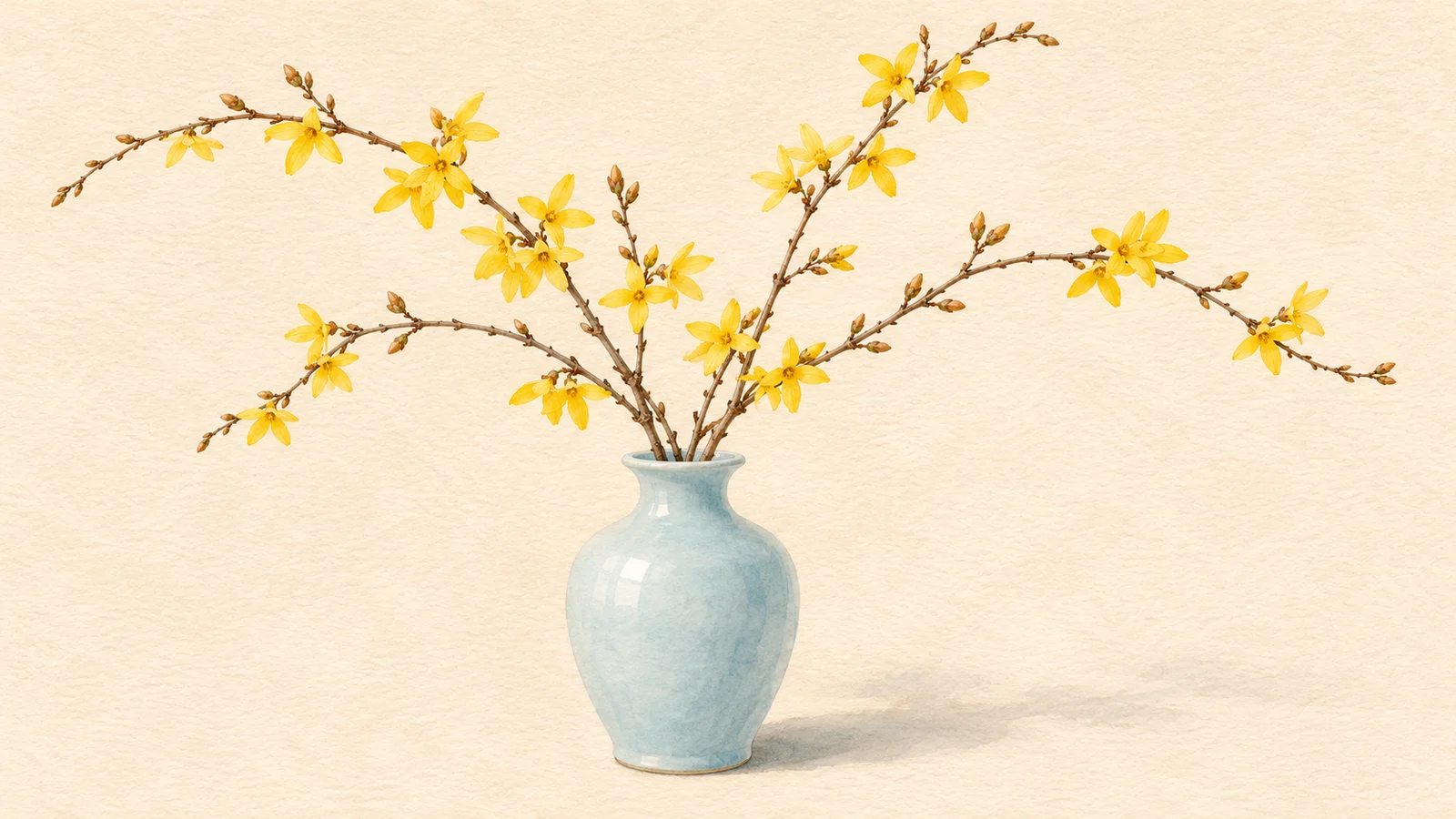
A few forsythia stems can fill a vase with yellow flowers while the shrub outside is still bare. The trick is choosing branches whose flower buds are ready to respond to warmth. Cutting them too early in winter and putting them beside a heater is more likely to bring disappointment than an early spring.
This is a late-winter project in a cold climate. You are opening flower buds that formed during the previous growing season, not asking a bare stick to manufacture new flowers. Start with a shrub you can identify and have permission to cut, a small branch harvest and a cool place indoors.
Let winter do its part first
UNH Extension explains that spring-flowering shrubs need a period of winter dormancy before their buds will open. Its New Hampshire guidance puts forsythia forcing in late February or March. Iowa State suggests February as an early starting point in its region.
Those dates are clues, not a calendar appointment for every garden. The Pennsylvania Horticultural Society places forsythia earlier in its regional sequence and emphasizes a substantial cold period. Local winter conditions matter more than the date on a vase label. In a mild or unusually warm winter, wait for the buds to become noticeably plump rather than assuming a fixed number of days has done the job.
The closer you are to the shrub’s normal flowering time, the faster forcing generally goes. If you want flowers for a particular occasion, leave room for uncertainty. Bud development, the branch’s condition and your indoor temperature all affect the result.
Take a little without spoiling the shrub
Go out on a day above freezing. Look for healthy stems with numerous rounded, swollen buds; the smaller, narrow, pointed buds are generally leaves. Select branches roughly one to two feet long, a manageable size recommended by Iowa State’s forcing guide. A few lengths that differ slightly will sit naturally together.
Step back before each cut. Imagine the space that branch will leave, then choose another if the gap would be conspicuous. Bring only what you need for a modest arrangement. Every flower bud removed for the vase is one fewer outdoors; collecting branches is a small trade, not a way to increase the shrub’s spring display.
Illinois Extension recommends taking selected forsythia branches back to the base and preserving the plant’s free-flowing shape. Avoid giving the whole shrub a winter haircut. Save its main pruning for just after flowering, when you can see what needs thinning without sacrificing the next display.
Use sharp, clean hand pruners and keep your supporting hand clear of the blades. Our pruner-cleaning guide covers tool care before you begin. Carry the cut branches inside promptly, with their bases in water if possible.
Prepare the vase before arranging
Choose a clean, stable container that supports the branches without tipping. A bucket works during the waiting stage; the display vase can come later. Set it where reaching in to change the water will be easy, rather than squeezing it between fragile objects on a narrow sill.
Remove any little side twigs, buds or leaves that would sit below the waterline. Recut the base of each stem with sharp pruners, removing about an inch, and put it straight into fresh water. UNH recommends making that fresh cut with the end submerged. Keep the vessel and your grip steady while working; there is no need to pound the woody ends into frayed brushes.
Use cool to lukewarm water. Illinois Extension specifically cautions against overly warm water for forsythia because it can distort the flowers. A comfortably cool room and steady water supply are more useful than trying to rush the process with heat.
Fresh water is the daily job
For the initial forcing period, Iowa State recommends a cool, dimly lit spot around 60–65°F. Keep the cut ends immersed and replace the water daily. Check the actual level as well as its appearance: a tall vase can look full from across the room while the stems have lost contact with water.
The Chicago Botanic Garden also recommends daily changes and misting as needed to keep the buds from drying. Use a light mist over a sink or protected surface. Do not leave the arrangement in the hot airflow from a vent or pressed against a radiator.
Watch for swelling buds and the first showing of yellow. Forsythia often opens in about one to three weeks, but that is a range rather than a deadline. If nothing happens after three or four weeks, UNH advises trying a fresh batch later. Check the collection date and care conditions before deciding that a warmer room is the answer.
Move opening flowers into view
When the buds begin opening, bring the arrangement into a brighter room with indirect light. Keep it cool and away from direct sun to prolong the flowers. The little yellow blooms should appear along mostly bare wood; a vase of green leaves alone is not the same result.
If the shrub itself flowers poorly, look beyond the vase. Iowa State’s forsythia guide identifies badly timed pruning and winter injury to flower buds as possible reasons. Green stems can survive a winter that damages their flower buds. Forcing cannot restore buds that were cut off or killed.
For a longer sequence of flowers, bring in another small batch later, as the Pennsylvania Horticultural Society suggests. Label the cutting dates and keep the batches separate so you can compare their progress. Continue changing the water while the display lasts, then clear away spent stems. If you want a living winter-flowering plant instead of cut branches, florist’s cyclamen offers a different kind of indoor project.
Sources
- How do you force branches of spring-flowering trees and shrubs indoors? (Iowa State University Extension and Outreach). Accessed November 27, 2026.
- Forcing Branches Indoors (University of New Hampshire Extension). Accessed November 27, 2026.
- Forcing Spring-flowering Branches Indoors (Chicago Botanic Garden). Accessed November 27, 2026.
- Prune properly, your forsythia and lilac shrubs will thank you (University of Illinois Extension). Accessed November 27, 2026.
- Forcing Branches Indoors for a Floral Boost Before Spring (Pennsylvania Horticultural Society). Accessed November 27, 2026.
- Growing Forsythias in the Home Landscape (Iowa State University Extension and Outreach). Accessed November 27, 2026.