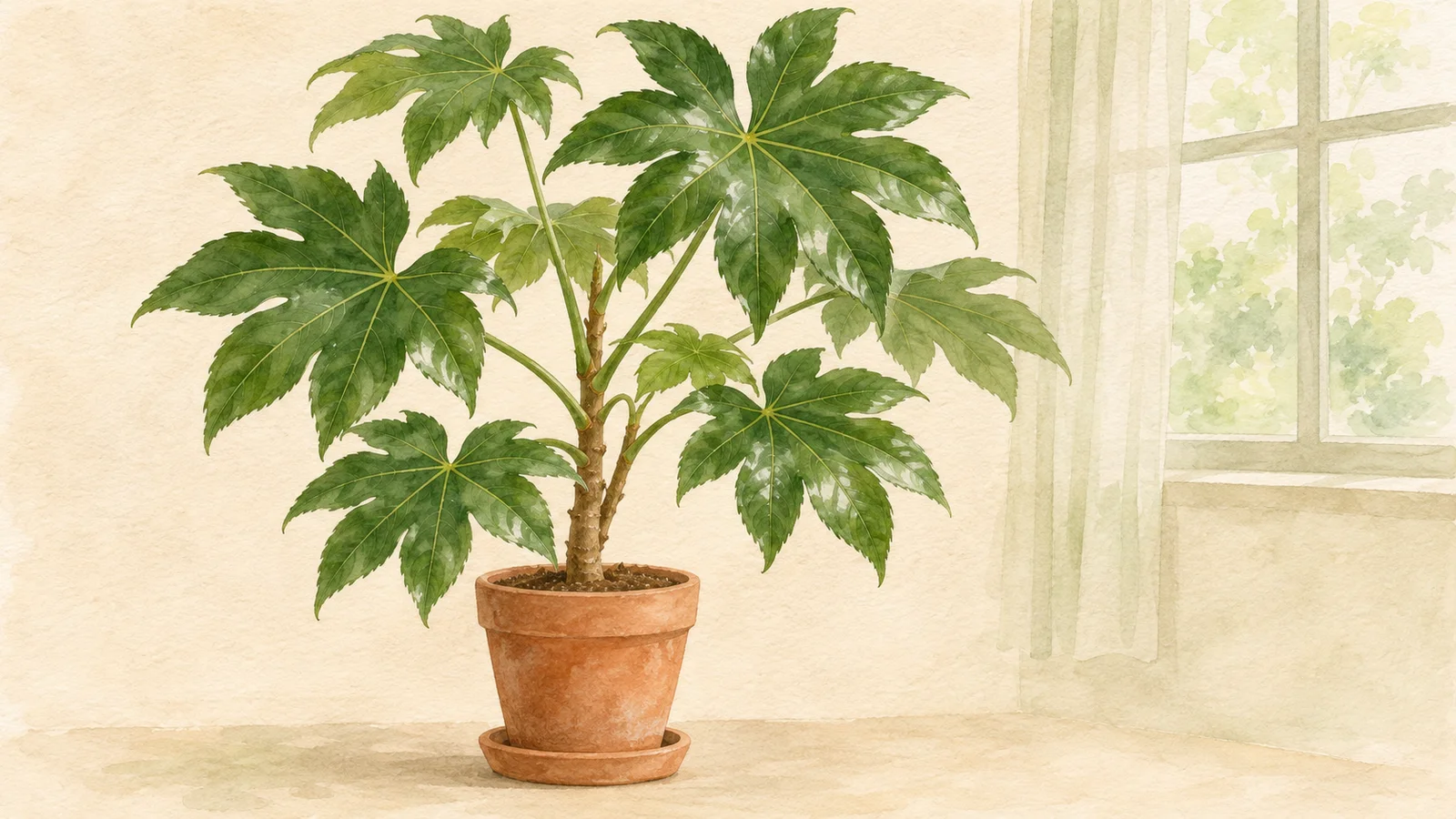
A fatsia needs space for its leaves before it needs anything decorative around its pot. Each broad blade opens like a green hand, and a young plant that fits neatly on a table can eventually crowd the glass, curtains or a neighboring chair. Choose its place with that spread in mind: a bright room on the cool side, with room to reach the pot and inspect the backs of the leaves.
Japanese aralia, Fatsia japonica, can live indoors, but its tropical appearance does not mean it wants the hottest spot in the house. It is also grown as an outdoor shrub in suitable climates. Keep those two settings separate when reading a nursery label; outdoor shade tolerance and mature landscape dimensions do not describe a small pot in a dim hallway.
Try the room before buying the plant
The Royal Horticultural Society recommends a bright, ventilated indoor position around 14–18°C, approximately 57–64°F. A cool sitting room or bright landing can suit that preference better than the space immediately above a radiator. Check the temperature where the leaves will actually sit, including at night.
Keep the foliage out of harsh direct sun and away from a drafty opening. A window can supply useful light while the nearby heater makes the same corner unsuitable. Move the pot if leaves are pressed against the pane; do not solve a space problem by bending their stalks out of the way.
Garden-sized fatsias can become substantial shrubs. NC State Extension describes large, glossy leaves with seven to eleven joined lobes and notes that flowers and fruit are uncommon indoors. Buy it for the foliage rather than expecting a dependable indoor flower display. Green and variegated forms are available, but both need a workable position and an accessible container.
Water the whole root ball, then let it drain
Before reaching for the watering can, feel beneath the surface of the potting mix. A pale, dry-looking top can conceal damp material underneath. Water when the mix has begun drying below the surface; do not wait for the entire root ball to become a hard, shrunken block. Equally, a still-damp pot does not need another drink because a week has passed.
University of Missouri Extension explains why a fixed schedule fails: plant size, light, temperature, container and humidity all change the rate of drying. Apply water across the surface until it flows through the drainage holes. Let the pot drain and empty its saucer or outer cover. A decorative container that conceals water can keep roots wet even when the inner nursery pot has holes.
If a fatsia droops, check the mix before watering. Drought and root trouble in saturated soil can both leave a plant looking thirsty. Yellow leaves over persistently wet mix call for a drainage check, not an automatic larger drink. For a pot that stays wet or has deteriorating roots, use the root-rot identification guide before deciding what to remove.
Let the roots decide when to move up
A bigger pot is not a cure for every slow-growing fatsia. Slide the root ball out gently when you can support it safely and inspect what is occupying the container. Roots filling the soil mass, circling densely or emerging through the holes are more useful evidence than the plant’s height alone.
Illinois Extension’s repotting guidance also identifies unusually small new leaves and repeated wilting between normal waterings as reasons to investigate. Plan routine repotting for active growth, usually spring or early summer. Use fresh potting mix and a container with drainage, keep the plant at its previous planting depth, and leave a little space below the rim for watering. Water the newly filled root zone thoroughly.
Choose a modest increase in pot size. A large amount of unused wet mix around a small root system makes moisture harder to manage. If the plant is top-heavy but its roots still have space, first consider a more stable outer container that can be emptied easily. Do not bury the stem deeper to hold it upright.
Inspect the leaves while you are close
Lift a few leaf blades and look at their undersides, then examine the points where the stalks join the stem. Fatsia can host aphids, mealybugs, scale, thrips and spider mites indoors. Fine webbing, cottony patches or unfamiliar bumps deserve a closer look; none is a reason to spray an unidentified mixture over the whole plant.
Minnesota Extension recommends keeping new additions separate while watching for pests. Give a newly purchased fatsia an inspection spot away from the rest of your collection. For suspected mites, compare the signs in the spider-mite guide; for attached bumps, consult the scale-insect guide. Identify the problem before choosing a treatment.
Notice the direction of new growth, too. A plant leaning toward the window may need a better supply of light, not fertilizer. Turning the pot periodically can distribute exposure, but rotating it in an unsuitable dark corner does not brighten that corner.
Change the routine after a summer outside
A sheltered, shady patio can hold a potted fatsia during suitable weather. When it returns indoors, inspect it before placing it beside other plants and continue watching it separately for several weeks. Nebraska Extension notes that hidden pests may appear later and that the move indoors reduces exposure to drying wind and heat. Recheck moisture instead of carrying the summer watering interval into the house.
Feed during active growth according to the fertilizer label; pause routine feeding when growth slows markedly. Extra fertilizer cannot replace missing winter light and can leave unwanted salts in the pot. A healthy fatsia does not require constant pruning either. If it has outgrown its position, plan size-reducing cuts for spring and consider the shape before cutting.
For today, start with three observations: the temperature beside the leaves, moisture below the soil surface, and whether the saucer is empty. Those checks tell you more about the next useful adjustment than the date of its last watering.
Sources
- How to grow Fatsia (Royal Horticultural Society). Accessed November 9, 2026.
- Fatsia japonica (NC State Extension). Accessed November 9, 2026.
- Caring for Houseplants (University of Missouri Extension). Accessed November 9, 2026.
- Repotting (University of Illinois Extension). Accessed November 9, 2026.
- Winter houseplant tips (University of Minnesota Extension). Accessed November 9, 2026.
- Bringing Houseplants Indoors (Nebraska Extension). Accessed November 9, 2026.