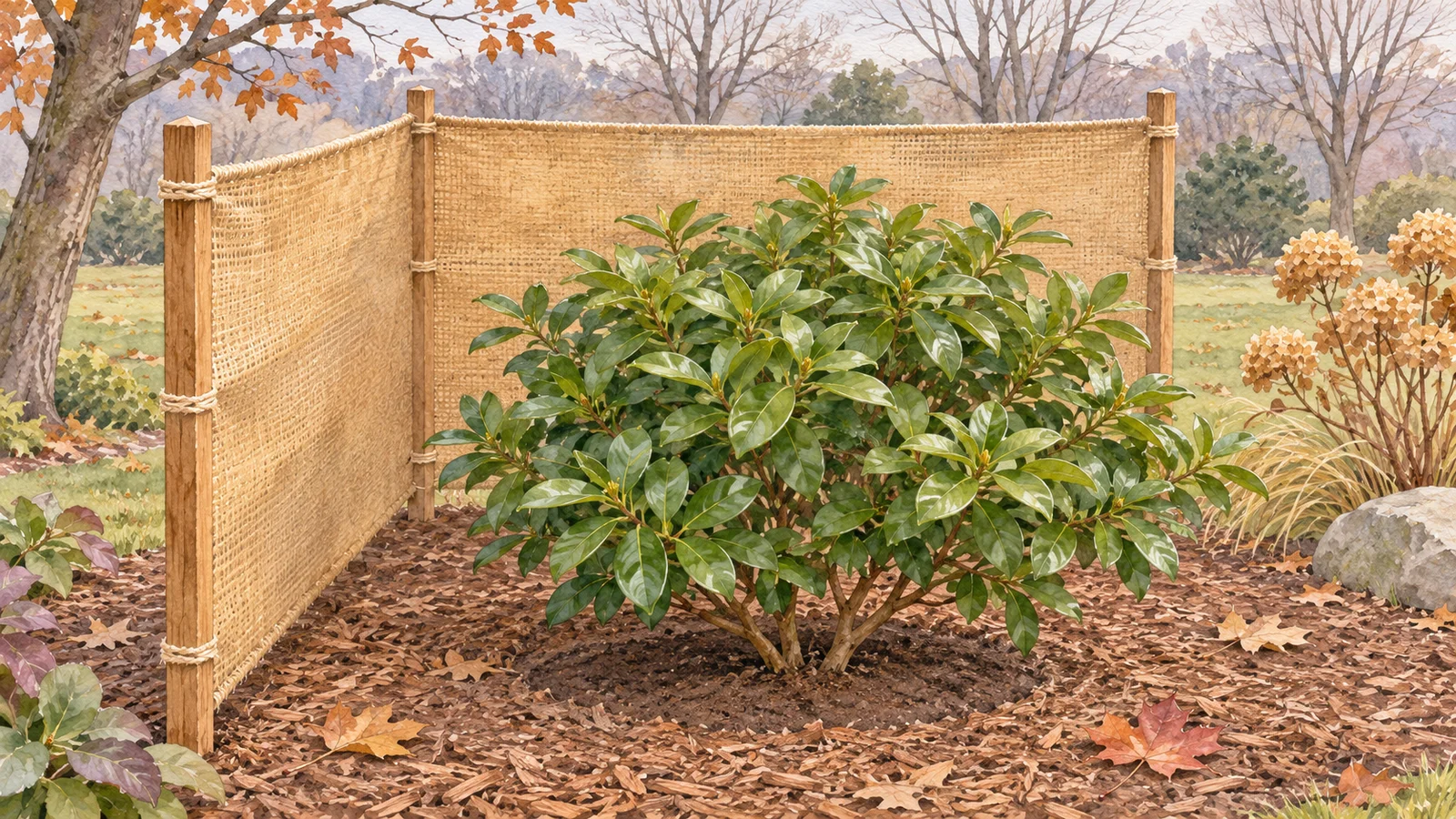
A burlap screen can give an exposed evergreen a quieter winter. The useful part is the space between the screen and the leaves: wind meets the fabric first, while the shrub remains open to air and light. Before buying a roll, check which side of the plant faces the strongest wind and afternoon sun. That tells you where protection can help.
Which shrubs need a screen?
Winter drying can affect both broadleaf evergreens, such as boxwood and rhododendron, and conifers, including arborvitae and yew. Leaves and needles can lose water while frozen soil prevents roots from replacing it. A plant that entered winter dry, or has not yet established a substantial root system, is especially vulnerable. The brown foliage often becomes conspicuous as winter ends.
Give priority to a recent transplant, a shrub beside an open driveway or a plant that browned on its exposed side last spring. An evergreen tucked into a sheltered courtyard may need no screen at all. Look at the actual exposure rather than covering every green plant in the yard. This guide concerns shrubs growing in the ground; a perennial in a pot also needs protection for its exposed root ball.
Winter burn is not one single process. University of Minnesota Extension describes water loss, sudden temperature changes and bright-light injury among the causes of winter discoloration. A screen reduces exposure. It cannot make a tender plant hardy enough for a colder climate.
Check moisture before the ground freezes
Pull mulch aside and feel the soil beneath it. During a dry fall, water the root area slowly enough for moisture to soak in instead of running away. Recheck after rain, particularly beneath eaves where the ground may stay dry. Moist soil needs no automatic extra soaking; Iowa State Extension recommends supplemental fall watering during dry periods, continuing until the ground freezes.
Avoid treating the last watering as a cure for months of drought. Keep an eye on newly planted shrubs throughout establishment, including the original root ball. If water stands in the planting area, solve the drainage problem rather than adding another bucket because winter is coming. Both dry and waterlogged roots make the plant harder to care for.
In places with long, dry, snow-free winter spells, watering may also be useful during a suitable thaw. Colorado State’s winter-watering guidance calls for air and soil above 40°F, no snow cover, and midday watering so moisture can soak in before night. A warm afternoon over frozen ground does not meet those conditions. Account for precipitation rather than following a calendar blindly.
Keep a modest layer of loose organic mulch over the root area, with the stems clear. Wisconsin Extension recommends a two-to-four-inch layer depending on soil, held at least four inches away from trunks and shrub bases. Check what is already there before adding more. A mound pressed against the stems provides neither the right clearance nor a useful way to judge soil moisture.
Put the fabric on stakes
Set the supports before frozen soil makes the job difficult. You need sturdy stakes, burlap and a way to secure the material to the supports. For a small shrub, the screen should stand above the foliage it is meant to shelter. Check for buried irrigation or utilities before driving stakes, and choose positions that avoid obvious large roots.
Place the barrier toward the south, southwest and prevailing wind, adjusting its shape to the site. A short L-shaped screen may cover two exposed sides. If wind reaches the plant from all directions, a surrounding screen can make sense, but leave the top open. Do not drape a roof of cloth over the branches.
Keep at least six inches between the fabric and the outer foliage, as Iowa State advises, and allow more room where the screen can move. Fasten the burlap to the stakes, not to the shrub. A length of wire fencing attached to the supports can help hold the fabric in place. Stand back and check the whole shape: a bowed middle section can touch leaves even when the ends look well spaced.
Leave yourself access to the soil and the fastenings. After strong wind, inspect for loose cloth, leaning stakes or a panel that has shifted onto the plant. Restore the air gap before wet fabric freezes against foliage. The screen should remain a small fence beside the shrub, not a tight sack around it.
Keep other winter hazards separate
A wind screen does not stop a shovel load of heavy snow from breaking branches. Choose a snow-piling spot away from the shrub before the first storm. Roadside salt can also damage roots and foliage; Colorado’s evergreen guide notes that salt injury may resemble drying. Check where salty runoff goes as well as where the wind blows.
Nor is loose burlap reliable protection from hungry animals. Where bark feeding is the problem, use a properly fitted rabbit and vole guard or appropriate fencing. Keep those supports separate from the screen so repairing one does not tighten the other around a stem.
Skip the assumption that a spray can replace water, a suitable planting site and physical shelter. Wisconsin Extension reports limited benefit from anti-transpirant products. It also cautions against late pruning or quick-release nitrogen that can encourage vulnerable growth. If the shrub has a persistent nutrition problem, a soil test is more useful than a precautionary fall dose.
Uncover, then watch the buds
Remove the screen promptly in spring as winter protection is no longer needed. Do not immediately shear off every brown tip. Brown leaves may be dead while the buds behind them remain alive. Wait for spring growth before deciding which branches have failed; recovery differs between broadleaf shrubs and conifers.
Photograph any damage and note which side of the plant it affects. If browning spreads, starts in an unusual pattern or returns despite protection, ask local Extension staff to help distinguish winter injury from root trouble, salt or disease. Repeated damage on the same exposed side is also a reason to reconsider the planting site or the choice of shrub before building a larger screen next fall.
Sources
- Protecting trees and shrubs in winter (University of Minnesota Extension). Accessed November 4, 2026.
- Protecting Trees and Shrubs in Winter (Iowa State University Extension and Outreach). Accessed November 4, 2026.
- Winter Burn (University of Wisconsin–Madison Division of Extension). Accessed November 4, 2026.
- Fall and Winter Watering of Plants and Trees (Colorado State University Extension). Accessed November 4, 2026.
- Winter Desiccation of Evergreens (Colorado State University Extension). Accessed November 4, 2026.