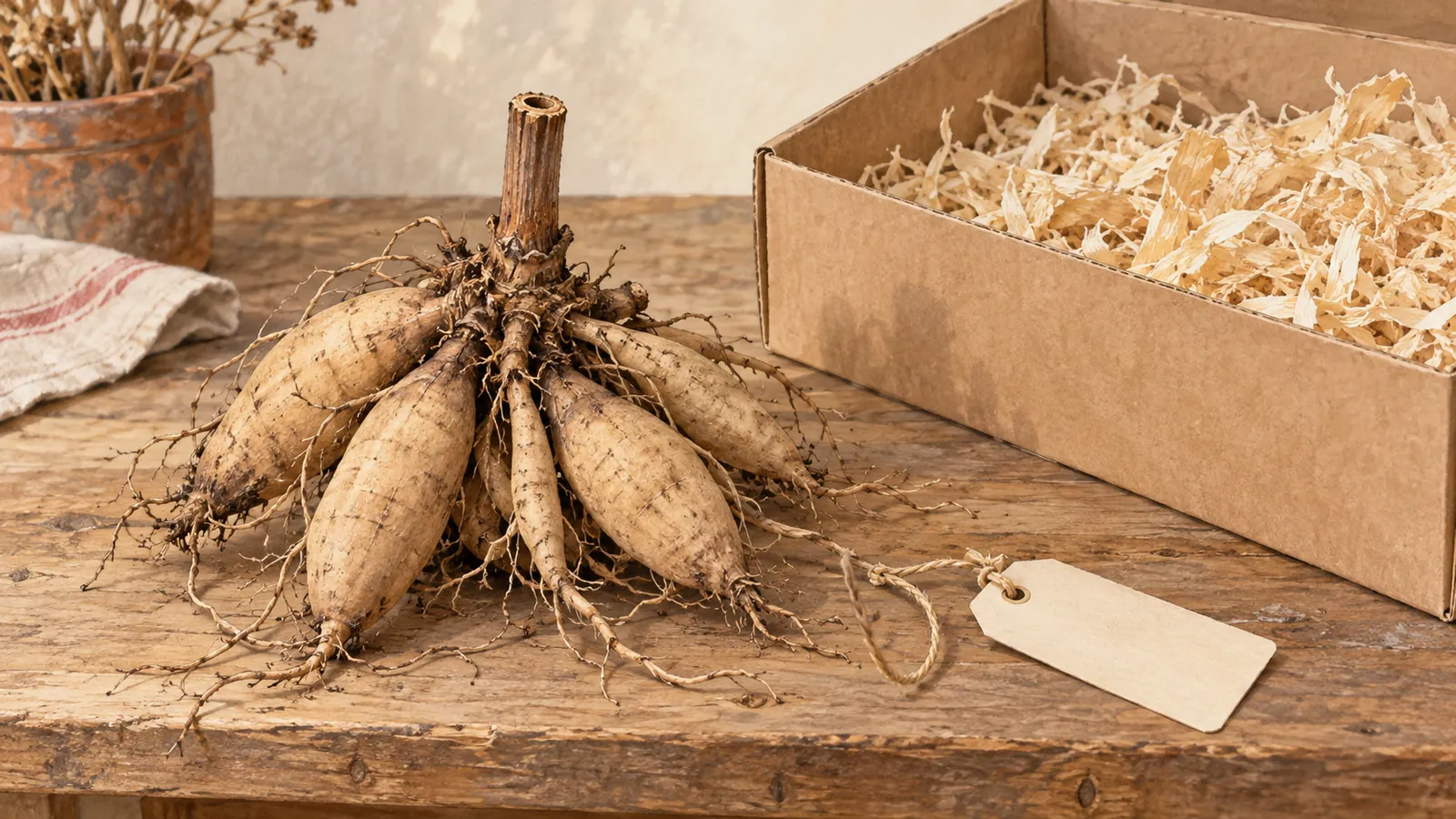
Before lifting your dahlias, decide where the tubers will spend the winter. A box is easy to find; a place that stays cool without freezing can be harder. The back of a garage may work in one home and freeze solid in another. Check the actual conditions before moving the plants out of the garden.
Dahlias form fleshy tuberous roots beneath the crown, the central area where the stems and roots meet. In cold climates, these clumps need protection from freezing. This is a different job from insulating hardy perennials in pots, and the tubers should not follow the autumn planting schedule used for spring-flowering bulbs.
Let your winter determine the plan
Where winters are mild and soil drains freely, leaving dahlias in the ground may be possible. The Royal Horticultural Society describes that option but warns that frost and wet winter soil can still cause losses. A warm regional label does not tell you whether water collects around a particular plant.
For a garden where the ground freezes, prepare to lift the clumps after frost has blackened the top growth, before severe cold threatens the roots. Follow your local forecast and extension guidance rather than a date borrowed from another climate. If several beds need attention, identify the exposed or difficult-to-reach ones while there is still time to work comfortably.
Keep a label with each variety. A photograph of a flower can help you decide which plants to save, but it is much less useful if you cannot match it to a clump after the stems are cut. Write labels before digging and move one plant at a time from the bed to its drying place.
Dig around the clump, then lift from below
Cut the frost-damaged stems back, leaving a short section you can see above the crown. The RHS suggests roughly 5–15 cm. Keep the clump together for storage and leave division until spring. There is no need to turn the lifting day into a separate propagation project.
University of Minnesota Extension advises loosening soil several inches away from the plant, working around it rather than driving a tool through the center. Start farther out if the clump appears large. Once it is loose, lift and support it from beneath instead of pulling hard on the remaining stem.
Work over a tray or a clear patch of ground so you can see what you have lifted. Set the clump down gently before carrying it away. If a root resists, loosen more soil rather than trying to free everything with one upward tug. The narrow connections between the swollen roots and crown deserve careful handling.
Clean and dry without forgetting them
Gently remove soil and rinse the clumps so you can inspect their condition. Do not scrub them as though you were cleaning a garden tool. Iowa State’s dahlia guidance recommends a gentle wash followed by drying before storage.
Set the clumps upside down initially so trapped moisture can drain from the cut stems. Choose a sheltered, ventilated place away from direct sun and drying wind. Minnesota recommends about 60–70°F for drying and gives dahlias a relatively short interval of one to three days, depending on conditions. Iowa State describes about a day; the RHS uses a longer inverted-drying approach. These are different routines, not successive waiting periods to add together.
With the washed-clump approach, check daily for a dry surface and drained stems. Do not pack visibly wet clumps, and do not keep extending the drying period after roots begin to shrivel. Spread them far enough apart that you can see each one and keep its label alongside it. A reminder to inspect tomorrow is more useful than assuming an unattended tray will be ready next weekend.
Pack for access as well as protection
Use a ventilated cardboard box or crate with clean packing material such as wood shavings or vermiculite. Illinois Extension recommends cushioning and separating stored roots so they do not touch. Fit the box to the number of clumps; cramming the last one into a narrow gap makes later inspection awkward.
Store them somewhere dark, frost-free and cool. Iowa State and Illinois give a target of about 40–50°F. Place a thermometer where the box will actually sit, and check it during cold spells. A temperature measured in the house does not describe an unheated corner beyond an exterior wall.
Keep labels readable above the packing, or make a simple box map if you have several varieties. Put the box where you can open it without moving a winter’s worth of stored belongings. Treat easy access as part of the storage setup, because the clumps will need another look before spring.
Inspect through winter
Check periodically for softness, decay or excessive shriveling. Illinois advises removing rotting material promptly so it cannot spread to neighboring stored roots. Do not bury a suspect clump deeper and hope the packing will fix it. Keep it apart from sound material while deciding what can be retained, and clean cutting tools between plants if you use them.
If otherwise sound tubers are shriveling, Illinois suggests lightly moistening the packing material. That is a small correction for drying, not an instruction to water every box on a schedule. Avoid making the contents wet, and check again to see whether the adjustment helped.
Record what you find on the box label: the inspection date, a cold spell, or a small moisture adjustment. By spring, that brief record will be more useful than trying to remember which clump looked dry in December. Keep the labels with the plants when you unpack them for the next growing season.
Sources
- How do I over-winter dahlias? (Iowa State University Extension and Outreach). Accessed September 28, 2026.
- Planting bulbs, tubers and rhizomes (University of Minnesota Extension). Accessed September 28, 2026.
- How to grow dahlias (Royal Horticultural Society). Accessed September 28, 2026.
- Give summer-blooming bulbs a second chance: Store them over winter (University of Illinois Extension). Accessed September 28, 2026.