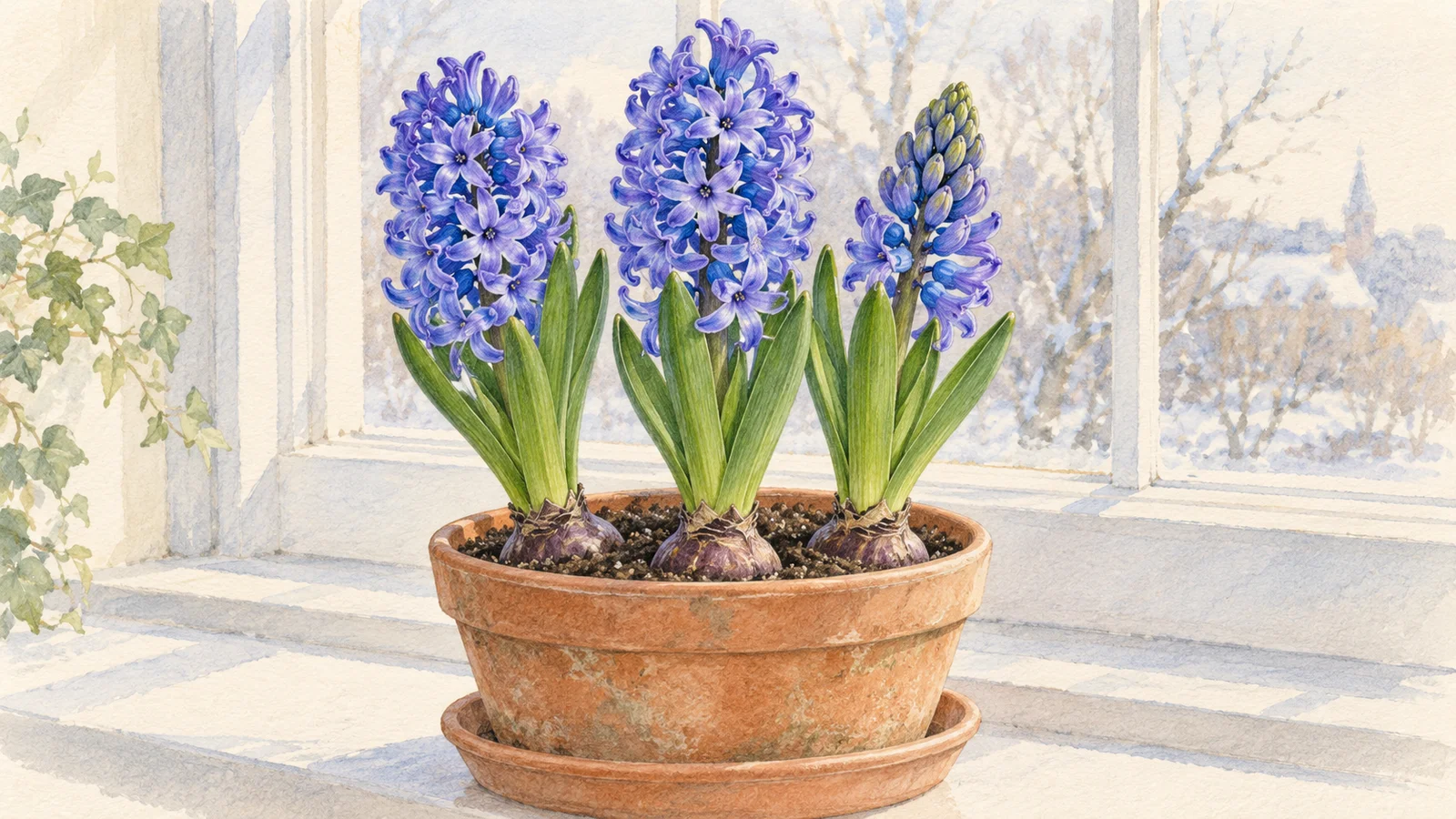
A pot of hyacinths begins with an unglamorous question: where can it stay cold for weeks? The windowsill comes later. Ordinary garden hyacinth bulbs need a cold period before they can produce a good indoor display, and a green shoot alone does not mean that work is finished.
This is a project to start in fall for winter flowers. Before buying bulbs, measure the temperature in the place you intend to chill them and check how much room a planted pot will occupy. A shelf that feels cool to your hand may still be much too warm.
Buy for the schedule you can provide
Choose firm, healthy bulbs sold for forcing, with no soft areas or obvious decay. “Forcing” means bringing a bulb into flower ahead of its normal outdoor season. Garden hyacinths are Hyacinthus orientalis, the plants with dense, fragrant flower spikes and fleshy basal leaves. Grape hyacinths are a different plant with a different schedule.
An ordinary bulb, a specially prepared bulb and a fully pre-chilled bulb are not interchangeable purchases. Ask what treatment has already been completed and what the supplier still requires. The University of Missouri’s forcing guide distinguishes regular fall potting from bulbs specifically prepared for earlier flowers. Keep those directions with the pot; the word “prepared” by itself is not a calendar.
For untreated bulbs, allow roughly three months of chilling plus several weeks to grow and flower indoors. Specific recommendations vary: Mississippi State lists 11 to 14 cooling weeks for hyacinths, while Iowa State’s general forcing method uses 12 to 15 weeks. Follow the bulb supplier’s cultivar instructions when available. Neither range promises flowers on an exact holiday.
If you cannot provide prolonged cold storage, a potted amaryllis bulb offers a different indoor-flower project without the same chilling requirement.
Keep bulbs away from the food supply
Hyacinths are not edible onions. NC State’s plant profile identifies poisoning and skin-irritation risks, with the highest toxin concentration in the bulbs. Wear gloves when handling them, wash your hands afterward, and keep bulbs, pots and discarded plant material away from children and pets.
Label any stored bulbs clearly. A dedicated cooling space is easier to manage than a crowded food refrigerator, especially in a household where someone might mistake a bulb for food. Also keep them away from ripening fruit: its ethylene can interfere with flower development. Do not put bulbs loose beside produce and hope the brown skin makes the difference obvious.
Pot with the tips showing
Use a container with drainage holes and a fresh, well-drained potting mix. Pick a pot deep enough to hold a useful layer of mix below the bulbs. For a first attempt, keep one cultivar in each pot so different flowering schedules do not complicate the display.
Moisten dry mix before filling. Set the bulbs upright with small gaps between them, then add mix around them while leaving the tips visible. Leave watering space below the rim. Do not screw or press the bulbs hard into the mix; their bases need room to develop roots. Water thoroughly and let excess water escape before putting the pot into storage.
Write the cultivar, potting date and intended earliest end of chilling on a label. If a supplier has already supplied a documented part of the cold treatment, record that too. A label attached to the pot stays useful when several containers look identical in a dark cupboard.
Cold storage still needs attention
Iowa State recommends 40 to 45°F for its potted-bulb method. Keep the pot dark, moist and protected from freezing. Check with a thermometer; an unheated garage may swing from warm afternoons to freezing nights, and a basement may never get cold enough.
Inspect the pot regularly and add water when needed to keep the mix from drying out. Drain it afterward rather than leaving it standing in a tray of water. Keep emerging shoots clear of shelves or stacked pots. Cold treatment is a growing stage for the roots, not dry storage of an empty ornament.
Near the end of the recommended period, look through the drainage holes for roots. Mississippi State emphasizes that top growth can appear before the root system is ready. Use both the completed cold period and root development to judge readiness; do not move a barely rooted bulb into warmth just because it has a promising green tip.
Bring the pot into spring gradually
Move the rooted pot first into a cool room with gentle light, then into a brighter position as the shoots green up. Keep it away from a radiator or heating vent. Missouri recommends a cool, bright window near 60°F and continued watering, with no fertilizer needed for this display.
Rotate the container periodically if growth leans toward the window. When the flowers open, cooler conditions help the display last. A warm room can produce weak stems or flowers opening low among the leaves; the Royal Horticultural Society recommends moving such plants somewhere cooler. A small support can help a heavy spike, but insert it beside the bulb rather than through it.
Water the mix carefully and empty the saucer. The fragrance can be strong, so choose a display spot with the people sharing the room in mind rather than assuming the bedside table is the best place.
After the flowers fade
Cut off the spent flower stalk while leaving sound leaves in place if you want to try saving the bulb. Do not expect another indoor performance from the same bulb next winter. Extension guides often recommend discarding forced hyacinths; the RHS allows trying them outdoors, with less certainty about future flowering.
If you keep a soil-grown bulb, maintain the foliage while it is green and reduce watering as it naturally dies back. An eventual garden planting needs a suitable climate and well-drained site; see the outdoor spring-bulb guide for that separate planting depth and plan. For your next indoor pot, start again with sound bulbs and the cold-storage dates on the label.
Sources
- How to Force Spring-Flowering Bulbs Indoors (Iowa State University Extension and Outreach). Accessed October 4, 2026.
- Forcing Bulbs for Indoor Bloom (University of Missouri Extension). Accessed October 4, 2026.
- Forcing Cold-Hardy Bulbs Indoors (Mississippi State University Extension). Accessed October 4, 2026.
- How to grow hyacinths (Royal Horticultural Society). Accessed October 4, 2026.
- Hyacinthus orientalis (North Carolina Extension Gardener Plant Toolbox). Accessed October 4, 2026.