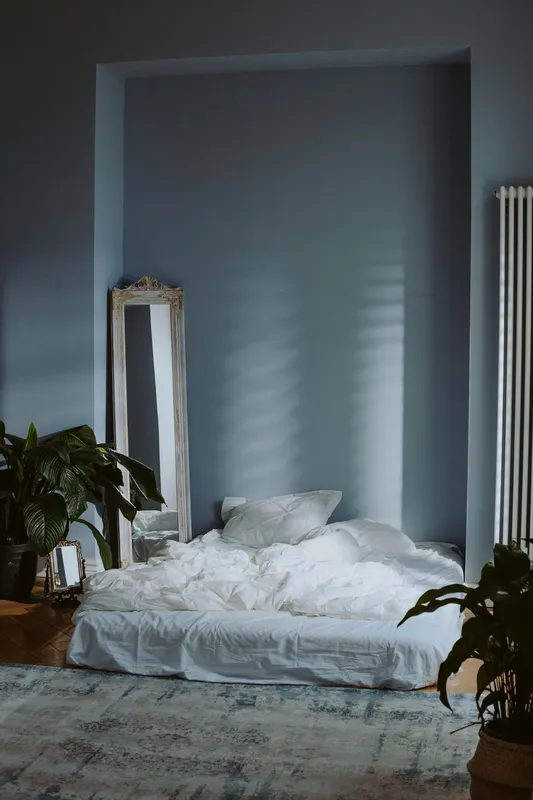
The best houseplant for a bedroom is one that fits the light at its permanent location, stays secure on its surface, matches the available care time, and can be kept away from children or animals likely to pull, chew, or spill it. Choose in that order. A plant selected for a dim corner, then placed beside a sunny window, may scorch; a plant labeled “low light” still cannot live indefinitely without light.
Check the room during daylight with curtains and blinds in their usual positions. A bedroom kept dark for sleep may provide little useful light once morning shades remain closed. Set the pot near the available window, not wherever an empty nightstand happens to be. Then consider watering burden and whether a dropped pot, trailing vine, or chewable leaf creates a household risk.
Quick bedroom plant choices
| Bedroom conditions | Suitable starting choice | Care burden | Pet note |
|---|---|---|---|
| Low to medium indirect light | Cast iron plant | Low | ASPCA lists it as non-toxic to cats and dogs |
| Medium to bright indirect light | Parlor palm | Moderate | ASPCA lists it as non-toxic to cats and dogs |
| Medium to bright indirect light with room for arching leaves | Spider plant | Moderate | ASPCA lists it as non-toxic to cats and dogs |
| Low to bright indirect light and infrequent watering | Snake plant | Low | Toxic to cats and dogs if eaten |
| Medium indirect light with space for a trailing vine | Golden pothos | Low to moderate | Toxic to cats and dogs if eaten |
“Low light” means a plant may maintain itself and grow slowly under limited indirect daylight. It does not mean darkness. University of Georgia Cooperative Extension calls light the most important factor for indoor plant growth and explains that light intensity changes sharply with window direction, distance, curtains, and outdoor obstructions.
Match the plant to the room
Cast iron plant for the lowest-care option
Cast iron plant (Aspidistra elatior) is a strong fit when the bedroom has low indirect light and the goal is a slow-growing floor or dresser plant. NC State Extension describes it as tolerant of deep shade, drought, and indoor conditions, while warning that direct sun can bleach or burn its leaves. Let the potting mix lose some moisture before watering rather than keeping it continuously wet.
This plant is also useful in a home with roaming animals: the ASPCA lists cast iron plant as non-toxic to cats and dogs. “Non-toxic” does not make leaves food, however, and eating plant material can still cause stomach upset or damage the plant. Place it where chewing is unlikely.
Parlor palm for a softer, upright shape
Parlor palm (Chamaedorea elegans) suits medium indirect light and brings height without a rigid silhouette. Keep it out of hot direct afternoon sun, use a pot with a drainage hole, and check the mix before watering. It is less drought-tolerant than cast iron plant, so it suits someone willing to inspect it regularly rather than follow a fixed calendar.
The ASPCA parlor palm profile lists it as non-toxic to cats and dogs. Confirm the botanical name on the nursery label, because unrelated plants sold with “palm” in a common name can have different safety profiles.
Spider plant for a pet-safer hanging or shelf plant
Spider plant (Chlorophytum comosum) works in medium to bright indirect light. Its arching leaves and dangling plantlets need clearance, so use a broad, stable shelf or a properly anchored hanging planter rather than a narrow ledge above the bed. Check the soil rather than watering automatically; a cooler, dimmer bedroom usually dries more slowly than a bright living area.
The ASPCA spider plant profile lists it as non-toxic to cats and dogs. Cats may still be attracted to the grassy leaves, making an inaccessible position preferable.
Snake plant when watering needs to stay infrequent
Snake plant (Dracaena trifasciata, often sold as Sansevieria trifasciata) tolerates a range of indirect light and stores water in thick leaves. It is more likely to fail from persistently wet soil than from a short dry interval. Use a draining mix and pot, and wait until the mix has dried substantially before watering.
This is not the best choice where pets chew foliage. ASPCA lists snake plant as toxic to cats and dogs, with nausea, vomiting, and diarrhea among possible signs after ingestion. A high shelf is not a reliable control for a climbing cat or a child who can move furniture.
Pothos when a trailing plant is practical
Golden pothos (Epipremnum aureum) is adaptable, but it grows better and retains stronger variegation with useful indirect light. In a very dim location, growth slows and the potting mix stays wet longer. Let part of the mix dry, empty the saucer after watering, and trim or support vines before they reach lamps, outlets, or a sleeping area.
ASPCA identifies golden pothos as toxic to cats and dogs because its insoluble calcium oxalates can cause oral irritation, drooling, vomiting, and difficulty swallowing. Skip it when secure separation is uncertain.
Bedroom plants do not clean the air at practical numbers
The air-cleaning claim usually comes from small sealed-chamber experiments, not occupied bedrooms with normal air exchange. An analysis by Cummings and Waring converted earlier laboratory results into clean-air delivery rates. It concluded that roughly 10 to 1,000 plants per square meter of floor area would be needed to match the pollutant removal already provided by typical building ventilation.
The U.S. Environmental Protection Agency likewise says a reasonable number of houseplants does not remove significant quantities of indoor pollutants. For indoor air concerns, prioritize source control, outdoor-air ventilation when conditions allow, and appropriate filtration. Avoid chronically wet potting mix; the EPA notes that overwatered plant soil can support microorganisms that affect sensitive people.
The available evidence does not support treating one or two bedroom plants as a ventilation or air-quality intervention. Choose them for fit and appearance, not as substitutes for source control, ventilation, filtration, or medical care.
A plant is decoration, not a sleep treatment
The National Heart, Lung, and Blood Institute recommends a quiet, cool, dark sleep environment along with a consistent schedule and other established habits; it does not present houseplants as a sleep treatment. A plant can make a room feel pleasant, but it should not interfere with darkness, airflow, or a clear path around the bed.
If fragrance or damp potting mix is a known personal trigger, choose an unscented plant and avoid standing water or chronically wet soil. New or worsening sleep problems deserve advice from a qualified health professional rather than a plant purchase.
Place and maintain the plant safely
- Put pots on stable furniture that can carry their wet weight. Use a watertight saucer and remove drainage water promptly.
- Keep plants, hanging hardware, and glass containers out of the fall zone above a bed or crib.
- Do not let leaves touch hot lamps, radiators, or cold window glass. Keep vines away from cords and outlets.
- Treat an unknown plant as potentially unsafe until its botanical identity is confirmed. Common names can refer to several species.
- Recheck soil moisture at root depth before watering. Lower light and cooler temperatures usually slow water use.
- Wipe broad leaves periodically and inspect stems and leaf undersides for pests before moving a plant beside the bed.
A practical bedroom choice is therefore simple: measure the available light, choose the safest species that fits it, provide a secure position, and select a care burden the household can sustain. Air-cleaning and sleep promises should not decide the purchase.
Sources
- Growing Indoor Plants with Success (University of Georgia Cooperative Extension). Accessed August 24, 2026.
- Potted plants do not improve indoor air quality: a review and analysis of reported VOC removal efficiencies (Journal of Exposure Science & Environmental Epidemiology). Accessed August 24, 2026.
- Improving Indoor Air Quality (U.S. Environmental Protection Agency). Accessed August 24, 2026.
- Sleep Deprivation and Deficiency – Healthy Sleep Habits (National Heart, Lung, and Blood Institute). Accessed August 24, 2026.
- Aspidistra elatior (NC State Extension). Accessed August 24, 2026.
- Cast Iron Plant (ASPCA Animal Poison Control Center). Accessed August 24, 2026.
- Spider Plant (ASPCA Animal Poison Control Center). Accessed August 24, 2026.
- Snake Plant (ASPCA Animal Poison Control Center). Accessed August 24, 2026.
- Golden Pothos (ASPCA Animal Poison Control Center). Accessed August 24, 2026.
- Parlor Palm (ASPCA Animal Poison Control Center). Accessed August 24, 2026.