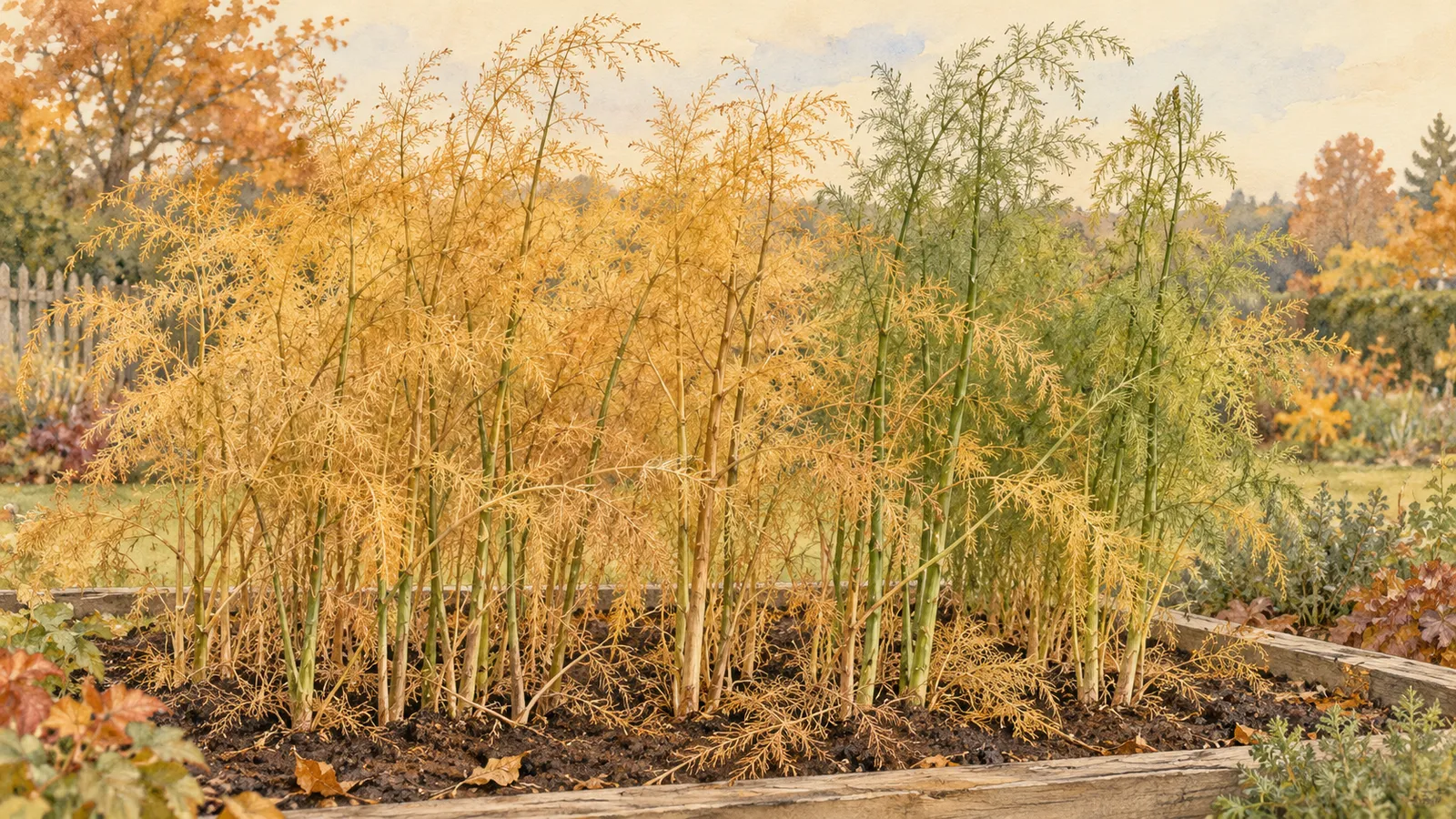
An asparagus bed can look ready for winter cleanup while its green ferns are still working. Resist cutting them simply because the tomatoes are gone or the rest of the vegetable garden is bare. Those tall, feathery stems help supply the underground crown with reserves for next year’s spears.
Wait until the ferns have turned fully yellow or brown before removing them. After that, you can choose between autumn cleanup and leaving the dead stems to catch winter snow. The best choice depends on your bed’s pest history and local conditions, not a single date on the calendar.
This guidance is for established edible asparagus, Asparagus officinalis, growing outdoors. The houseplants sold as asparagus ferns need different care.
Green stems still have a job
Once asparagus harvest ends, the shoots grow into ferny stems. That summer and autumn growth supports the next crop. University of Minnesota Extension’s harvest guidance says to leave the ferns until they are completely yellow or brown, when the plants have entered dormancy.
A few yellow branches among green ones do not mean the whole bed is finished. Walk along the row and look at the plants themselves. Let healthy green growth remain, even if neighboring crowns have already changed color. A cold forecast is also not the same thing as fully dormant foliage.
If the bed browns unusually early, especially with spotted or damaged stems, do not assume autumn has simply arrived ahead of schedule. Make a note and take clear photographs of the whole plant and affected growth. A local extension office can help distinguish seasonal decline from a problem that deserves attention during the next growing season.
Decide what the old ferns are doing for your bed
There are good reasons for both autumn and spring removal:
- A bed with asparagus beetles or diseased ferns benefits from prompt cleanup once dormant. Minnesota Extension explains that old growth and debris can shelter beetles through winter. Its pest-management guidance also identifies old fern tissue as a source of purple-spot infection.
- A healthy bed in a snowy climate may benefit from standing stems over winter. Iowa State Extension recommends leaving dead tops to help hold snow, which insulates the crowns. The stems must then come out before new spears emerge.
Illinois Extension makes a similar distinction for asparagus rust: removing tops after freezing can reduce carryover, while spring removal is an option where rust is not present. Rust history matters more than a desire to make every garden bed look equally tidy.
If snow arrives before the ferns finish browning, wait rather than cutting them green to beat the weather. Plan to remove the old growth when the bed is accessible in early spring, before the new crop starts. Where local asparagus behavior differs from these cold-winter examples, use your extension service’s timing advice.
Cut and carry; leave the crowns in place
When removal time comes, wear gloves and use clean pruning shears to cut the dead stems near ground level. Work from the path when you can. Gather the stems as you go so brittle fragments do not spread across the bed.
The underground crowns are staying for another year. Do not pull on a tough stem until the crown lifts, dig through the row to remove its base, or turn the bed over as though it were an annual crop. Hand removal is a more controlled job in a small garden than trying to till old foliage into the soil.
Take the cut material out of the asparagus bed. If it carried disease or substantial pest damage, use an appropriate local plant-waste disposal route rather than laying it back over the crowns as mulch. Removing residue reduces a source of trouble; it does not promise that beetles or disease will never return from elsewhere.
For a spring cleanup, look closely for emerging spears before each cut. If growth has already started, slow down and remove individual dead stems around it. Do not mow blindly through the row.
Keep autumn care modest
While the ferns remain green, check the soil during dry spells. Asparagus is not finished needing moisture simply because you have stopped harvesting. Minnesota’s home-garden guide explains that established plants still benefit from water during dry periods. Check beneath the surface before watering; a wet bed does not need another soaking.
Pull small weeds carefully, without deep cultivation through the crown area. If green ferns lean into a walkway, support them rather than cutting them to clear the path. The Royal Horticultural Society’s asparagus guide recommends support for tall fern growth, careful hand weeding and organic mulch in late winter to help manage weeds and moisture.
Do not add fertilizer merely because the stems are turning yellow. Minnesota recommends basing established-bed fertility on soil tests, with feeding timed for early spring or after harvest when needed. An autumn vegetable-garden soil test can inform that decision without requiring you to apply everything immediately. If you plan to use homemade compost later, check that it is finished and ready for the bed.
If you leave the ferns standing, put spring removal on your garden calendar now. Set the reminder before asparagus usually emerges in your garden, and move it earlier if the season warms quickly. The useful deadline is new growth, not a particular weekend in March or April.
Sources
- Harvesting asparagus (University of Minnesota Extension). Accessed October 31, 2026.
- Asparagus pest management (University of Minnesota Extension). Accessed October 31, 2026.
- When can I cut back my asparagus foliage? (Iowa State University Extension and Outreach). Accessed October 31, 2026.
- Asparagus (Illinois Extension). Accessed October 31, 2026.
- Growing asparagus in home gardens (University of Minnesota Extension). Accessed October 31, 2026.
- How to grow asparagus (Royal Horticultural Society). Accessed October 31, 2026.