Recipes
Tamago Sando: A Soft Japanese Egg Sandwich
Make two soft egg-salad sandwiches with fully cooked eggs, Japanese-style mayonnaise and a thin butter layer, then keep them cold for lunch.
Jump to recipe ↓Recipe
- Total time
- About 35–45 minutes
- Method
- Boil, cool and assemble
- Difficulty
- Easy
- Allergens
- Egg · Wheat · Milk
About 2 sandwiches (4 triangular halves)
Allow about 35–45 minutes, including cooling; timing and yield are estimates. Contains egg, wheat and milk; check mayonnaise and bread for other allergens. Use fully cooked eggs and keep the sandwiches refrigerated until serving.
Equipment: Saucepan, slotted spoon, bowl of ice water, mixing bowl, fork, measuring spoons, knife, cutting board and covered food container.
Ingredients
- 4 large refrigerated eggs, shells intact
- 4 tablespoons commercially prepared Japanese-style mayonnaise
- 4 slices soft shokupan or white sandwich bread
- 2 teaspoons softened butter, or enough for a thin layer
- Salt and ground black pepper, to taste
- Water to cover the eggs by 1 inch, plus ice and cold water for cooling
Method
Set out the cooling bowl
Wash hands and clean the work surface and utensils. Fill a bowl with ice and cold water. Place the eggs in a saucepan in one layer and add water to cover by 1 inch. Wash hands again after handling the shells.
Convert a measurement for this stepHard-cook the eggs
Bring the water to a boil over medium heat. Once boiling, cook for about 12 minutes, adjusting the heat to prevent violent bouncing or a boil-over. Stay near the stove and keep the eggs submerged. Turn off the burner and use a slotted spoon to move the eggs into the ice water.
Convert a measurement for this stepCool before peeling
With the burner off, keep the eggs in ice water until completely cool, adding ice as needed. Check after about 10 minutes: peel and cut one egg. Its center should be cool and both yolk and white fully firm. Continue cooling if warm. If undercooked, finish cooking until firm and cool again before making the filling.
Convert a measurement for this stepMash and season
Cut the remaining eggs and check that their yolks and whites are also firm. Mash all the eggs with a fork into small pieces. Stir in the mayonnaise, then taste and add salt and pepper as needed.
Convert a measurement for this stepFill and cut
Spread a thin layer of butter on one side of each bread slice. Divide the filling between two slices, spread to the edges, and close with the other slices buttered-side down. Press lightly. Trim crusts if you like, then cut diagonally.
Convert a measurement for this stepServe or keep cold
Serve now or cover and refrigerate promptly at 40°F (4°C) or below. Use refrigerated egg salad within three to four days of making it. Discard sandwiches left unrefrigerated for more than two hours, or one hour above 90°F (32°C). Carry them in an insulated bag with frozen packs.
Convert a measurement for this step
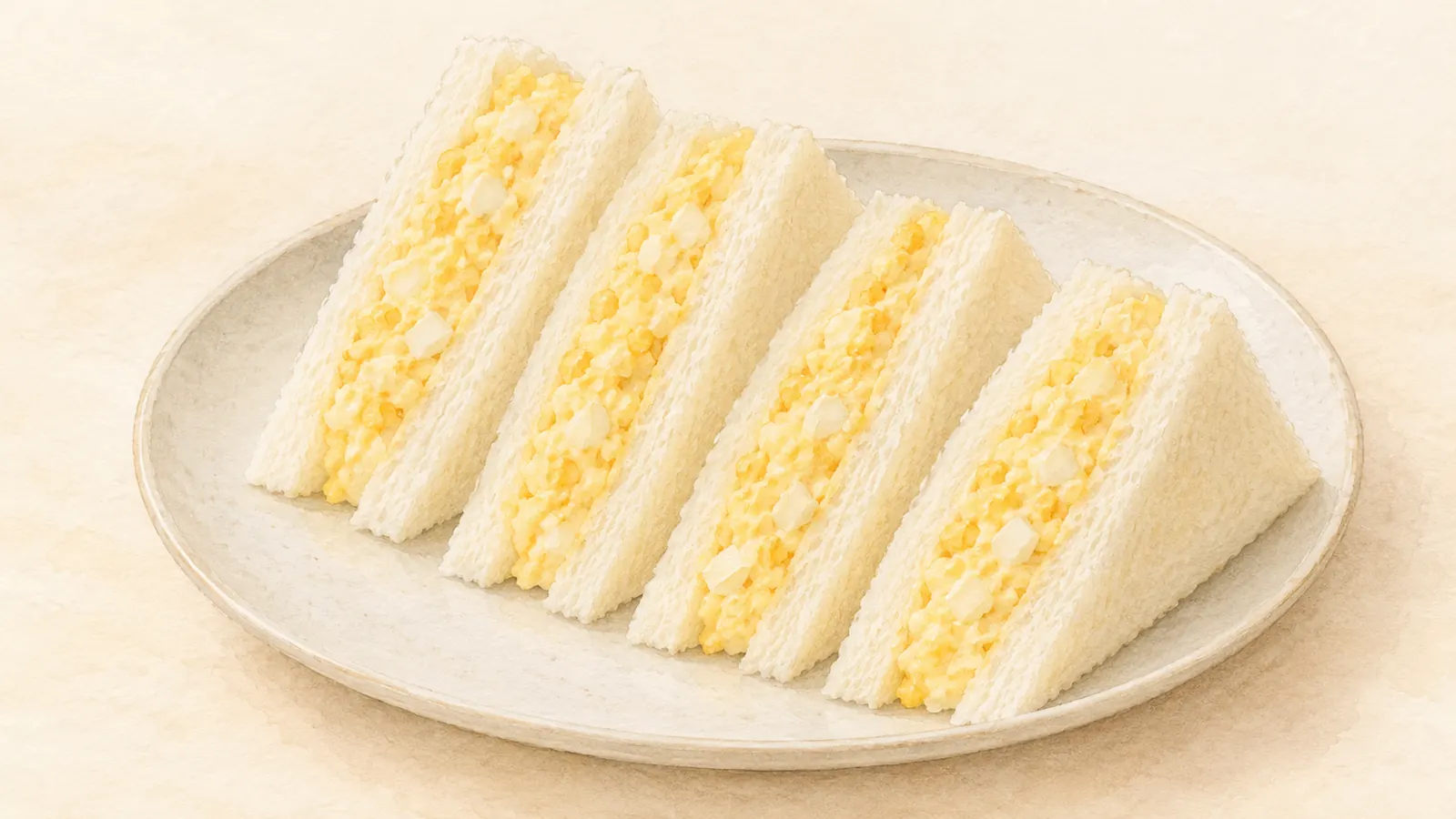
A tamago sando should be easy to bite through: soft bread, small pieces of egg white and a filling that stays where you spread it. This Japanese egg-salad sandwich needs no lettuce or extra layers. Put the effort into the filling, then keep the finished sandwiches cold until lunch.
Soft bread, a little tang
Shokupan, Japanese milk bread, gives this sandwich its tender bite. Plain soft white sandwich bread also works. A tough crust and a chewy loaf pull against the filling; trimming the crusts is optional, but soft bread matters more than a perfect triangle.
Choose commercially prepared Japanese-style mayonnaise for a tangy filling. Regular mayonnaise is a workable substitution with a different flavor. Check the bread and mayonnaise labels for allergens as well as the eggs and butter in the recipe. There is no need to buy a particular brand.
Keep the filling spreadable
Mash until the whites are small enough to distribute through the yolks. Large slippery chunks make the sandwich harder to cut. Add the mayonnaise before deciding whether the filling needs more salt. If you prefer a coarser egg salad, leave a few small pieces of white rather than beating everything into a paste.
The card uses four eggs for two generously filled sandwiches. Divide the filling between the bread slices before adding the tops so the portions stay even. Set up a stable board for cutting; the cutting-board guide covers grip and working space.
If lunch is later
Refrigerate the sandwiches promptly in a covered container at 40°F (4°C) or below. For the softest bread, assemble close to serving; you can keep the egg salad covered separately. FoodSafety.gov gives refrigerated egg salad a three-to-four-day limit. Making a sandwich does not restart the storage clock for older filling.
For travel, use an insulated lunch bag with frozen packs and refrigerate on arrival when possible. Discard sandwiches left unrefrigerated for more than two hours, or one hour above 90°F (32°C). Butter helps protect the bread’s texture; it does not make an egg sandwich safe at room temperature.
Recipe references
The filling and soft-bread assembly draw on Noriko and Yuko's tamago sando at Japanese Cooking 101 and Namiko Hirasawa Chen's egg sandwich at Just One Cookbook. The card keeps the seasoning simple and uses fully set yolks.
Safe handling follows the FDA’s egg guidance and FoodSafety.gov’s cold-storage chart.