Kitchen skills
Set Up a Cutting Board Before the Knife Comes Out
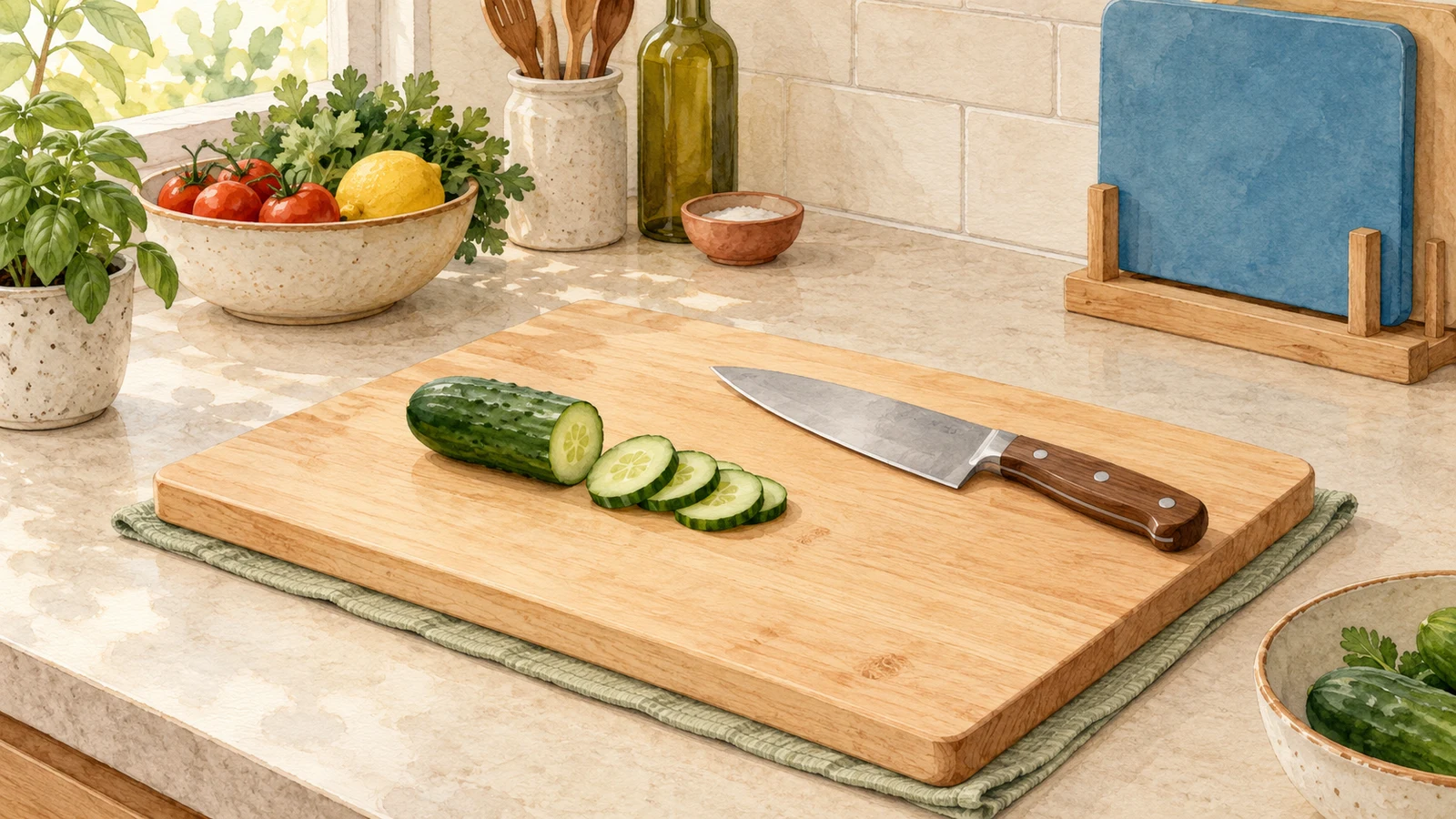
A cutting board that slides when you push a cucumber across it needs attention before you pick up the knife. So does a board that has just held raw chicken, even if the juices are barely visible. Set up a steady work surface, give ready-to-eat food its own clean space, and plan where the used equipment will go.
Make the board stay put
Clear enough counter space for the whole board to sit flat. Place a clean, damp kitchen towel or a suitable nonslip mat underneath, smooth out any lumps, and press against the board with the knife still set aside. If it moves or rocks, fix the support before cutting. Illinois Extension’s cutting-tool guidance recommends a damp towel to prevent sliding.
Choose a board large enough for the food and your working hand. Transfer finished pieces into a clean bowl as you go instead of letting them crowd the cutting area. For a long ingredient such as a leek, make sure it fits before starting; the leek preparation guide explains how to open and wash its layers.
Keep the knife on the board when setting it down, with the handle safely inside the counter edge. Put scraps in a separate container. A towel used under the board is part of this work area: replace it if soiled, and do not use it to dry clean dishes afterward.
Give garnishes a separate route
The FDA recommends separate boards for fresh produce and raw meat, poultry or seafood. Keep cooked food and ready-to-eat ingredients away from the raw-food board, too. Different colors can help everyone in the kitchen remember the arrangement, but color does not make an unwashed board clean.
For a stir-fry, cut the washed vegetables and the scallions you will scatter over the finished dish first. Transfer them to clean bowls away from the raw-meat area. Then prepare the meat on its separate board. Keep the garnish bowl out of reach of meat juices, and wash the knife and your hands before touching it again. The beef-slicing guide covers the direction of the cut once that setup is ready.
If you have only one board, complete the produce preparation and move it aside before handling raw meat. Before that board touches ready-to-eat food again, wash and sanitize it. Flipping it over or wiping away visible juice is not an adequate reset: the counter, hands and board edges may also have been contaminated.
Wash hands with soap for at least 20 seconds before and after handling food. Rinse fresh produce under running water before cutting, including produce you will peel. Wash the board, knife and other contacted equipment between food items.
Wash first, then sanitize
Illinois Extension’s board guidance calls for hot, soapy washing and a sanitizing step after raw meat. Cleaning removes food and grease; sanitizer belongs on an already cleaned surface.
- Scrape food scraps into the waste container. Wash the board with dish soap and hot water, scrubbing the surface and edges. Clean the knife, worktop and any other surfaces the raw food touched.
- Rinse away the soap and loosened debris.
- Apply a sanitizer labeled for food-contact surfaces and suitable for the board. Follow that product’s dilution, required wet contact time, safety precautions and rinsing directions exactly. A quick spray followed immediately by wiping may not provide the required contact time.
- Let the board dry fully before storing it. A rack that exposes both faces is useful; do not stack boards while damp.
University of Minnesota Extension explains why sanitizer strength and contact time matter. Do not substitute a general household disinfectant without food-contact directions, and never mix cleaning chemicals or sanitizers together. Bleach concentrations differ, so use the applicable label rather than guessing a splash-to-water ratio.
Keep the board easy to clean
Wood and plastic both need care. Choose a food-safe board you can clean properly and check its manufacturer’s instructions before putting it in a dishwasher. Do not soak a wooden board in the sink. University of Maine Extension notes that glued wood sections can split and that moisture can warp wood; it also recommends drying boards with airflow around them.
Replace a board with deep grooves, cracks or wear that prevents thorough cleaning. Run a visual check while putting it away, when no food is covering the surface. The next meal should start with a clean, dry board that sits firmly on the counter.