Recipes
Kabocha Simmered in a Light Soy Broth
Simmer skin-on kabocha in a light soy-and-dashi broth, check for tender centers, and rest it off the heat before serving. Includes a guided cooking card.
Jump to recipe ↓Recipe
- Total time
- About 60–75 minutes, including a 30-minute rest
- Method
- Simmer
- Difficulty
- Moderate
- Allergens
- Soy · Wheat may be present in soy sauce · Fish may be present in dashi
4 small side portions
Allow roughly 60–75 minutes, including a 30-minute off-heat rest; cutting and simmering time will vary. Contains soy; soy sauce may contain wheat and dashi may contain fish. This recipe includes sake.
Equipment: Stable cutting board, sturdy sharp knife, spoon, measuring jug and spoons, medium saucepan about 18–22 cm wide with a lid, cooking parchment and scissors, skewer, broad serving spoon and heatproof surface.
Ingredients
- 450 g kabocha squash, weighed after removing seeds and stringy pulp, skin on; buy a halved or quartered piece if a whole squash is difficult to cut safely
- 350 ml prepared dashi at drinking strength, not undiluted concentrate
- 2 teaspoons regular soy sauce
- 1 tablespoon sake
- 2 teaspoons granulated sugar
- Water as needed to adjust the liquid level
Method
Wash and cut the squash
Wash hands with soap for 20 seconds. Scrub the squash under running water with a clean produce brush and dry it; do not use soap on the squash. Scoop out seeds and stringy pulp. Set a cut piece flat-side down on a stable board and cut into roughly equal 4–5 cm chunks, keeping the skin. Do not force a knife through a piece you cannot hold securely; use a safely precut portion instead.
Convert a measurement for this stepFit one layer and add the broth
With the saucepan cold, cut a parchment circle slightly smaller than its interior and snip a small steam vent in the center. Mix the dashi, soy sauce, sake and sugar in the pan. Arrange the squash skin-side down in one layer. Liquid should reach about three quarters of the way up the pieces; add a little water if needed. If the pan leaves large empty spaces or requires stacking, change to a better-fitting pan.
Convert a measurement for this stepBring to a gentle simmer
Bring the liquid just to a boil, then reduce the heat to a gentle simmer. Lay the parchment directly over the squash as a drop lid, keeping it entirely inside the pan and away from flames. The pieces should sit quietly while the broth bubbles gently. Do not stir or shake them around.
Convert a measurement for this stepSimmer until a skewer slides in
Start the first-check timer once the broth is gently simmering. Stay nearby and watch the liquid; add a small splash of hot water if the pan is getting dry. Lift the parchment carefully to test the thickest pieces. Continue simmering and recheck after a few minutes if they are still firm.
Convert a measurement for this stepTurn off the burner and rest in the broth
Once the squash is tender, turn off the burner and place the pan on a heatproof surface. Carefully remove the parchment and cover with the saucepan's regular lid. Start the 30-minute rest with the heat off; keep the squash in its broth.
Convert a measurement for this stepLift gently and serve
Use a broad spoon to lift the tender pieces into small bowls with a little broth. Refrigerate leftovers in shallow containers within two hours of finishing cooking, or one hour above 90°F (32°C); the rest counts toward this time. Keep at 40°F (4°C) or below, use within 3–4 days and reheat leftovers to 165°F (74°C).
Convert a measurement for this step
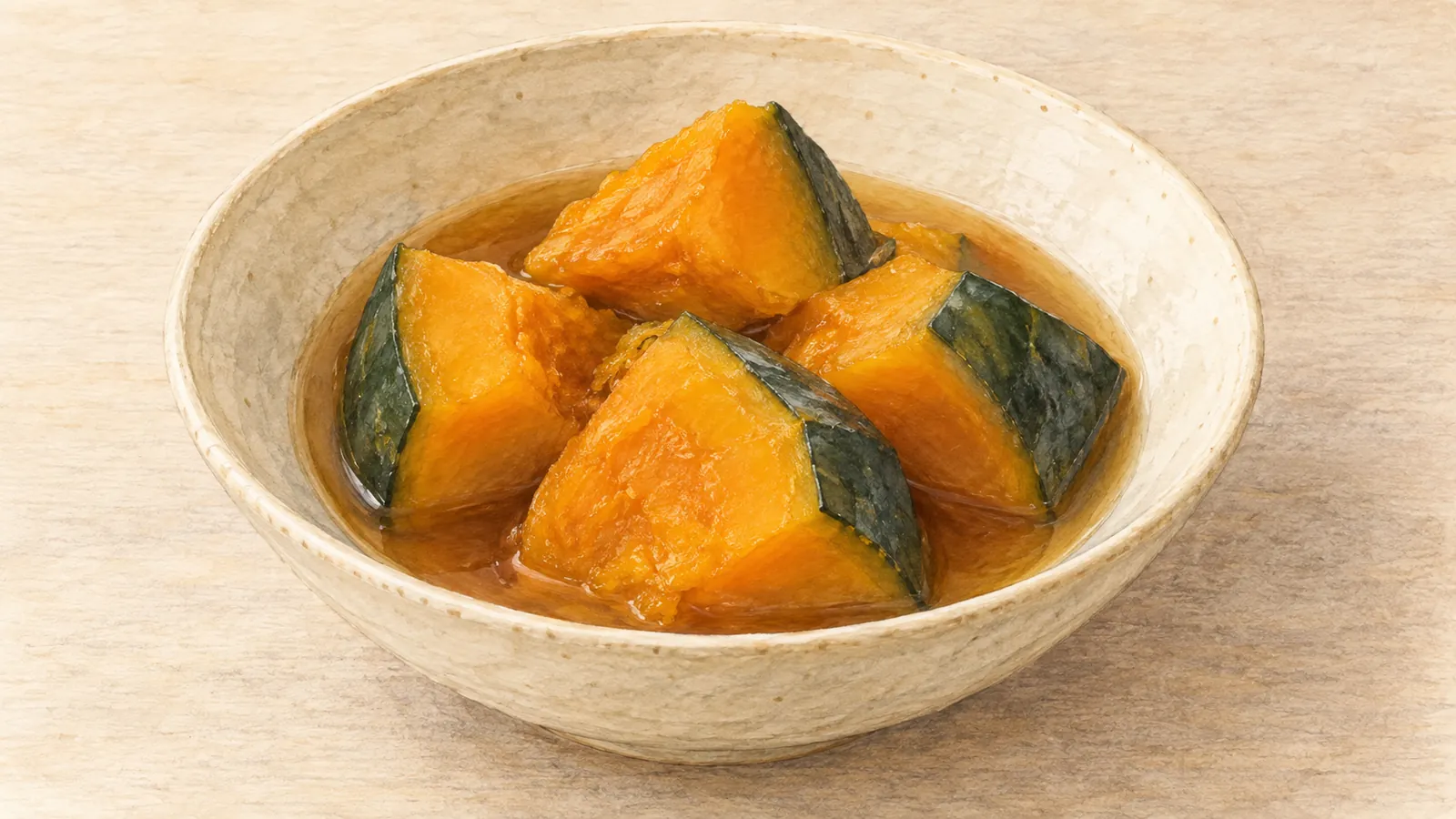
A few tender pieces of kabocha can hold their own beside rice and a savory main dish. The orange flesh is naturally sweet; a light soy-and-dashi broth gives it a salty edge without turning the bowl into soup. Leave the dark rind on so each piece has a little structure as it softens.
This is kabocha no nimono, a Japanese simmered side. Serve a small portion with teriyaki salmon or another main you can finish after the squash comes off the heat. The covered rest gives you that opening in the meal.
Choose the squash and the pan together
Kabocha’s firm flesh makes cutting the most demanding part of this dish. A halved or quartered piece is a sensible purchase if you cannot safely steady a whole squash. Leave the rind attached, but remove the seeds and stringy center before weighing your portion. Keep refrigerated precut squash cold until preparation.
The saucepan should hold the chunks in one fairly snug layer. A wide skillet spreads the broth too thin; a narrow pot stacks pieces on top of each other. Set out the cut squash and check the fit before heating anything. The listed stock quantity is a starting amount, with the height of the liquid providing the useful check.
Keep the seasoning light
Use prepared dashi at the strength you would serve in a broth. A concentrated liquid or powdered stock needs dilution according to its package before you measure it. Dashi made with bonito contains fish; choose a clearly labeled plant-based dashi if that matters for your meal. Check soy sauce for wheat as well as soy.
There is no need to reduce the liquid to a sticky glaze. Spoon a little around the finished squash and leave the rest in the pan. If a piece breaks when lifted, use a broader spoon for the next one rather than stirring the batch to rearrange it.
The method draws on Namiko Hirasawa Chen's simmered kabocha and Japanese Cooking 101's kabocha no nimono. This smaller batch uses prepared dashi, light seasoning and a covered rest; its timing is an estimate, with a skewer check deciding when the squash is tender.
Keep the rest within dinner time
Wash the outside before cutting, even where the knife will later remove a section: FDA produce guidance recommends running water and a clean brush for firm produce. The recipe card includes that preparation and the complete cooking sequence.
The half-hour rest is not a reason to leave the pan out all evening. Maryland Extension recommends prompt refrigeration in shallow containers and using leftovers within three to four days. FoodSafety.gov gives 165°F as the reheating temperature for leftovers. Save the broth with the squash so you have a little liquid in the pan when reheating.