Recipes
Gamjajeon: Small Potato Pancakes with Crisp Edges
Grate potatoes, save their starch and pan-fry small Korean potato pancakes. Includes a soy-vinegar dip, cooking cues and a complete recipe.
Jump to recipe ↓Recipe
- Total time
- About 35–45 minutes
- Method
- Pan-fry
- Difficulty
- Moderate
- Allergens
- Soy · Wheat in regular soy sauce
About 16 small pancakes, or 4 snack portions
Allow about 35–45 minutes, including starch settling and frying in batches. Yield and timing are estimates. Contains soy and usually wheat in regular soy sauce. Stay at the stove during frying.
Equipment: Fine grater, peeler, clean produce brush, strainer, two mixing bowls, small sauce bowl, measuring spoons, 10–12-inch nonstick skillet, spatula and clean serving plate; food thermometer for reheating.
Ingredients
- 680 g (1½ lb) potatoes, weighed before peeling
- 2 tablespoons finely grated onion (from about ¼ small onion)
- ¼ teaspoon fine salt
- 3 tablespoons neutral cooking oil, divided, plus up to 1 tablespoon if the pan needs it
- 1 tablespoon regular soy sauce
- 1 teaspoon unseasoned rice vinegar
- 1 tablespoon water for the dip; running water for rinsing produce
Method
Clean, measure and mix the dip
Wash hands with soap for 20 seconds. Scrub the potatoes under running water without soap, then peel. Peel the onion. Mix the soy sauce, vinegar and 1 tablespoon water in the small bowl. Measure the salt and oil. Keep the burner off.
Convert a measurement for this stepGrate and catch the liquid
Grate 2 tablespoons onion into a mixing bowl. Set the strainer over the second bowl and finely grate the potatoes into it. Let the juice drain, pressing gently. Keep the cloudy liquid below. Mix the drained potato with the onion.
Convert a measurement for this stepLet the starch settle with the stove off
Set the bowl of drained liquid on the counter without stirring it. Leave it undisturbed for about 10 minutes, until a dense white starch layer is visible at the bottom. Keep the burner off while the starch settles.
Convert a measurement for this stepReturn the starch to the potato
Carefully tip away the watery layer, leaving the white starch in the bowl. Scrape that starch into the potato and onion. Add the salt and mix. Do not add the discarded water back.
Convert a measurement for this stepPan-fry thin discs in batches
Heat 1 tablespoon oil in the skillet over medium heat. Spoon in portions and flatten each to about 8 cm (3 inches) across and 5 mm thick, with room between them. Cook until the underside is golden and releases with a spatula, roughly 2–3 minutes. Turn carefully and brown the other side. Stay at the pan and lower the heat if the surface darkens too fast.
Convert a measurement for this stepCheck the center and finish the batches
Cut the first pancake through the center: it should be soft and cooked through, without hard raw potato bits. Continue gently cooking if needed. Transfer finished pancakes to the clean plate. Repeat with the remaining mixture, adding oil between batches as needed. Keep all pancakes thin; do not use browning alone as the doneness check.
Convert a measurement for this stepTurn off the heat and serve
Switch off the burner and serve hot with the dip. Refrigerate leftovers promptly in a shallow covered container at 40°F (4°C) or below, within two hours or one hour above 90°F (32°C). Discard food left out longer. Use within three to four days and reheat to 165°F (74°C), checked with a food thermometer.
Convert a measurement for this step
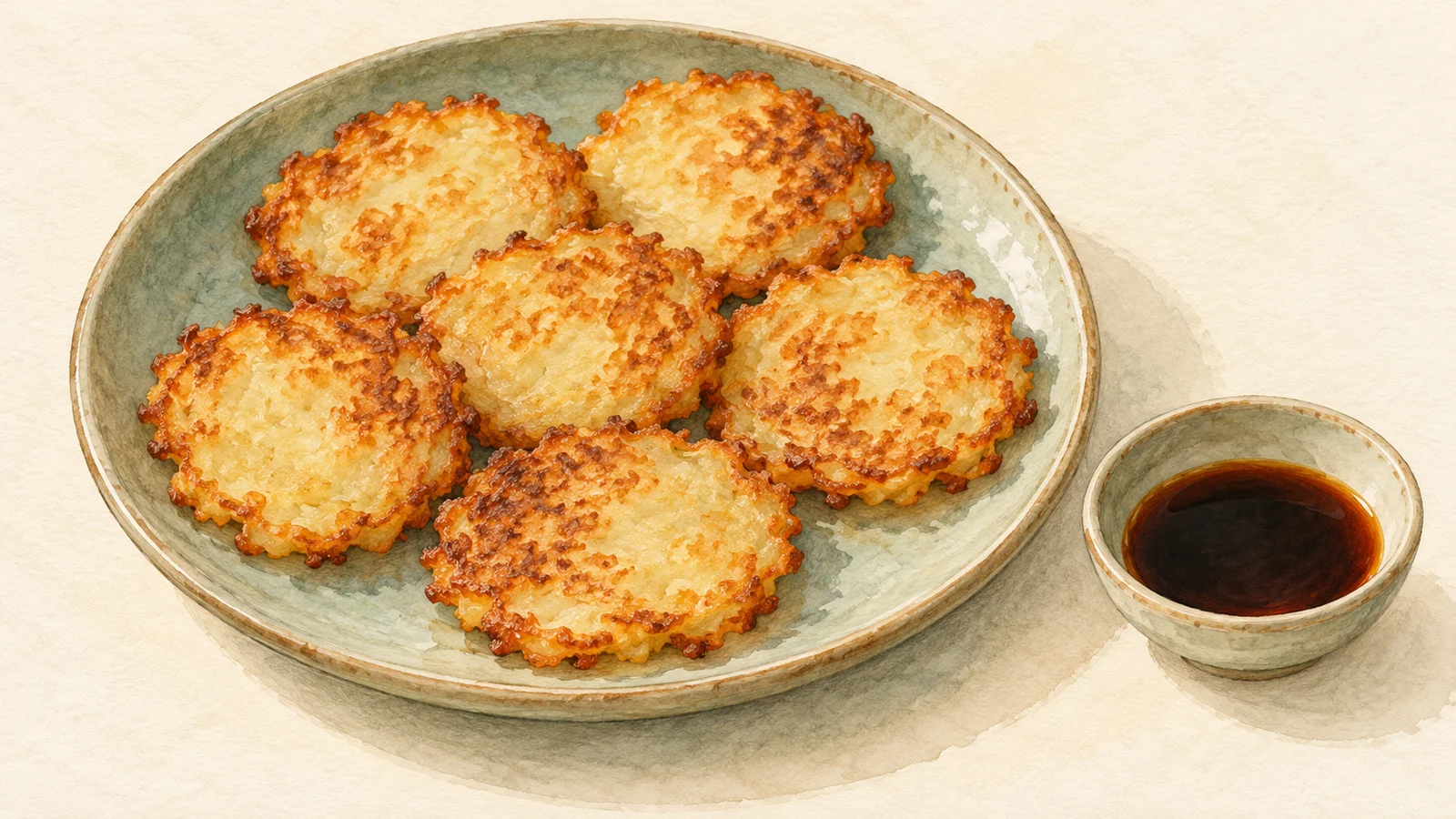
Keep the cloudy liquid when you drain grated potatoes. The white starch that settles at the bottom helps gamjajeon (감자전) hold together without flour. These small Korean potato pancakes have browned edges and a soft, slightly chewy middle, with a soy-vinegar dip to cut through the richness.
A grater gives the potato some texture. Use its fine shredding face rather than the large holes you might choose for hash browns, and stop before your fingertips reach the metal. The little pieces are easier to cook evenly than a thick mound. A food processor is another option in many gamjajeon recipes, but this card uses a hand grater and does not add blending water.
Let the first pancake guide the heat
Start with a small pancake and leave enough room to slide a spatula beneath it. A thin disc is easier to turn than a pan-wide pancake. If the surface is browning before the middle softens, lower the heat and make the next disc thinner; a darker crust will not fix an undercooked center.
Keep a clean plate beside the stove, and move each finished batch there before adding the next. Do not balance cooked pancakes on the bowl of raw potato mixture. Stay with the skillet throughout frying. The settling timer earlier in the recipe is a pause for the starch, not a signal to leave an oiled pan heating.
The grating, draining and starch-recovery approach adapts Hyosun's gamjajeon. Maangchi's small potato pancakes show another version using puréed potato and chives. Here the pancakes stay plain, with a little onion and a diluted soy-vinegar dip. The yield and 35–45-minute planning allowance are estimates.
Dip a corner, then take a bite
Bring the sauce to the table separately so everyone can decide how much to use. Regular soy sauce contains soy and usually wheat; check the label and cross-contact information when cooking for someone with an allergy. This is not a gluten-free claim simply because the batter has no wheat flour.
Serve the pancakes as a hot snack or one small part of a meal. For a different potato texture, gamja jorim gives you tender soy-braised cubes. If you want a chile-flavored pancake with a flour batter, try the separate kimchi pancake recipe.
Put away what you will not eat now
The crisp edges are best soon after cooking. Refrigerate leftovers promptly in a shallow covered container, following the time and temperature limits in the card; do not leave them out until the plate is completely cold. Reheat only the portion you need and check its center with a food thermometer. A browned surface alone does not establish the reheating temperature.
The preparation steps follow FDA’s produce-cleaning guidance. Storage and reheating limits follow USDA’s leftovers guidance and FoodSafety.gov’s food-safety steps.