Recipes
Carrot and Daikon Refrigerator Pickles (Do Chua)
Sweet-tart Vietnamese carrot and daikon pickles for sandwiches and rice plates, with a complete recipe and a refrigerated one-hour rest.
Jump to recipe ↓Recipe
- Total time
- About 85 minutes, including refrigerator time
- Method
- Refrigerator pickle
- Difficulty
- Easy
- Allergens
- Check vinegar and other packaged ingredients for allergen information
About 3 cups of drained pickles, or 12 small condiment portions
Allow roughly 20–25 minutes to prepare, then at least 1 hour in the refrigerator. Yield and preparation time are estimates. Keep refrigerated at 40°F (4°C) or below; this recipe is not for canning or room-temperature storage.
Equipment: Stable cutting board, knife, peeler, clean vegetable brush, scale, measuring cups and spoons, mixing bowl, colander, spoon, clean quart-size food-safe lidded container or two smaller containers, and refrigerator thermometer.
Ingredients
- 1 lb (454 g) daikon radish
- 1 large carrot
- 1 teaspoon fine salt
- 2 teaspoons granulated sugar, for softening the vegetables
- ½ cup granulated sugar, for the brine
- 1¼ cups distilled white vinegar labeled 5% acidity
- 1 cup lukewarm drinking water
Method
Clean the workspace and cut the roots
Wash hands with soap for 20 seconds. Use clean equipment and a washed, rinsed lidded food container. Scrub the daikon and carrot under running water without soap, then peel and cut into similar matchsticks about ⅛ inch thick. Keep prepared vegetables and utensils away from raw meat and its juices.
Convert a measurement for this stepSoften, rinse and drain
Toss the vegetable sticks with the measured salt and the sugar marked for softening. Knead gently until a daikon stick bends back on itself without snapping, roughly 3 minutes. Rinse in the colander under cold running water, then squeeze gently and drain well.
Convert a measurement for this stepMix the brine and cover the vegetables
Stir the remaining measured sugar with the vinegar and water until dissolved. Pack the vegetables in the container and pour in the brine to cover. Divide between smaller containers if needed; do not top up with plain water. Close the lid, date the container and refrigerate immediately at 40°F (4°C) or below.
Convert a measurement for this stepRest in the refrigerator
Start the timer only after the covered pickles are in the refrigerator. Leave them cold for at least 1 hour before checking the flavor.
Convert a measurement for this stepDrain a portion and keep the rest cold
Lift out a serving with a clean utensil and drain it before eating. Keep the remaining pickles covered by brine in the refrigerator and use within 1 week. Discard any showing mold or sliminess without tasting. Do not add a new batch of vegetables to used brine, can this recipe, or store the jar on a pantry shelf.
Convert a measurement for this step
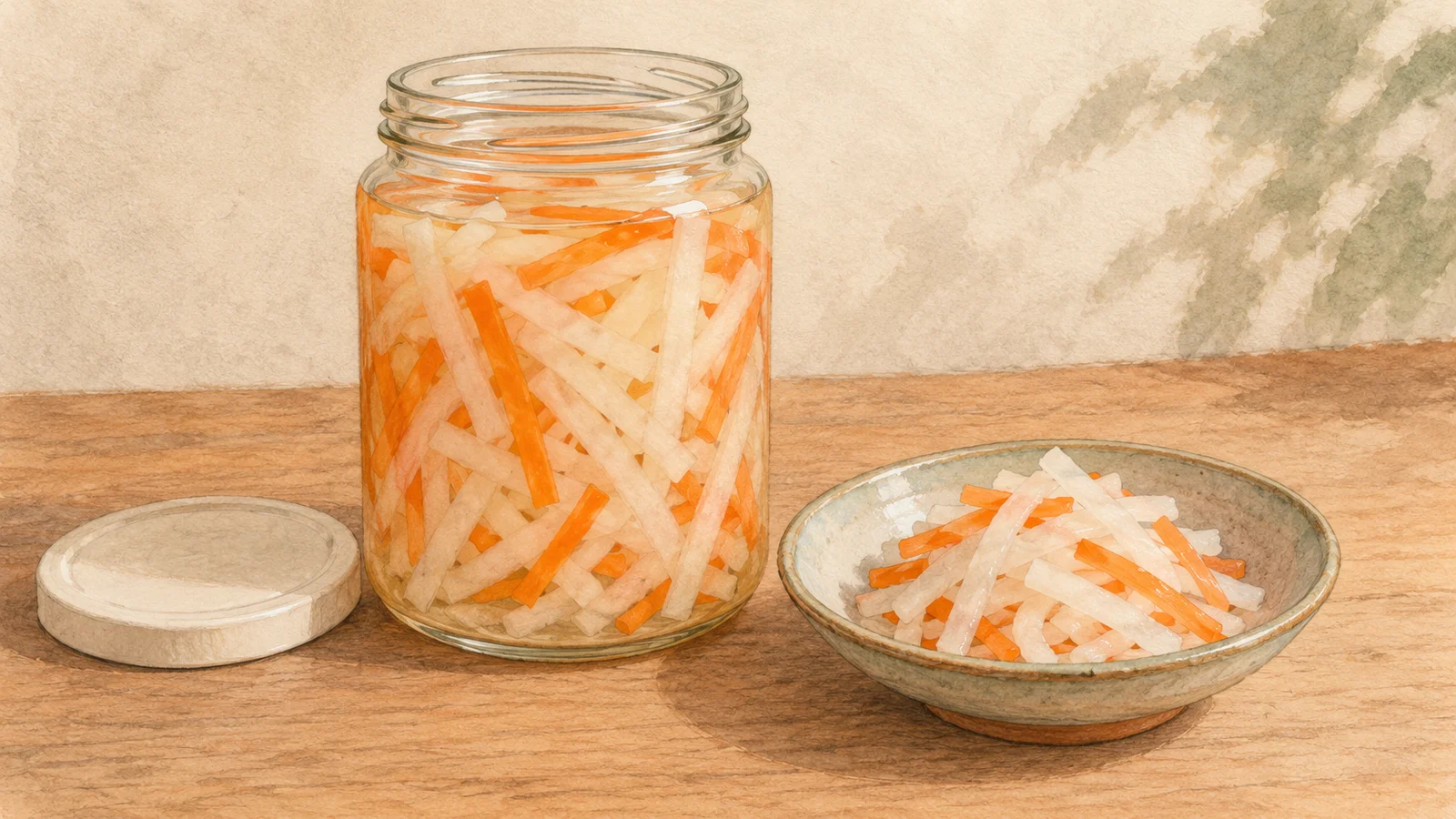
Orange and white pickle sticks bring a sharp, sweet crunch to a sandwich or rice plate. Vietnamese đồ chua is useful in small portions: a forkful beside a rich dish gives you something cool and bright between bites.
This carrot-and-daikon version uses a vinegar brine and a refrigerator rest. It is not a canning recipe. Make room in the refrigerator before you start, and choose a lidded container that holds the vegetables under their liquid without crowding the top.
Cut pieces you want to bite
Wash both roots before peeling. A peeler does not replace washing: dirt on the outside can reach the cut surface. The FDA’s produce-cleaning guidance recommends running water, a clean brush for firm produce and no soap.
Use a stable cutting board. Cut a flat side on each peeled root, set it on that face, and make slabs before slicing them into sticks. Aim for similar thickness rather than perfect little rectangles. Very long pieces are awkward to tuck into a sandwich; broad chunks eat differently from slender sticks. A sharp knife and a manageable section of root are more useful than rushing through a whole daikon.
A pickle for the refrigerator
The proportions and vegetable-softening method are adapted from Andrea Nguyen's do chua at Viet World Kitchen. Keep these pickles refrigerated from the moment the brine goes on, and use them within one week.
Use plain distilled white vinegar labeled 5% acidity. Seasoned rice vinegar already contains seasoning, so it changes the balance; the rice-vinegar guide explains the label distinction. Keep the measured vinegar and water amounts together when scaling the batch. If the vegetables will not stay covered, divide them between smaller containers rather than diluting the brine with extra water.
Oregon State University’s Food Hero likewise stores refrigerator pickles only in the refrigerator. A lid, an acidic taste or a jar that looks sealed does not make this preparation safe for a pantry shelf. Do not turn it into a water-bath canning project using a guessed processing time.
Take out only what you will serve
Use a clean fork or tongs and let the liquid drain before adding pickles to bread. Keep the rest covered and cold. Try a small portion beside lemongrass chicken or tuck it into a sandwich; it need not cover every bite of the meal.
Label the container with the preparation date. Do not add fresh vegetables to old used brine: the vegetables change its acidity, as Minnesota Extension’s pickling guidance explains. Start with a fresh measured mixture for the next batch. Discard pickles with mold, sliminess or an unexpected change; do not taste them to decide whether spoilage is harmless.