Recipes
Baechujeon: Napa Cabbage Leaf Pancakes
Pan-fry whole tender napa cabbage leaves in a thin batter and serve with a soy-vinegar dip. Includes a complete recipe and attended cooking cues.
Jump to recipe ↓Recipe
- Total time
- About 25–30 minutes
- Method
- Pan-fry
- Difficulty
- Moderate
- Allergens
- Wheat · Soy · Check pancake mix for egg, seafood and other allergens
4 leaf pancakes, about 2 side portions
Allow about 25–30 minutes, depending on leaf size and batches. Timing and portions are estimates. Uses US measuring cups and spoons. Contains wheat and soy; check the pancake mix for egg, seafood and other allergens. Stay at the stove throughout frying.
Equipment: Knife, cutting board, clean towel, wide shallow mixing bowl, whisk, small sauce bowl, measuring cups and spoons, 10–12-inch nonstick skillet, tongs, wide spatula, clean serving plate and kitchen scissors; food thermometer for reheating.
Ingredients
- 4 small, tender napa cabbage leaves from the inner part of a head
- ½ cup Korean savory pancake mix (buchimgaru), a type made with water; not sweet breakfast pancake mix
- 1 tablespoon potato starch or cornstarch
- ½ cup cold water for the batter, plus a little more only if needed to thin it
- 2 tablespoons neutral cooking oil, divided, plus up to 1 tablespoon if needed
- 1 tablespoon reduced-sodium soy sauce
- ½ tablespoon unseasoned rice vinegar
- ¼ teaspoon sugar
Method
Prepare four flat leaves
Keep the stove off. Wash hands with soap for 20 seconds. Remove the cabbage’s outermost leaves, select four small inner leaves and rinse under plain running water without soap. Blot away dripping water with a clean towel. Trim the hard stem end and make a short lengthwise slit through the thick white base so each leaf can lie flat. Keep fingers clear of the knife.
Convert a measurement for this stepMix the dip and measure the batter
Stir the soy sauce, rice vinegar and sugar in the small bowl. Set aside with a clean serving plate. Whisk the pancake mix, starch and cold water in the wide bowl just until combined. It should leave a thin coating on a leaf and drip away easily; if thick, add cold water a teaspoon at a time. Do not taste raw batter. Keep the burner off until everything is ready.
Convert a measurement for this stepCoat and fry the first leaves
Heat 1 tablespoon oil in the skillet over medium heat. Dip a leaf into the batter, coat both sides thinly and let excess drip back. Lower it carefully into the pan, away from you. Add a second only if both fit in one layer with room to turn. Press the thick rib gently with the spatula. Stay at the pan until the underside is set and lightly golden, about 2 minutes; reduce the heat if it darkens quickly.
Convert a measurement for this stepTurn and check the thick rib
Turn with the spatula and cook the second side until golden, roughly another 2 minutes. Continue gently cooking as needed until the white rib is tender when pierced and the batter is fully set, with no wet or floury patches. Follow any cooking requirements on the mix package. Time and color alone are not the endpoint. Keep the coating thin and adjust the heat so the leaf cooks before the crust burns.
Convert a measurement for this stepFinish the remaining leaves
Move cooked pancakes to the clean plate. Stir the remaining batter, add the remaining tablespoon of oil and repeat the coating, frying and doneness checks for the other leaves. Add a little extra oil only if the pan needs it. Attend every batch; do not leave an empty oiled skillet heating. Discard leftover raw batter and wash batter-contact tools before using them to serve.
Convert a measurement for this stepTurn off the burner and serve hot
Switch off the burner. Cut the pancakes into manageable pieces with clean kitchen scissors and serve with the dip. Refrigerate leftovers promptly in a shallow covered container at 40°F (4°C) or below, within two hours or one hour above 90°F (32°C). Discard food left out longer. Use within three to four days; reheat to 165°F (74°C), checked with a food thermometer.
Convert a measurement for this step
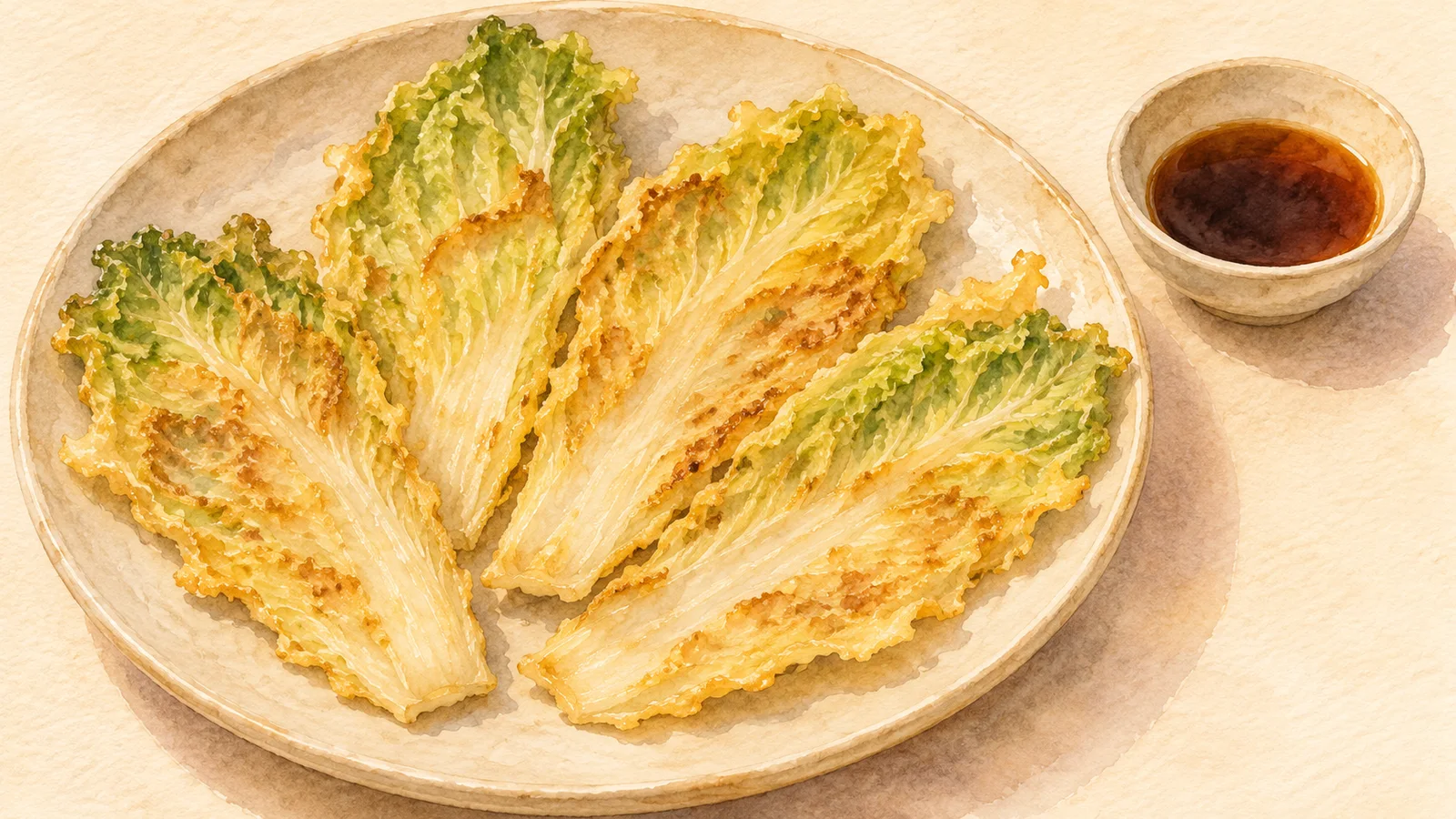
A whole napa leaf makes its own pancake shape. Baechujeon (배추전) gives you a tender white rib, a wrinkled green top and a thin golden coating, with a sharp soy-vinegar dip alongside. Four small leaves make a manageable first batch without a bowlful of shredded vegetables to turn.
Start near the heart of the cabbage
Choose leaves that fit comfortably in your skillet. Small inner leaves are easier to flatten and cook than the broad, thick outer ones. Save the rest of the head for another meal; the napa cabbage preparation guide covers separating, rinsing and cutting it for other dishes.
The coating should let you see the leaf beneath it. A heavy blanket of batter can brown while the thick rib is still firm. Sue Pressey’s baechujeon uses tender leaves and a light coating; her version also brines the cabbage and includes seafood seasoning. This smaller batch uses unbrined young leaves and a simpler batter.
The pancake-mix, starch and water proportions adapt Beyond Kimchee’s cabbage pancakes, halved here with its optional shrimp omitted. The dip is also reduced to suit four leaves. Maangchi’s baechujeon provides another approach, using egg and stock, and shows how a slit in the white base helps a leaf lie flat. These are source-based proportions and cooking cues; the timing is an estimate.
Read the mix before making the batter
Look for Korean savory pancake mix, often labeled buchimgaru. Sweet breakfast pancake mix will change the result. No separate egg goes into this card, but a packaged mix may contain egg, seafood seasonings or other allergens. Check both its ingredients and cross-contact information, along with the soy sauce label, before cooking for someone with an allergy.
Raw flour can carry harmful bacteria even when no egg is added. FDA’s flour guidance advises against tasting raw batter and says to follow the mix’s cooking instructions. Keep the sauce bowl and serving utensils clear of flour and batter splashes.
Bring the plate to the table while the edges are crisp
Offer the dip separately rather than pouring it over all four pancakes. Cut a leaf across its rib into easy bites. If you want a tangier pancake another day, the kimchi pancake uses chopped fermented cabbage and a different batter balance.
Baechujeon softens as it cools. Refrigerate what you will not eat promptly rather than leaving the plate out in hope of preserving the crust. The card’s storage limits follow USDA’s leftover guidance, and its reheating temperature follows FDA’s safe-food-handling chart. The cabbage-cleaning steps follow FDA’s produce guidance.