Ingredients
Prepare Napa Cabbage for the Dish You Want
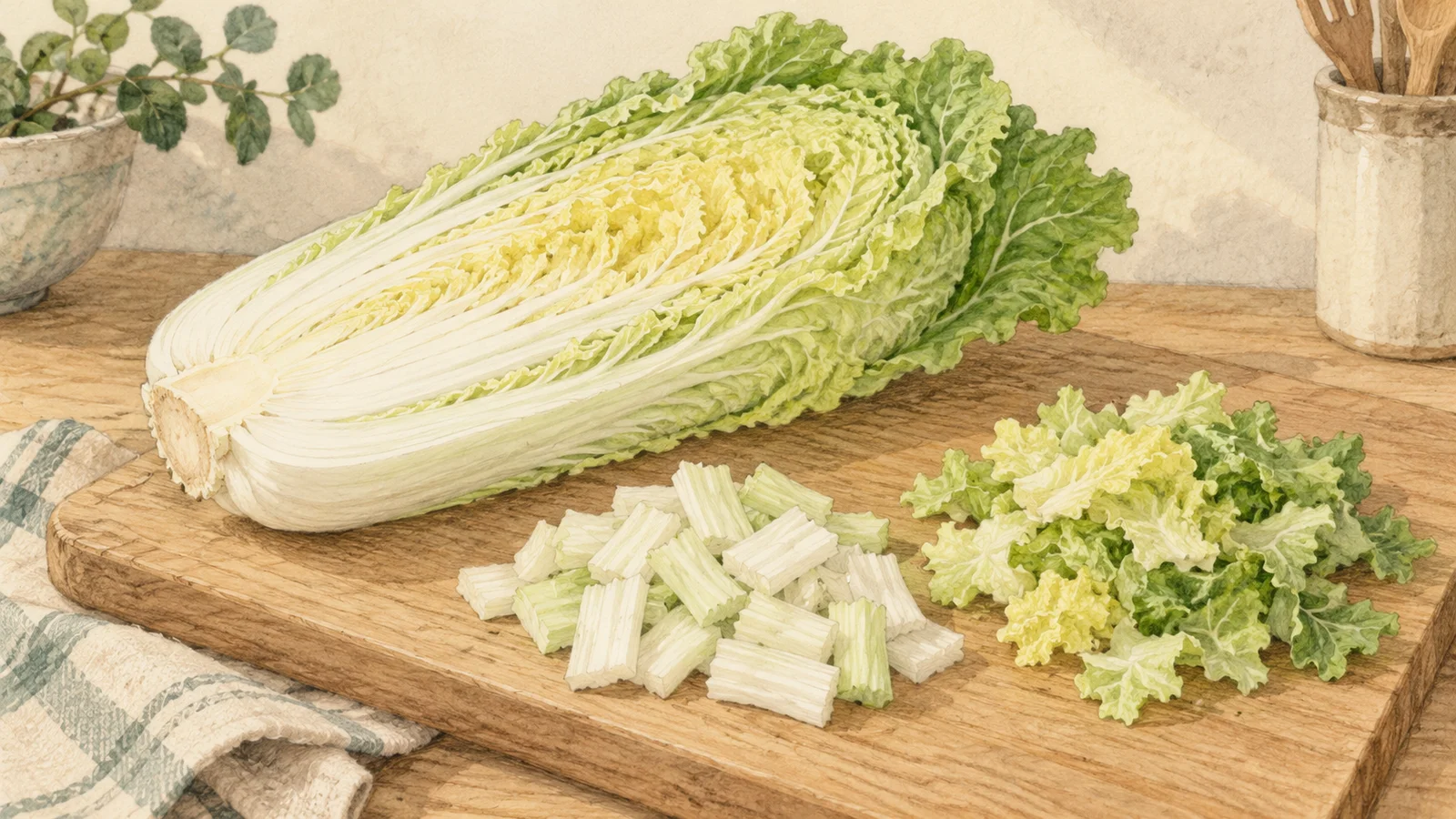
The thick white rib of a napa cabbage leaf and its crinkled green tip behave differently in a hot pan. The rib can still have a firm center when the leafy end has already collapsed. Cut and sort them before you cook, and you can keep both textures where you want them.
Napa is the elongated, tightly layered cabbage with pale leaves and broad white ribs. You may also see it called Chinese cabbage, wombok or hakusai. It has a mild sweetness and works in soups, hot pots, stir-fries and raw salads. Kikkoman’s hakusai guide describes its light flavor and high water content. It is a different purchase from the open bunches in our gai lan, bok choy and choy sum guide.
Buy the amount you will use
Look for a firm head with crisp leaves. Avoid soft, damaged or decaying areas. A refrigerated half or quarter can be a sensible purchase for a small household; check that the cut surface is fresh and the package has stayed cold. Do not choose pre-cut cabbage sitting unrefrigerated beside whole heads.
Keep an unwashed head in a plastic bag in the refrigerator. UMass Extension recommends using napa within about a week, a useful planning window rather than a guarantee for an already tired head. Wrap a remaining cut portion or put chopped cabbage in a covered container, refrigerate it promptly and use it before the whole head you have kept intact.
Napa is sensitive to ethylene, which can speed yellowing and deterioration, according to UC Davis’s postharvest guidance. If your refrigerator allows it, keep it apart from ripening fruit. The long storage periods quoted for commercial cold rooms are not a promise for a cut cabbage in a home crisper.
Wash the folds, then let the water leave
Wash your hands, clean the board and knife, and remove damaged outer leaves. Rinse the cabbage under running water before cutting. For loose pieces, separate the leaves and rinse along the ribs and folds where grit can hide. If you cut a head into quarters first, open the layers gently enough for water to reach between them.
Use plain running water, without soap or produce wash. Drain in a colander, then dry with a clean towel or salad spinner, especially for a stir-fry or salad. Keep the cabbage and its utensils away from raw meat, poultry and seafood. The FDA’s produce guidance also recommends keeping perishable produce at 40°F (4°C) or below. Washing reduces contamination; it does not make rotten produce usable. Discard a head that is slimy or visibly decaying.
Let the dish choose the cut
Set a halved cabbage on its flat side so it cannot roll. For loose chopped cabbage, remove the hard base that holds the leaves together. Keep the broad white ribs: they are useful food, not all disposable core.
- For a quick stir-fry: cut bite-size pieces and divide particularly broad ribs lengthwise. Put the rib pieces and leafy pieces in separate bowls so you can add them at different times.
- For soup: use pieces small enough to lift comfortably on a spoon or with chopsticks. A long strip that looks modest on the board can trail awkwardly from a full spoon.
- For a raw salad: slice across a manageable stack of leaves into thin shreds. Dry them well before dressing so the dressing clings instead of collecting in diluted puddles.
Kikkoman’s cabbage cutting reference illustrates the difference between shreds, bite-size pieces and wedges. If your recipe needs intact wedges or whole leaves, read that preparation step before removing the core or chopping everything. You cannot put those layers back together afterward.
Give the ribs a head start
Namiko Hirasawa Chen’s napa stir-fry adds the thicker white pieces before the leafy ones. That sequence is useful when you want the ribs tender while the leaves still have some shape. Narrowing a thick rib also helps it cook more evenly; chopping only the leafy end smaller does not solve a hard center.
Check an actual rib piece as you cook. For a crisp vegetable side, it should yield to a bite without becoming limp throughout. For a soft braise, let the recipe take it further. Those are different endpoints, so a single cooking time cannot serve both.
Napa releases water as it softens. Give a stir-fry room in the pan and follow the recipe’s liquid quantities before adding extra broth. A crowded skillet with a large pile of wet leaves will behave more like a steaming pot. Our ordinary-skillet guide covers batch size and heat control. Have your sauce measured and both bowls of cabbage ready before switching on the burner; the leafy pieces need your attention once they go in.