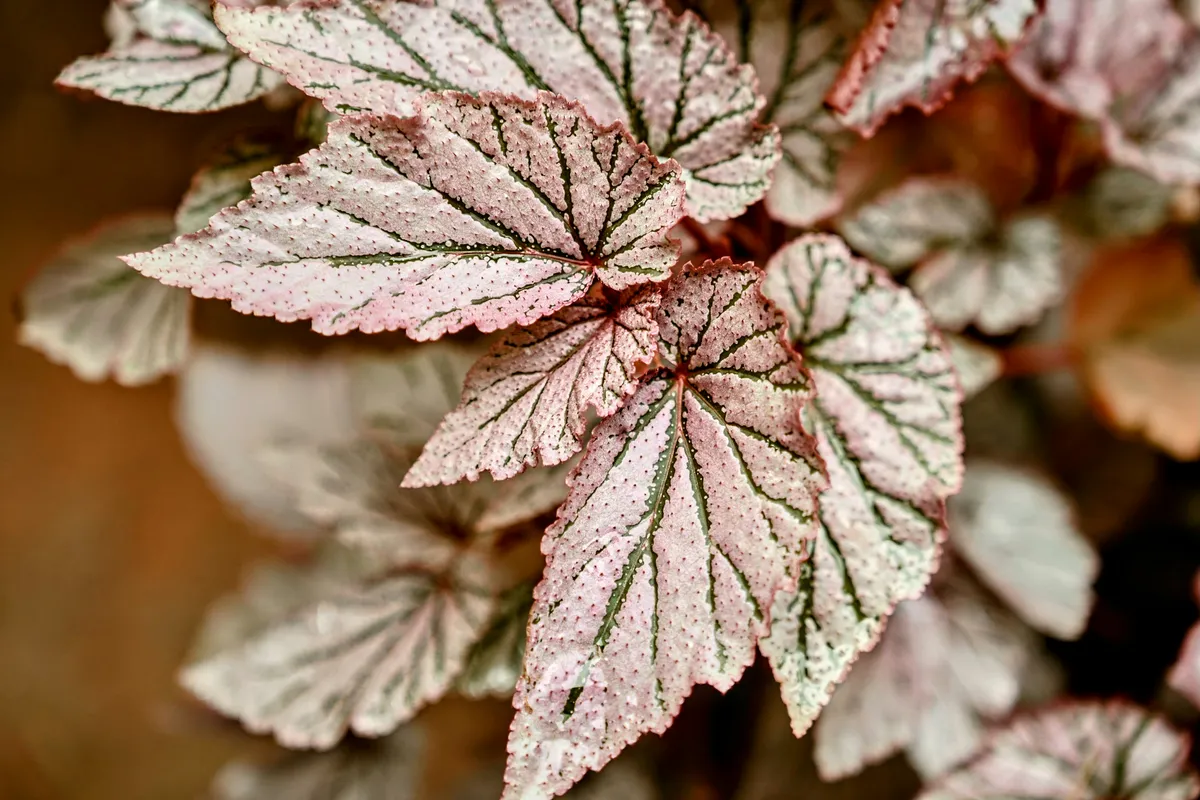
A rex begonia can fill a windowsill with color before it produces a single flower. Silver bands, burgundy centers and unevenly shaped leaves are the attraction. The challenge is keeping those leaves supplied with moisture while giving the roots air and keeping the crown out of standing water.
The nursery name covers a varied group. NC State’s rex-begonia profile includes Begonia rex and hybrids derived from it, with different sizes, textures and patterns. Keep the plant’s label if it has one. A photograph of another rex is useful inspiration, but it cannot tell you exactly how large yours will grow.
Find a bright place that softens the sun
Start near a bright window where a sheer curtain or the room’s position filters strong sunlight. These are foliage begonias, not bedding plants to put into a hot, exposed window because they have colorful leaves. Clemson Extension recommends bright light away from direct sun for the foliage group.
Look at the spot when sunlight actually reaches it. A shelf that seems gentle in the morning may receive a hard afternoon beam. Leave enough room to lift the pot and inspect its surface without folding or rubbing the leaves against the glass.
Keep the plant in a warm room away from cold drafts. Clemson advises nights above 55°F (13°C). The window glass can be a colder neighbor than the middle of the room, so pull the leaves clear of it as outdoor temperatures fall.
Water around the crown, then let the pot drain
Check the mix before reaching for the can. During active growth, aim for even moisture with a little drying between waterings; do not wait for the whole root ball to become a hard, dry block. Clemson cautions against both waterlogged mix and leaving the pot in a saucer of water.
Direct a small spout toward exposed mix near the pot’s edge. The RHS’s guidance for rex and other rhizomatous begonias specifically advises keeping water off the leaves and crown. Let excess water escape, then empty the saucer or decorative outer pot.
Use the same checks next time: surface moisture, the pot’s weight and how actively the plant is growing. If it still feels wet, a drooping leaf is a reason to look more closely, not a command to add water. Our root-rot guide helps when decline continues in persistently wet mix.
Humid air needs room to move
Rex begonias prefer humid air, but spraying their leaves is a poor substitute for choosing a suitable place. NC State advises avoiding misting and maintaining air circulation. Leave gaps around the foliage and remove dead leaves from the mix instead of letting them collect beneath the plant.
A room with naturally higher humidity can work if it also has good light. Check both conditions before moving the begonia into a bathroom. For a dry room, the houseplant humidity guide explains how to measure conditions and assess practical changes. Do not trade a dry but airy location for a sealed, constantly wet corner.
Give the roots a proportionate pot
Most rexes grow from a thickened stem called a rhizome. The American Begonia Society recommends a shallow container and porous growing mix. Choose drainage holes and a pot that accommodates the existing roots; a large decorative pot does not need to become a large volume of wet mix.
Repot when root crowding warrants it, preferably as active growth begins. Wisconsin Extension’s houseplant guidance recommends inspecting the root ball and moving only one pot size up when needed. A few visible roots are a prompt to inspect, not a reason to make several sizes of jump. Use a suitable, freely draining houseplant mix and keep the existing growing depth.
Feed during growth using a fertilizer labeled for the plant and follow its dilution instructions. Stick to one feeding program; do not combine fertilizer schedules or add a second product because growth seems slow.
A quieter winter is different from a collapsing plant
The American Begonia Society notes that some cultivars pause in autumn or winter and may shed leaves, especially without supplemental light. Reduce watering as growth slows. The RHS advises allowing the mix’s surface to dry before watering again in winter.
Keep watching what remains. Gradual slowing is different from soft, spreading decay. Brown edges, yellowing or leaf loss can have several causes; the RHS lists moisture, light, humidity and temperature among the possibilities. Check those conditions together before changing the fertilizer or watering more often.
Inspect leaf undersides and the places where stalks join the plant for pests. NC State identifies mealybugs and fungal problems as concerns. Separate a suspect plant and identify the problem before treating it; a patterned leaf does not need a preventive spray merely because it looks unusual.
Choose the display spot with pets in mind, too. The ASPCA lists begonias as toxic to cats and dogs. Keep the plant and fallen pieces out of reach, and contact a veterinarian promptly if ingestion is suspected. A bright, accessible place for your own checks should still be inaccessible to an animal that chews leaves.
Sources
- Begonia – Rex Types (North Carolina Extension Gardener Plant Toolbox). Accessed September 23, 2026.
- Growing Begonias Indoors (Clemson Cooperative Extension). Accessed September 23, 2026.
- Begonias: houseplants (Royal Horticultural Society). Accessed September 23, 2026.
- Rex Cultorum Begonias: Gloriously Gaudy (American Begonia Society). Accessed September 23, 2026.
- Houseplant Care (University of Wisconsin–Madison Extension). Accessed September 23, 2026.
- Begonia (ASPCA Poison Control). Accessed September 23, 2026.