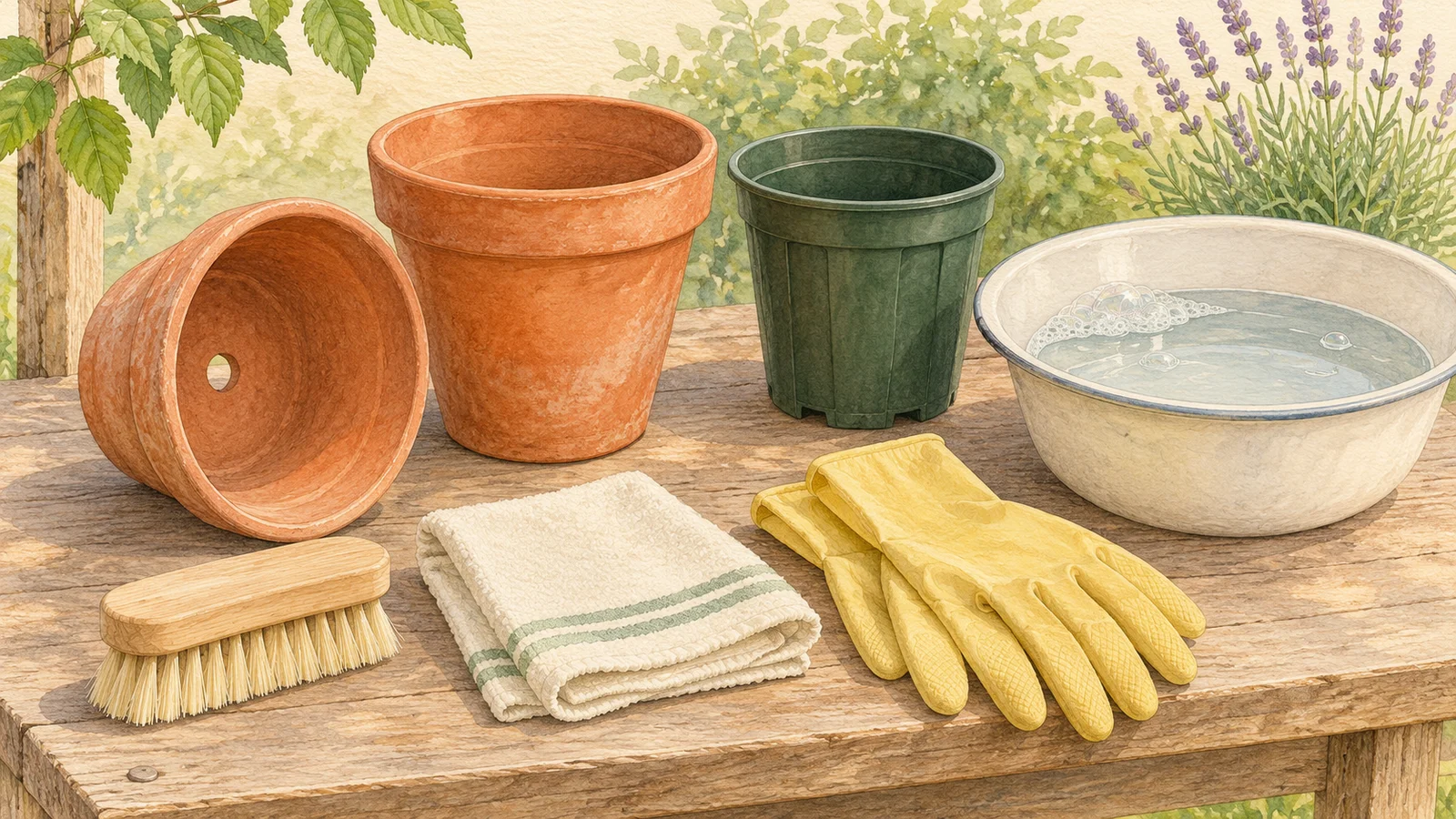
Pull two nested nursery pots apart and the hidden rim often tells the story: dried roots, a little old mix and a chalky ring that never reached the hose. Before fresh potting mix goes in, clean the whole container, including the places you will stop seeing once it is planted.
Washing and disinfecting do different jobs. Scrubbing removes the material stuck to the pot; a suitable disinfectant treats the cleaned surface. A quick rinse of a dirty pot is not a substitute for either step.
Sort the stack before filling a bucket
Keep sound containers whose insides, outsides and drainage holes you can reach. Set aside brittle plastic, sharp broken rims and badly cracked pots. Saving a container is less useful if it splits while you carry a newly potted plant.
Be stricter about known disease. Wisconsin Extension advises against reusing plastic pots after damping-off or root-rot problems, because they are difficult to decontaminate. Use new pots or cell trays for that next sowing, along with fresh suitable mix. Do not tip the old contents into a healthy plant’s container. If a valued pot held a plant with a diagnosed disease, ask a local Extension office whether reuse is sensible for that material and pathogen.
Put saucers, removable inserts and reusable labels with the pots they belong to. These surfaces need attention too. Keep the dirty pile away from your bag of fresh mix and from containers you have already finished.
Remove the roots, then wash
Separate nested pots completely so you can reach every rim and base. Empty each pot. Brush out loose mix, pull roots from the drainage openings and work beneath the rim. A small brush can reach an opening that a broad scrub brush misses. You should be able to see the holes clearly before you start washing.
Wash with water and dish detergent, scrubbing inside and out, then rinse off the detergent. Minnesota Extension explains that soil and debris interfere with disinfection. Check the base and raised feet as well as the obvious planting surface. A clean interior does little good if you set it back into a dirty saucer.
A white crust may need separate attention. Iowa State describes mineral deposits around plastic and glazed-pot rims and across porous clay. Use a scouring pad suitable for the finish on plastic or glazed pots; a stiff brush can help on plain terracotta. Avoid gouging the material or leaving a sharp edge. This removes residue; it does not establish that the pot is free of plant pathogens.
Read the disinfectant directions before mixing
Choose a product appropriate for the container and intended use. Check the required dilution, protective equipment, wet contact time and rinsing directions. If those instructions do not cover your material or the plant-disease problem, get advice or use a new container. A household surface wipe is not automatically a proven treatment for every plant pathogen.
For bleach-compatible pots, Iowa State describes a soak of one part household bleach to nine parts water for at least ten minutes, followed by rinsing. That is a dilution of the bottled product, not a request for 10% pure sodium hypochlorite. Bleach strengths and formulations vary: follow the current product label, and do not substitute an unknown, scented or splashless product into a remembered ratio. Add bleach to water to limit splashing. Iowa State advises using its prepared solution within two hours.
Work with good ventilation and the gloves and eye protection specified on the label. Never mix bleach with vinegar, ammonia, detergent or another cleaner. Rinse away the washing detergent before the disinfecting step. The CDC’s bleach guidance explains these precautions; its general household dilution is not a replacement for container-specific directions.
Keep all surfaces being treated wet for the full instructed contact time. Set a timer after wetting them, rather than guessing from when you started washing. Keep children and pets away from the work area, and return the chemical to its original, securely closed container after use.
Finish on a clean surface
Complete any required rinse and let containers dry before stacking them for storage. Put the finished pots on a clean rack or tray, not back onto spilled used mix. Store the clean stack separately from the next batch awaiting washing. Rinse and clean the brush and basin as well.
Dispose of used disinfectant according to its label and local requirements. Do not pour bleach solution into garden beds; Minnesota warns that it can harm plants and beneficial soil organisms. A stronger leftover mixture is not a garden treatment.
Before replanting, check that the drainage openings are still clear and choose a pot that fits the root ball. The pot-selection guide covers that decision. Clean containers are one part of a fresh start; healthy roots, suitable mix and careful watering still matter after the pot is filled.
Sources
- How to Clean and Disinfect Plant Containers (Iowa State University Extension and Outreach). Accessed November 23, 2026.
- Clean and disinfect gardening tools and containers (University of Minnesota Extension). Accessed November 23, 2026.
- Cleaning and Disinfecting with Bleach (Centers for Disease Control and Prevention). Accessed November 23, 2026.
- Damping Off (University of Wisconsin-Madison Extension). Accessed November 23, 2026.