Recipes
Musaengchae: Crisp Korean Radish Salad
Salt and drain thin radish matchsticks, then toss them with gochugaru, garlic and a little vinegar for a crisp Korean side dish.
Jump to recipe ↓Recipe
- Total time
- About 40 minutes
- Method
- Salt, drain and toss
- Difficulty
- Easy
- Allergens
- Sesame
4 small side portions (estimated)
Allow about 40 minutes, including a 20-minute salting rest; time and portions are estimates. Uses US measuring spoons. Contains sesame. No cooking is required.
Equipment: Knife, stable cutting board, vegetable brush, peeler if needed, kitchen scale, measuring spoons, mixing bowl, strainer, small bowl and serving utensil.
Ingredients
- 450 g (about 1 lb) trimmed Korean radish or daikon
- 1 teaspoon fine salt (about 6 g)
- 1 tablespoon unseasoned rice vinegar
- 2 teaspoons gochugaru (Korean red pepper flakes)
- 2 teaspoons sugar
- 2 garlic cloves, peeled
- 1 scallion, white and green parts
- 1 teaspoon toasted sesame seeds
Method
Wash and cut the vegetables
Wash hands with soap for 20 seconds. Scrub the radish and rinse the scallion under plain running water; do not use soap on produce. Trim the scallion roots and damaged areas; peel the radish if its skin is tough. On a clean, stable board, cut the radish into roughly 1/8-inch-thick matchsticks, keeping fingers back. Mince the garlic and finely slice the scallion; keep them separate from the radish. Keep all utensils away from raw meat and its juices.
Convert a measurement for this stepSalt the radish and let it soften
Toss the radish with the measured salt in a clean bowl until evenly distributed. Start the 20-minute rest once all the strips are salted. At the check, look for liquid in the bowl and strips that bend more readily while remaining crisp; if still stiff, let them stand a little longer and check again.
Convert a measurement for this stepDrain away the released liquid
Tip the radish into a strainer and let the collected liquid drain away. Do not rinse. Return the drained strips to a clean, dry bowl; leave the salty liquid behind.
Convert a measurement for this stepCoat with the seasoning
Stir the vinegar and sugar in a small bowl, then add the gochugaru and minced garlic. Toss this mixture through the drained radish. Add the scallion and sesame seeds and turn gently until the seasoning is evenly distributed. Taste a strip before adding any extra chile or salt.
Convert a measurement for this stepServe or refrigerate promptly
Serve with a clean utensil. Cover and refrigerate any portion you are keeping at 40°F (4°C) or below. Discard salad left out more than two hours, or one hour above 90°F (32°C). Use refrigerated leftovers promptly; vinegar does not make this fresh salad shelf-stable.
Convert a measurement for this step
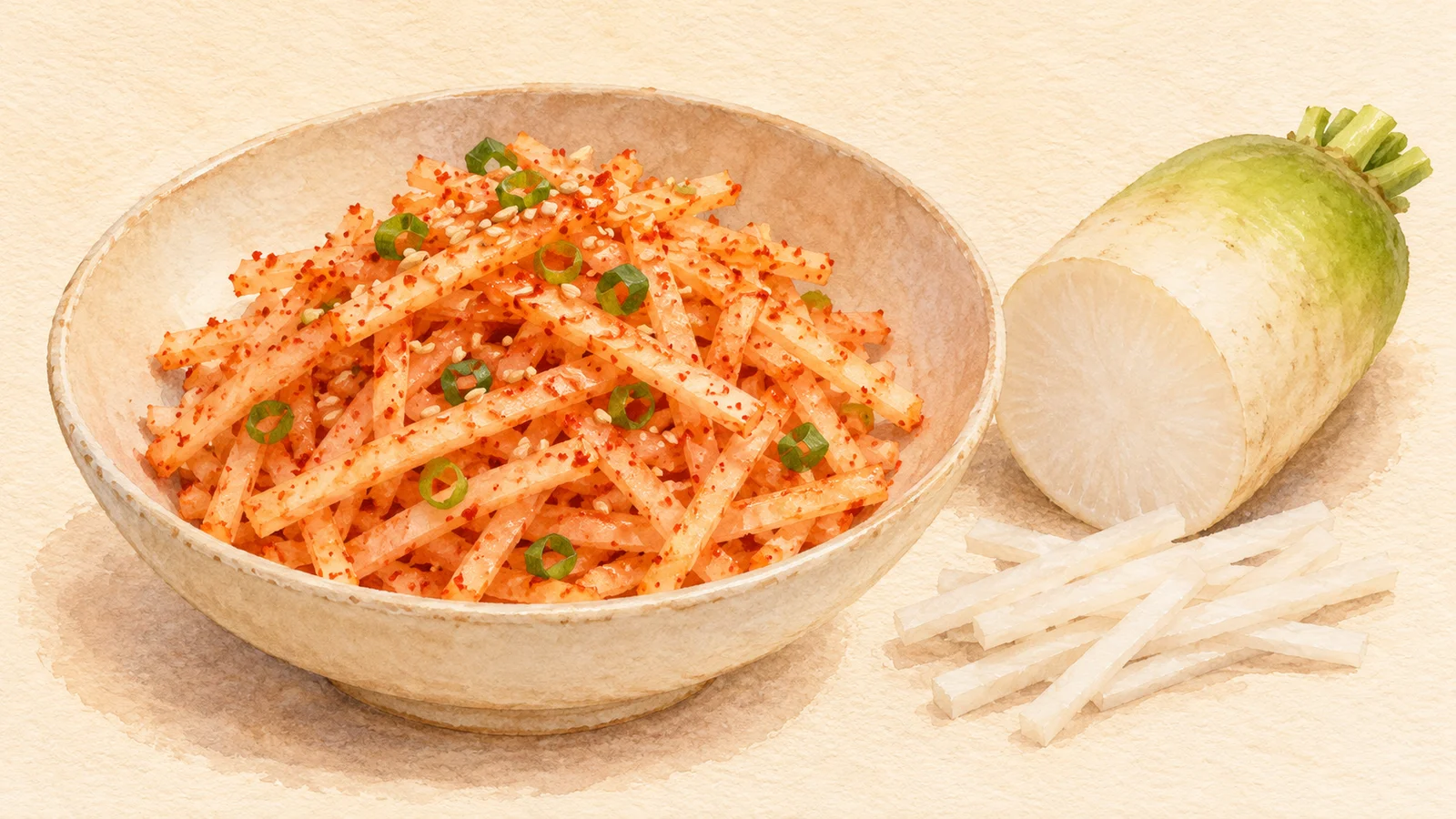
Radish makes a lively side dish when it is cut thin enough to bend but still has a crisp bite. In musaengchae, the pale matchsticks pick up red pepper, garlic and a little sweetness. A modest splash of vinegar gives this version a tangy finish without turning it into a jar of pickles.
Choose a radish worth eating raw
Look for a firm Korean radish, or mu, with smooth skin. It has a broad white body and often a pale green shoulder. Daikon works here too, though its flavor and texture differ. Once cut, the flesh should look solid and moist; a spongy interior will not make a satisfying salad.
If a large root is more than you need, weigh the trimmed piece for the card and refrigerate the rest. Sue Pressey’s daikon salad at My Korean Kitchen makes the useful point that the root’s weight determines how much seasoning it needs. A short section is also easier to handle on the board. Make a stable flat face before cutting thin slices, then stack only a few slices for the matchsticks. Our carrot matchstick guide shows the same small-stack approach.
This version combines the vinegar, garlic and sesame seasoning of Maangchi's musaeng-chae with the gentler salting and draining method in Hyosun's spicy radish salad at Korean Bapsang. It uses no fish sauce or salted shrimp. The four small portions and preparation allowance are estimates.
Keep the crunch, lose the puddle
Salting softens the matchsticks enough for them to mingle with the seasoning and draws out liquid that would otherwise dilute it. Drain after the rest rather than pouring the dressing into the collected radish water. The finished strips should still have some resistance when you bite them.
Use gochugaru rather than an equal spoonful of cayenne. Its heat varies, so start with the amount in the card and taste before increasing it. Unseasoned rice vinegar keeps the added sugar and salt under your control. The sesame seeds are a small garnish, but they still matter for anyone avoiding sesame.
A small cold dish beside a warm meal
Serve a few forkfuls with rice and pan-seared tofu or another main dish. Give the salad a clean serving utensil, particularly if raw meat is being prepared nearby. It is ready to eat after mixing; there is no fermentation stage to wait for.
Refrigerate any portion you are keeping promptly in a covered container. The radish will continue to release juice and soften, so make a modest batch and use leftovers promptly. This is a fresh salad, not a shelf-stable preserve; the vinegar is seasoning.
The handling instructions follow the FDA’s guidance on washing and separating produce and safe cold storage. USDA FSIS also advises refrigerating fresh-cut produce immediately.