Ingredients
Gochugaru: Choose the Grind and Heat for Your Dish
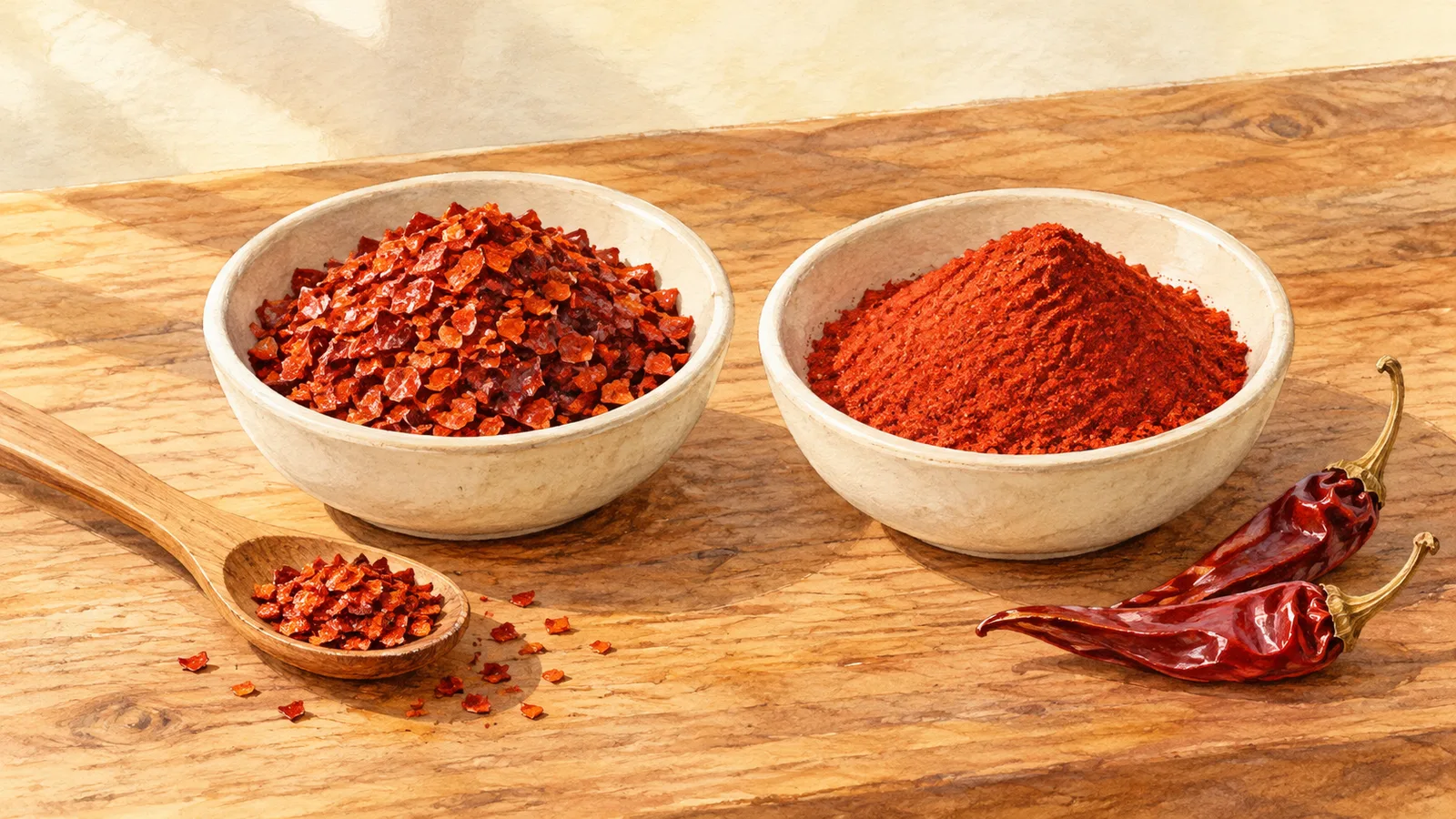
A bag marked “red pepper powder” may hold coarse flakes or a very fine grind. Either can be gochugaru, the dried red pepper used throughout Korean cooking, but the two will not give a sauce the same texture. Before buying a large bag, check the recipe, then the grind and heat level on the package.
For everyday dishes such as braised tofu, soups and seasoned vegetables, coarse gochugaru is a useful starting point. Fine powder has its own place, especially when a recipe calls for a smoother sauce or for making gochujang. You do not need both simply to begin cooking with Korean red pepper.
Look through the package
The English word powder is not a reliable guide to particle size. Maangchi’s ingredient guide points out that packages of flakes can carry that label. If there is a clear window, look for small, irregular pieces rather than relying on the largest printed word. When shopping online, find a description that actually specifies coarse or fine.
Coarse flakes remain visibly textured. Fine gochugaru looks more like a uniform ground spice. Kimchimari identifies the fine version as goun gochugaru and explains that changing the grind changes the feel of the dish. A recipe that specifies flakes is giving you a texture instruction as well as an ingredient name.
Keep the recipe open while choosing. “For kimchi” can help identify the coarser kind, while a fine powder labeled for gochujang serves a different purpose. If a listing mixes those descriptions and has no useful photograph, choose one that makes the distinction clear. A bargain bag is less useful when you cannot tell what is inside.
Read the heat level separately
Fine does not mean hotter, and coarse does not mean mild. Grind describes particle size; the package’s heat description is a separate choice. Korean Bapsang’s pantry guide notes labels such as botongmat (보통맛, medium spicy) and maeunmat (매운맛, extra spicy). Maangchi also describes mild and hot versions.
Choose a stated milder option when you want red-pepper flavor without a particularly hot dish. Do not assume that every new bag matches the one you finished. Keep its label until you have cooked with it, so you can buy the same type again or deliberately choose a different heat next time.
For a flexible cooked dish, follow the recipe’s seasoning range and start at its lower end if the pepper is unfamiliar. Taste the cooked food before adding more. This is especially useful in dubu jorim, where gochugaru seasons the braising liquid. For kimchi or another fermentation project, use the quantities and method in a complete, reliable recipe rather than treating the batch as an improvised heat test.
Keep flakes and paste in different roles
Gochujang is a fermented paste with other ingredients, including salt and a grain component. A spoonful changes sweetness, saltiness and consistency as well as heat. Gochugaru contributes dry pepper without bringing that whole paste into the dish. Korean Bapsang describes fine gochugaru as one way to add pepper and body to a sauce without the paste’s sweetness and saltiness.
That makes a one-for-one swap a poor starting point. If your recipe asks for flakes and you have only gochujang, choose a recipe written for the paste or make a deliberate sauce adjustment. Likewise, a jar of another country’s chili flakes may have a different flavor and heat. Similar red color does not establish that it will behave like the gochugaru the recipe expects.
There is no need to put pepper into every Korean side dish. In kongnamul muchim, the garlic-and-sesame version lets the soybean sprouts remain mild. Choose the version of a dish you want to eat before deciding which red seasoning it needs.
Give the opened bag a good seal
Follow the package’s storage directions. For regular use, an airtight container in the refrigerator is a practical choice; for a larger reserve, seal it well and use the freezer. Kimchimari’s storage guidance supports both cold-storage options, and Maangchi keeps a smaller working portion refrigerated.
Label the container with the grind, heat level and opening date. Take out pepper with a clean, dry utensil and close the container before working over a steaming saucepan. Buying a manageable amount also makes it easier to keep the label, seal and ingredient together. The next time a recipe calls for gochugaru, you should be able to reach for it without guessing which red powder you saved.