Kitchen skills
Setting Up a Steamer with the Pot You Own
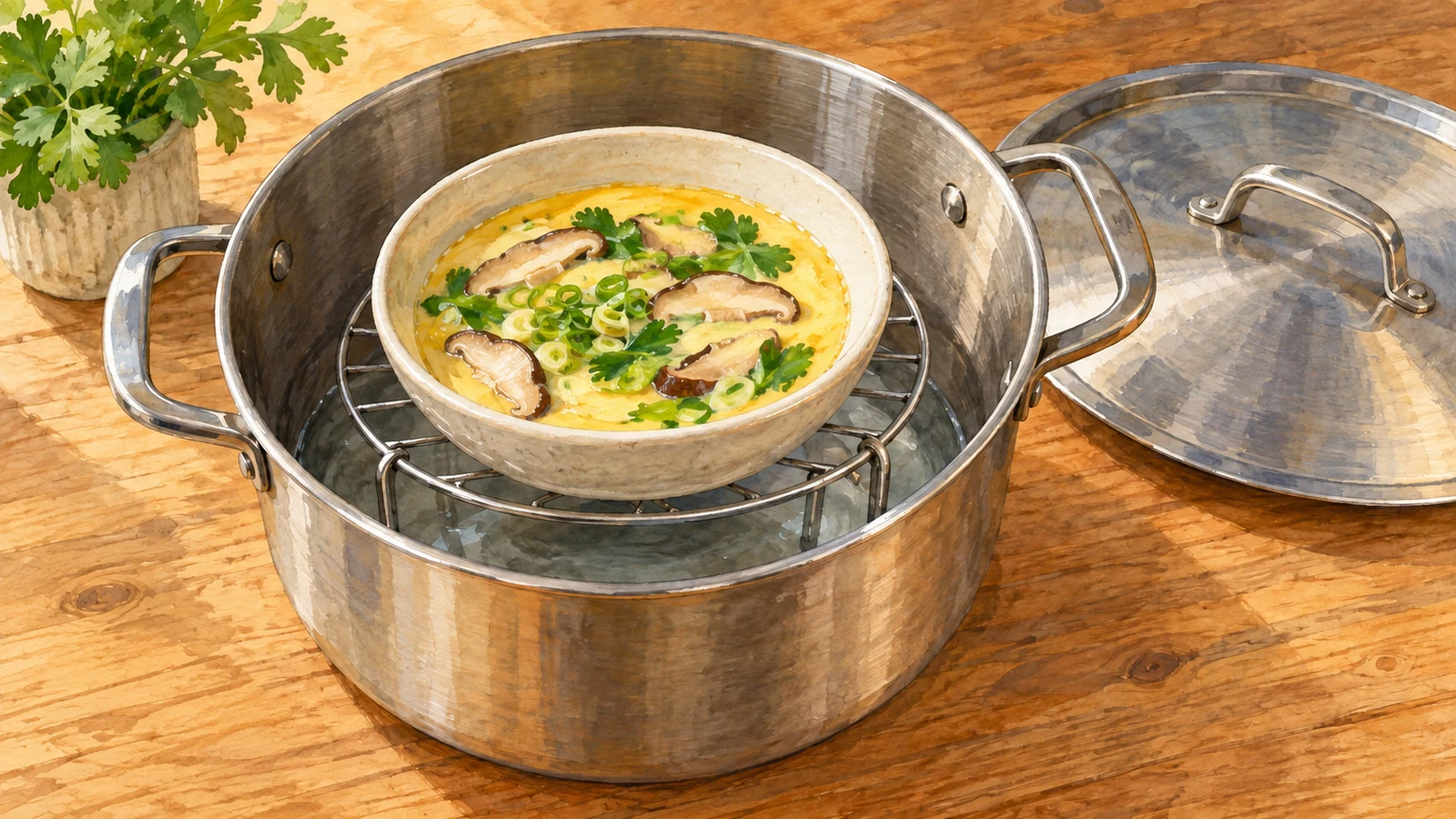
A steamer needs three spaces: water at the bottom, food held above it, and a covered space for steam to circulate. The pot you already own may do the job. The question is whether the rack, dish and lid fit together safely.
Try the empty arrangement first
With the burner off, place a purpose-made metal steaming rack inside a wide, stable pot. Put your empty cooking dish on it and close the lid. A shallow bowl is easier to lift out than one that almost fills the pot.
Check the arrangement with cold water before adding food:
- The rack sits flat and cannot tip under the dish.
- Water stays below the dish, including when it bubbles.
- There is an open gap around the dish for steam to pass.
- The lid closes normally without pressing on the food.
- You can remove the dish with an appropriate lifter or dry oven mitts without reaching into a tight gap.
If one part fails, change the pot or dish. Do not solve a height problem by building a tower of plates. A rack that fits your pot is a smaller purchase than an entire steaming set.
Judy Leung’s steaming guide explains the pot-and-rack method and the importance of keeping the cooking vessel above the water.
Match the insert to dinner
A perforated basket suits vegetables whose liquid can drain away. A solid, steam-safe bowl holds sauces, fish juices or custard. These are different jobs: pouring an egg mixture into a perforated basket will not work.
Use cookware whose manufacturer permits steaming and the temperatures involved. “Microwave-safe” alone does not establish that an item belongs in a steamer. Avoid chipped dishes, thin drinking glasses and ordinary plastic containers. Follow the particular dish’s thermal-shock instructions, especially when moving it from the refrigerator toward heat.
Check the pot’s lining too. Some metal inserts can scratch nonstick coatings; IKEA’s insert instructions give one example of that restriction and warn against boiling the pot dry. Use your own equipment’s instructions for compatibility.
For steamed eggs with scallions, choose the shallow heatproof bowl specified in that recipe. Its food quantity and doneness check still apply even if your outer pot is different.
Once the water is hot
Use the steam intensity the recipe calls for. Keep enough water to continue steaming, but never flood the food to avoid a refill. Stay nearby; if water needs topping up, turn down the heat, lift the lid away from your face and add hot water carefully down the side without splashing the dish.
Steam can burn before you touch the pan. Turn off the burner before removing the finished dish, uncover away from your hands, and use dry heat protection. Keep loose towels away from the burner. Let the equipment cool before emptying the water.
Changing the bowl’s depth, food quantity or steamer changes the cooking conditions. Use the actual recipe’s texture and temperature checks; there is no single steaming time for everything that fits beneath the lid.