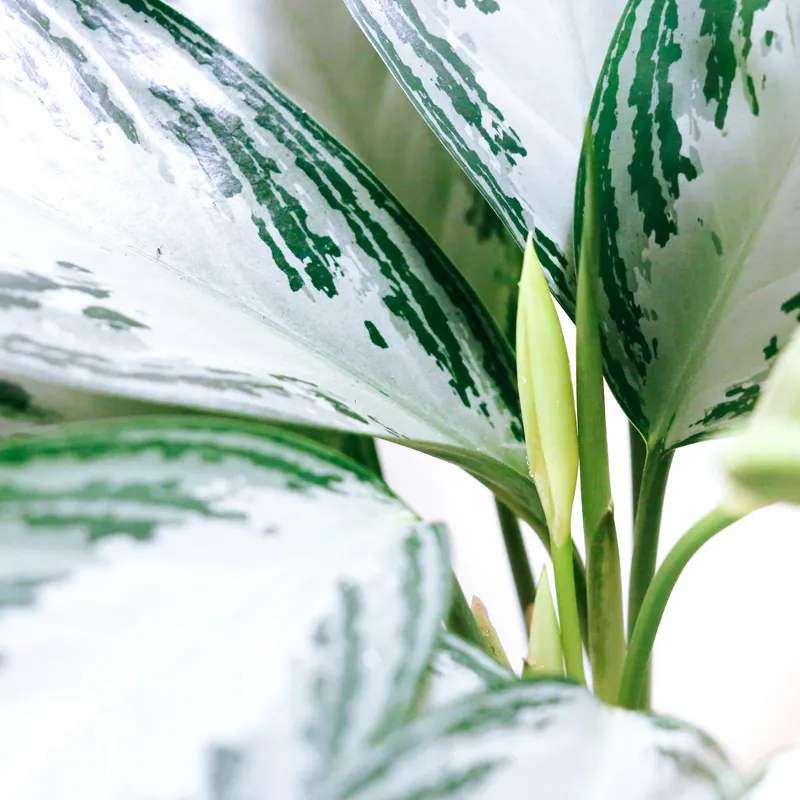
A Chinese evergreen can bring silver, deep green or pink leaves to a room without needing a sunny windowsill. The trick is to match the plant to the light you actually have, then check the pot before watering. Its tolerance of shade does not make a dark corner or a permanently wet cachepot a good home.
Chinese evergreens are Aglaonema species and hybrids. They grow as leafy clumps, with patterns that vary greatly between selections. This guide covers ordinary indoor container care; a plant’s label can help you judge its eventual size and leaf color more accurately than the common name alone.
Choose the leaves for the location
For a room with modest daylight, a green-and-silver plant is a useful starting point. Strongly pink or red selections generally need brighter indirect light to hold their color. University of Florida IFAS makes this distinction between green-and-silver forms and highly colored selections, and warns that excessive sun can scorch the foliage.
Start near a window where the leaves receive light without sitting in strong direct sun. A sheer curtain can soften a harsh exposure. Look at the spot during the brightest part of the day: a comfortable morning position may receive intense afternoon sun. A north-facing window shaded by a deep porch may provide much less light than its direction suggests.
Do not buy a pink-leaved plant for the darkest shelf and expect it to look exactly as it did at the nursery. If the only available position has little useful daylight, consider a suitable grow light before buying. Keep the tag, and take a photograph on arrival so you can compare new growth with the plant you brought home.
Keep it warm through the window season
Clemson Extension gives 68–80°F (20–27°C) as the preferred range and advises avoiding temperatures below 55°F (13°C). Treat that lower figure as a limit to avoid, not a winter-rest target. Chinese evergreen does not need a cold spell to grow well indoors.
Check the position when the heating comes on. Keep leaves away from cold glass and move the pot out of the blast from a heating vent or an exterior door. Check overnight conditions beside the pot, too. Protect a new plant from cold on the trip home.
Average indoor humidity is usually workable. A browning tip does not automatically mean you need to mist several times a day. First look for drafts, very dry air and a watering problem; changing all three at once makes it harder to see what helped.
Check below the surface before watering
Use a pot with drainage holes and a loose commercial houseplant mix. Before watering, feel the upper 1–2 inches of mix, following Clemson’s practical check. If that layer is still damp, wait. When it has dried, water with room-temperature water and let excess drain away. Aim for a root zone that stays lightly moist, rather than cycling between a sodden pot and a completely dried-out root ball.
Lift a nursery pot out of its decorative cover to water it. Empty the saucer or cover afterward; a hidden pool can keep the bottom of the pot wet even when the surface looks dry. If someone else waters the plants, show them that inner pot and the moisture check rather than leaving only a weekday instruction.
Expect the interval to change with conditions. NC State Extension recommends less water in winter, without a true winter dormancy. In practice, check as usual and wait longer when the mix remains moist. A brighter, warmer position may dry sooner than a dim, cool one. Do not give a damp plant extra water simply because a leaf has drooped.
Feed and repot when growth calls for it
Chinese evergreen grows slowly enough that repotting is not an annual requirement. Illinois Extension notes that several years may pass between repottings. Check the roots when the plant has clearly outgrown its container; avoid replacing a manageable nursery pot with an enormous decorative one just for appearance.
When the roots form a dense mass, move up only about 1–2 inches in pot diameter, using a container with drainage. Purdue’s indoor-plant guidance recommends this modest increase and repotting as spring growth begins. Keep the plant at its previous planting depth. The repotting guide walks through supporting the root ball and settling fresh mix around it.
Use a balanced houseplant fertilizer during active growth, following its label for dilution and frequency. Reduce feeding when growth slows. More fertilizer cannot compensate for insufficient light, cold damage or waterlogged roots. Before adding feed, check whether the potting mix already contains fertilizer and whether its stated feeding period has ended.
Read the plant before treating it
Look at leaf undersides and the places where leaf stalks meet the stems. NC State lists mealybugs, scale, spider mites and aphids among possible pests. Cottony clusters or attached bumps deserve a closer look; separate an affected plant from its neighbors while identifying the problem. The mealybug guide shows what to check before choosing a treatment.
Yellow leaves alone do not identify the cause. Check moisture, drainage and recent cold exposure before watering or feeding again. A soft stem base and persistently wet mix warrant a root inspection. An older plant can also develop a bare lower stem as it ages; that is different from rapid collapse in a wet pot.
Choose the location with children and animals in mind. Chinese evergreen contains irritating calcium oxalate crystals. The ASPCA lists it as toxic to cats and dogs, with possible mouth pain, drooling and difficulty swallowing after chewing. Keep the plant and fallen material out of reach, and contact a veterinarian promptly after suspected ingestion. Wear gloves when cutting damaged stems, wash your hands afterward, and keep sap away from eyes and skin.
Sources
- Aglaonema spp.: Chinese Evergreen, Aglaonema (University of Florida IFAS Extension). Accessed October 26, 2026.
- Chinese Evergreen (Aglaonema) Care, Cultivation & Growing Guide (Clemson Cooperative Extension). Accessed October 26, 2026.
- Aglaonema (North Carolina Extension Gardener Plant Toolbox). Accessed October 26, 2026.
- Favorite houseplants of a horticulturist (Illinois Extension). Accessed October 26, 2026.
- Indoor Plant Care (Purdue University Extension). Accessed October 26, 2026.
- Chinese Evergreen (ASPCA Poison Control). Accessed October 26, 2026.