Kitchen skills
Thaw Frozen Fish Safely, from Package to Pan
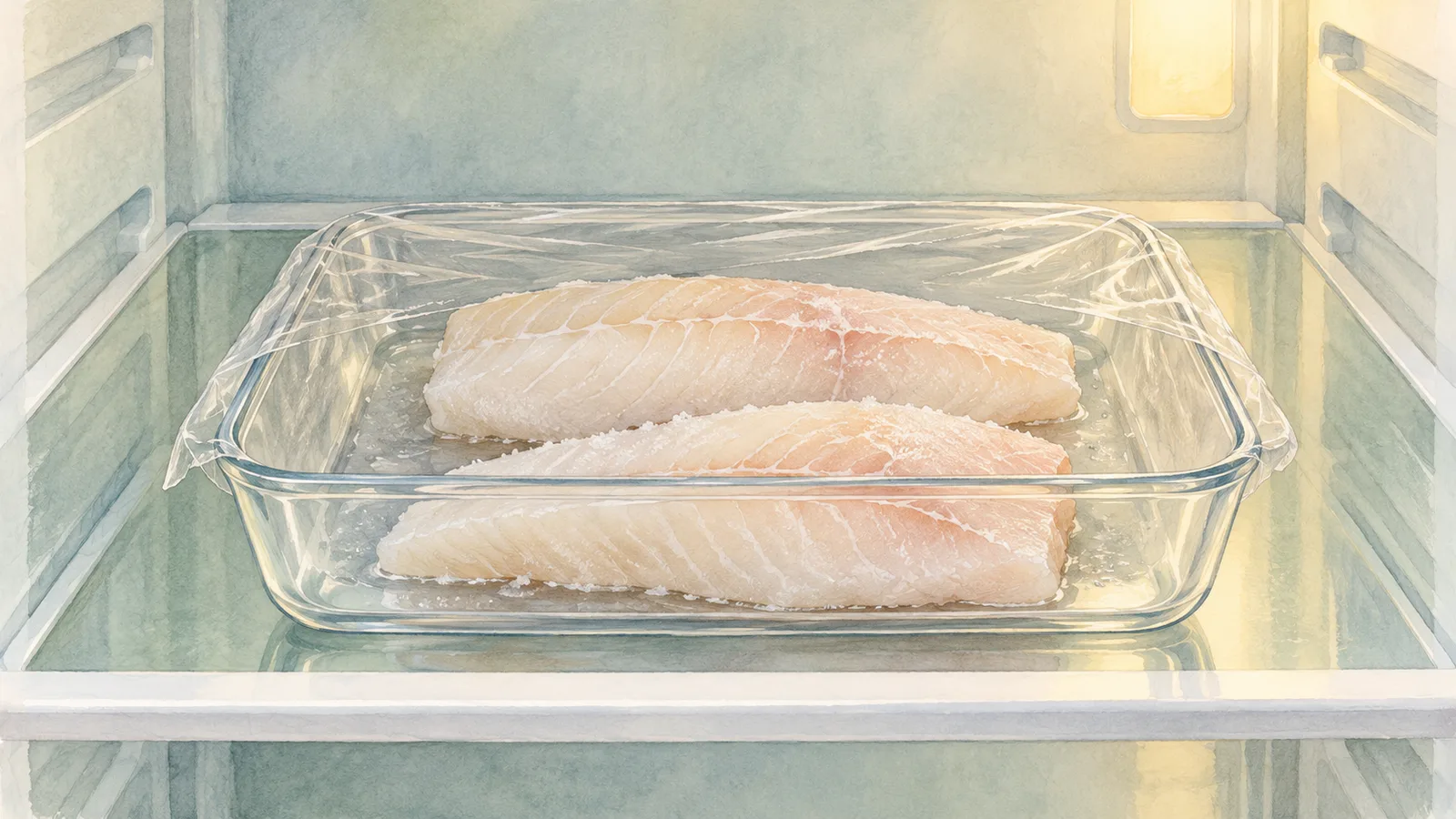
A frozen fillet can be flexible at the edges while its center is still hard. Leaving it on the counter until everything softens also leaves the outside warming for too long. Choose the thawing method before you start dinner, and read the package before moving the fish out of the freezer.
Remove a vacuum pouch before thawing
For fish sealed tightly in a vacuum pouch, take the frozen fish out of that packaging before thawing it. University of Maine Extension explains that vacuum packaging does not eliminate pathogens and that fish needs this precaution because of the risk associated with botulism in reduced-oxygen conditions.
Put the unwrapped fish in a clean container for refrigerator thawing. For a cold-water thaw, transfer it to a new, ordinary leakproof food bag; do not vacuum-seal it again. Removing the outer cardboard box is not the same as removing the tight pouch around the fillet.
Keep and follow the package’s handling instructions. If you discover that fish has already thawed in a pouch that required removal beforehand, do not assume opening it afterward fixes the problem. Ask the manufacturer for advice about that product and its handling history, or discard it if you cannot establish that it was handled safely.
Have time until tomorrow? Use the refrigerator
Set the fish in a container that catches drips, cover it, and keep it separate from ready-to-eat food. The refrigerator should be 40°F (4°C) or colder. An appliance thermometer is useful: a dial setting does not tell you the actual temperature inside.
The FDA recommends an overnight refrigerator thaw. Treat that as a planning allowance, not a promise for every thick piece or frozen block. Check the center before beginning a recipe that calls for fully thawed fish. If it is still rigid, give it more refrigerated time or finish with the cold-water method below.
USDA’s thawing guidance allows another one to two refrigerated days for seafood after it thaws. Follow any shorter package limit. If plans change, USDA’s freezing guidance allows refrigerator-thawed fish to be refrozen without cooking, though quality may decline. Fish thawed in cold water or a microwave needs cooking before refreezing.
Cooking today? Stay with a cold-water thaw
Use this method when you can cook as soon as the fish is thawed:
- Remove any vacuum pouch and put the fish in a clean, leakproof food bag.
- Submerge the bag in cold tap water in a clean bowl. Keep water outside the bag.
- Replace the water every 30 minutes so it stays cold. Set a reminder and check the fish when you change the water.
- Once thawed, take the fish out and cook immediately.
These are USDA’s cold-water thawing precautions. Do not switch to warm water to hurry the middle along, and do not leave the bowl unattended for the afternoon. Portion size and thickness make a fixed “ready in 20 minutes” claim unreliable.
A microwave is another option when cooking will follow immediately. Use its defrost instructions; the FDA advises stopping while seafood is still icy but pliable. Some areas can begin heating before others thaw, so do not microwave-defrost fish now and save the raw fillets for tomorrow.
Move from thawing to the recipe
Keep clean utensils and garnishes away from raw-fish juices. Wash your hands, the container and contacted surfaces after handling the fish. For ginger-scallion steamed salmon, start with the fully thawed fillets specified in the recipe. The same check matters before cutting fish for canh chua.
Thawing is not cooking. Check fin fish at 145°F (63°C) with a food thermometer; the temperature guide explains probe placement. Freezing also does not make a fillet automatically suitable to eat raw.
Do not taste a questionable piece to decide whether it is safe. USDA’s food-safety basics explain why harmful bacteria cannot be judged by smell, appearance or taste. A normal-looking fillet cannot erase an unknown or unsafe thawing history.