Kitchen skills
Check Food Temperature in the Right Place
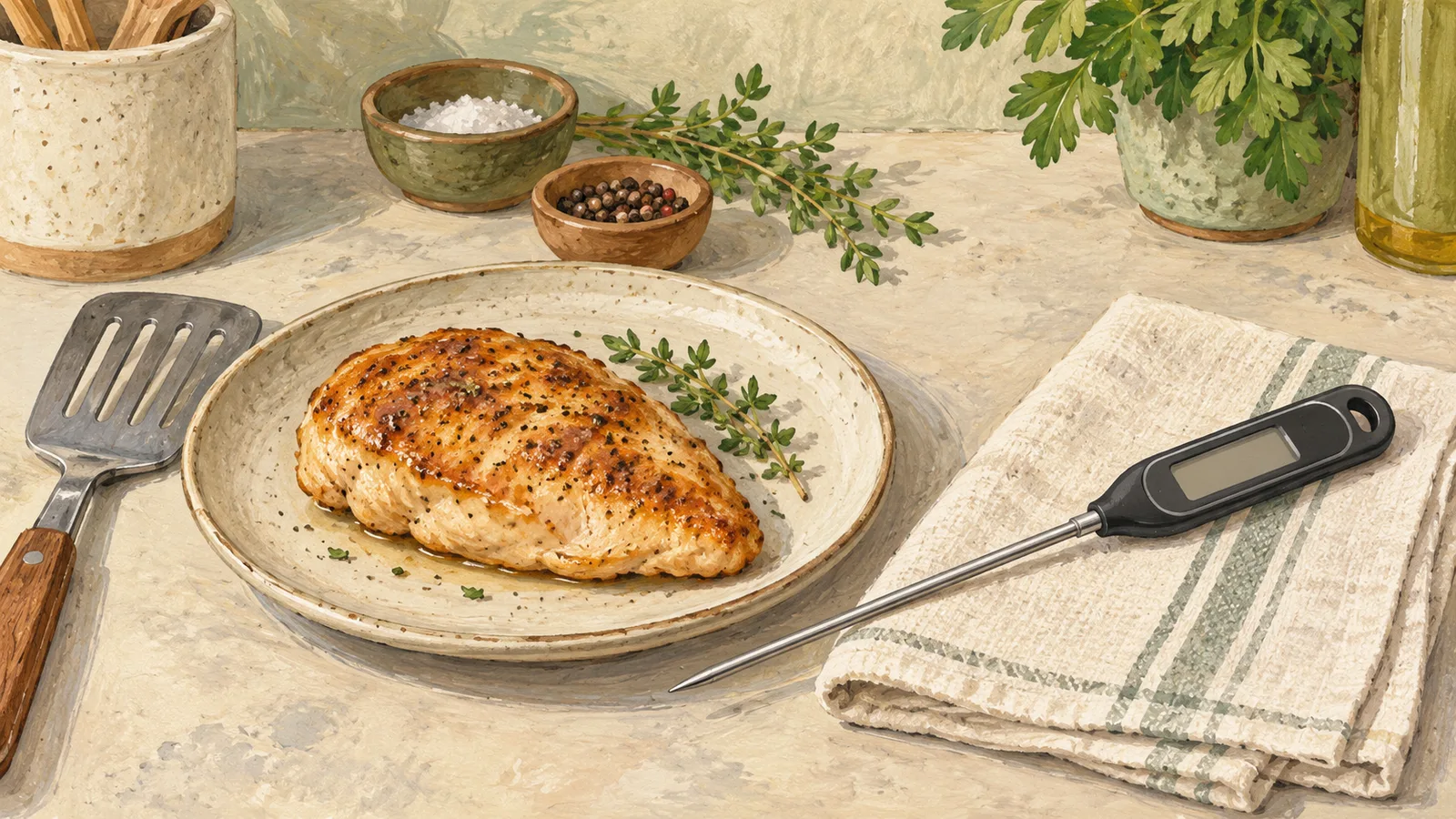
A thermometer can show a reassuring number while its probe is touching the hot pan. Before you trust the display, check where the sensing part of the stem is sitting. It needs to measure the food you are about to eat.
For a thin chicken cutlet, that usually means approaching from the side. For a roast, it means reaching the thickest part without touching bone. The target temperature matters only after the probe is in the right place.
Find the sensing area before dinner
Read your thermometer’s instructions for its minimum insertion depth and response time. A digital display does not tell you how much of the probe must be inside the food. USDA’s thermometer guide distinguishes sensors near a thin probe’s tip from dial bimetal models that sense along roughly two to three inches of stem.
Choose a probe whose entire sensing area fits inside the portion. A long sensing zone is awkward in a shallow piece of fish; a thin-tip model suited to thin foods is more useful there.
Use a handheld instant-read thermometer for spot checks. Leave a probe in an oven or grill only if its manufacturer rates that probe, cable and arrangement for the job. Keep the display unit away from heat as directed.
Enter thin foods from the side
For a patty, cutlet or thin chop, insert the probe horizontally through the side toward the center. Keep the sensing area within the food, clear of the pan beneath it. USDA’s placement advice specifically recommends this approach for thin foods such as sausage patties.
If the angle is cramped, lift the piece with a clean spatula or move it briefly to a clean plate so you can reach the side without leaning over the heat. Return it to cooking if it has not reached its target. Wash any plate or utensil that touched undercooked food before using it for the finished meal.
Check each piece rather than assuming that one reading represents the whole pan. A small patty at the edge and a thick one in the middle can finish at different times.
Check thick foods in more than one spot
Aim for the thickest portion, avoiding bone, large pockets of fat and gristle. On a large or unevenly shaped piece, check several places. Let each reading settle for the time specified by the thermometer before moving it; a quickly changing number is not a finished measurement.
For a whole chicken or turkey, check the innermost thigh and wing and the thickest breast. For a casserole, check the center and additional locations. Keep cooking if any required spot is below the safe minimum, then recheck. A browned surface or clear-looking juice is not a substitute for temperature.
Match the number to the food
These common targets come from the FoodSafety.gov minimum-temperature chart. Ground poultry belongs in the poultry row, even when shaped like a beef burger.
| Food | Minimum internal temperature |
|---|---|
| Chicken and turkey, including ground poultry | 165°F / 74°C |
| Ground beef or pork | 160°F / 71°C |
| Beef or pork steaks, chops and roasts | 145°F / 63°C, followed by at least a 3-minute rest |
| Fish | 145°F / 63°C |
| Reheated leftovers and casseroles | 165°F / 74°C |
For example, the thickest part of steamed salmon needs checking even when its thinner edges flake. Follow package directions for prepared foods and consult the full chart for foods outside this table.
Keep the probe clean and check its accuracy
Wash the food-contact stem with soapy water after each use, following the manufacturer’s cleaning directions. Keep a non-waterproof display out of the sink. Clean between raw or undercooked food and a later doneness check.
University of Minnesota Extension describes an ice-water check for dial thermometers: fill a glass with crushed ice, add water to the top of the ice, stir, and let it stand for three minutes. Immerse at least two inches of stem without touching the glass; after 30 seconds, it should read 32°F / 0°C. Use your own model’s instructions for any different sensing depth or checking procedure.
Checking accuracy and adjusting calibration are separate jobs. Turn a calibration nut or use an adjustment control only as the manufacturer directs, then retest. If an inaccurate thermometer cannot be adjusted, have it serviced or replace it before relying on it for cooking.
A correct final reading also does not undo unsafe storage. Follow the cooling and refrigeration steps in the rice-storage guide before using leftover rice; the thermometer is the last check at reheating, not a way to rescue rice left out overnight.