Ingredients
Choose and Cook with Oyster Sauce
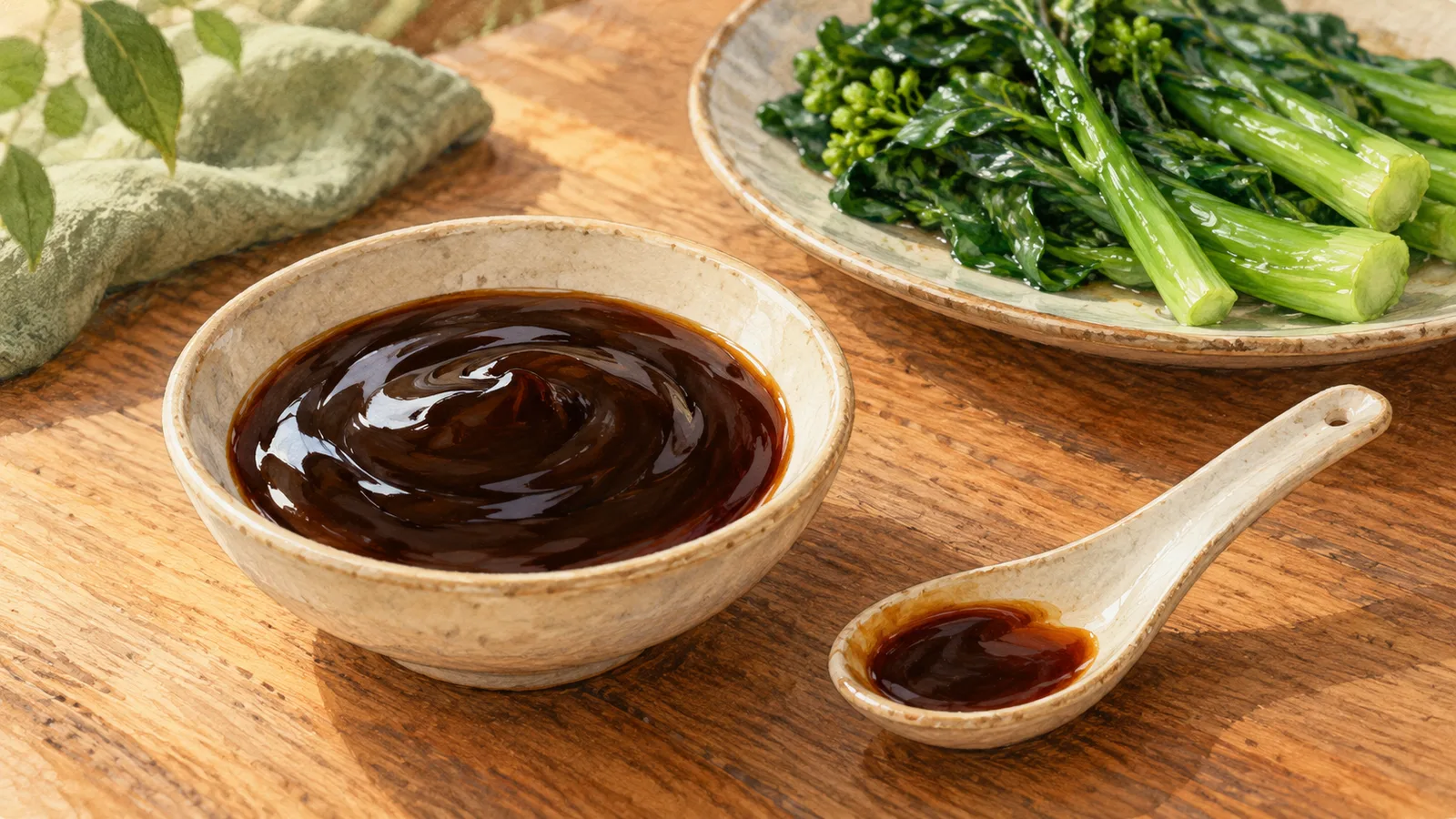
Oyster sauce earns its place in the refrigerator a spoonful at a time. It gives greens, noodles and stir-fry sauces a dark, savory coating, with sweetness as well as salt. That combination is useful—but it also means a generous squeeze can change a dish more than you intended.
The familiar brown sauce is made with oyster extract and other seasonings. It is thick enough to cling to food, unlike the thin pour of most soy sauces. The Woks of Life’s ingredient guide describes a sweet, salty, savory flavor with a milder seafood character than fish sauce. Expect a seasoning, not the taste or texture of a bowl of oysters.
Turn the bottle around before buying
“Oyster-flavored sauce” can still contain real oysters. Read the ingredient list rather than treating that wording as a vegetarian claim. Depending on the formula, you may also find sugar, salt, starch, soy or wheat.
Compare bottles using the actual ingredients and nutrition panels. Check that the serving sizes match before comparing sodium. A bottle that suits one recipe may taste sweeter or saltier than the one you used last time; keep that in mind before adding the recipe’s optional extra seasoning.
For vegetarian cooking, look for a mushroom-based vegetarian stir-fry sauce intended to replace oyster sauce, then check the complete label. Just One Cookbook’s oyster-sauce guide describes this thick, savory alternative. It changes the flavor, but offers a closer starting texture than plain soy sauce. “Vegetarian” does not automatically mean gluten-free or suitable for every allergy.
Check oysters separately from the “Contains” line
If you need to avoid oysters, ordinary oyster sauce is unsuitable. Also check for wheat, soy and any other ingredients you avoid; formulations differ.
In the United States, oysters are molluscan shellfish. They are not included in the major-allergen category for crustacean shellfish such as shrimp and crab. The FDA explains this distinction in question B.9 of its allergen-labeling guidance. A “Contains” statement alone therefore cannot settle whether the sauce contains oysters. Read the ingredient list, including extracts, and contact the manufacturer when the answer is unclear. Do not serve an uncertain sauce to someone who must avoid it.
Measure it into the sauce, then judge the finished dish
For a stir-fry, measure oyster sauce into the other sauce ingredients before heating the pan. Stir until evenly combined so you are not chasing a thick blob around the vegetables while they cook. Use the liquid and starch quantities in your recipe: the bottled condiment’s thickness does not tell you how much slurry a whole pan of food needs.
The skillet stir-fry guide helps with batch size and managing vegetable moisture. If your recipe calls for starch, the cornstarch slurry guide explains how to mix and add it. Neither extra oyster sauce nor extra starch can fix every watery pan; first check whether the vegetables released more liquid than expected.
For a simpler use, follow gai lan with oyster sauce. That recipe finishes drained greens with the sauce directly. Start with its stated amount and taste before adding more; oyster sauce already brings salt and sweetness to the plate.
Don’t replace it tablespoon for tablespoon with whichever dark sauce is nearby. Soy sauce, fish sauce and hoisin can supply parts of a savory sauce, but they change its balance. When oyster sauce is the main flavor, use it or a suitable vegetarian equivalent. Otherwise, choose a recipe written for the condiment you have.
Keep the opened bottle clean and cold
Refrigerate after opening and follow the bottle’s storage and use-by instructions. Both culinary references recommend refrigeration; neither a dark color nor a salty taste makes the sauce immune to contamination.
Use a clean utensil, close the cap and return the bottle to the refrigerator. Do not dip a spoon used on raw meat back into it. Marking the opening date on the bottle makes its instructions easier to follow. Buy a size you can use comfortably rather than relying on one universal shelf-life promise for every formula.