Ingredients
Leeks: Clean the Layers Before They Reach the Pan
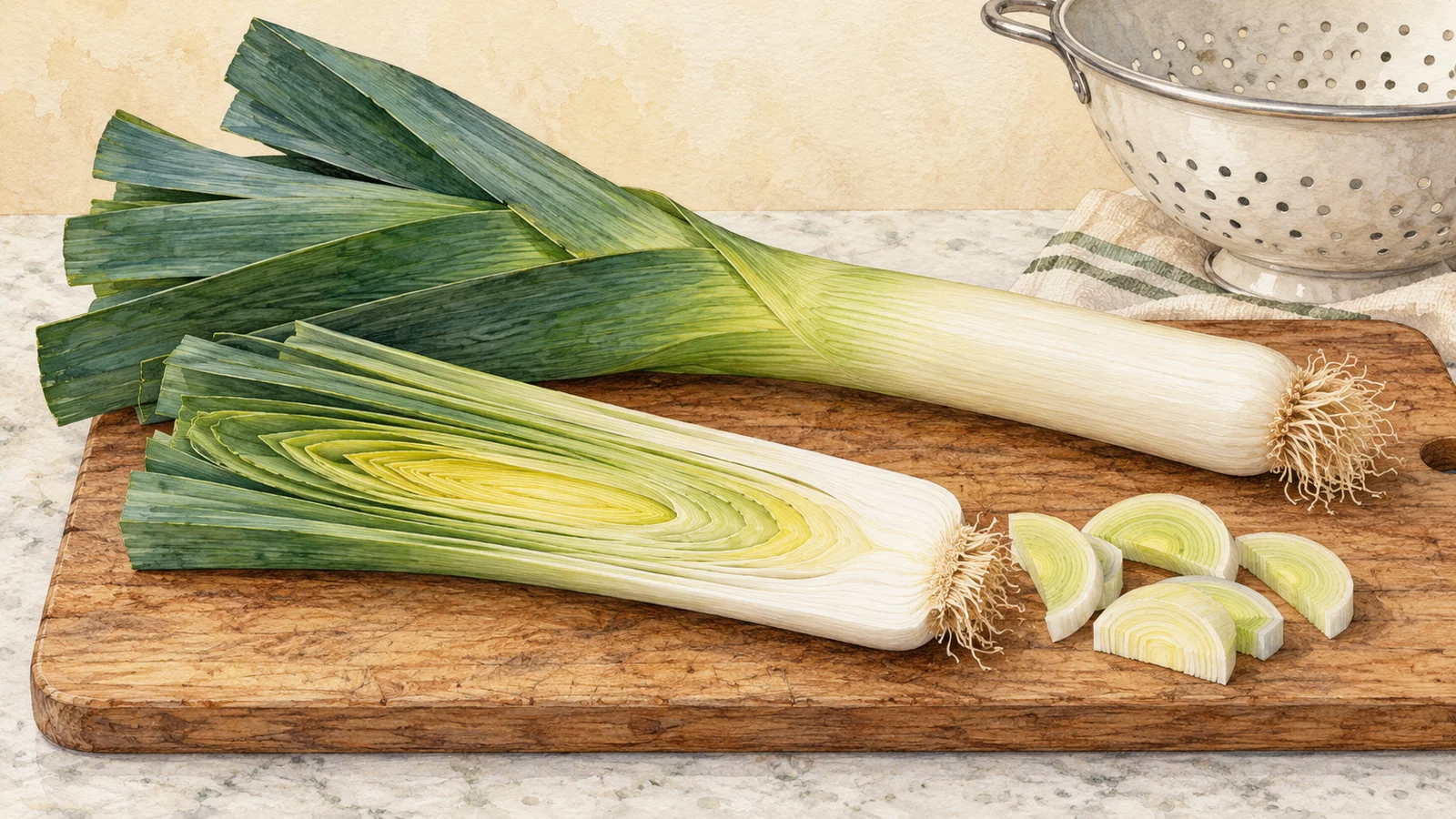
A leek can look clean on the outside and still carry sand between its tightly folded leaves. Rinsing the stalk like a carrot misses those pockets. Open the layers, wash where they overlap, and only then make the cuts you need for dinner.
Start with a firm stalk
Choose leeks with crisp leaves and a firm white-to-light-green lower section. Pass over yellowed, badly wilted specimens. The pale portion is the part most recipes mean when they call for chopped or sliced leek; a long white shank gives you more of it.
Keep whole leeks unwashed in a bag in the refrigerator until you need them. Iowa State Extension gives up to two weeks for refrigerated storage, but that is not a promise for a leek already past its best. Use it sooner if the leaves are losing freshness, and discard rotten leeks. Keep the refrigerator at 40°F (4°C) or below.
Split, open and rinse
Set out a clean knife, cutting board and colander. Wash your hands with soap for 20 seconds. Rinse loose dirt from the outside of the leek before making the first cut.
- Trim the ends. Cut away the roots and the tough dark-green upper leaves. Peel off damaged outer layers. Set aside sound green tops if you want them for stock.
- Cut lengthwise. Split the white and light-green section down its length. This exposes the places where leaves wrap around one another.
- Open the layers under cool running water. Gently spread them with your fingers so water reaches each overlap, especially toward the greener end. Separate stubbornly dirty layers instead of trying to rinse through a tightly closed bundle.
- Check before chopping. Look inside the folds for remaining sand or soil. Rinse any gritty areas again, then place the cleaned leek in the colander. Keep it away from dirty trimmings and wash the board before returning it there.
This follows the split-and-rinse approach in Oregon State Extension’s leek guide. Soil is often drawn up around growing leeks to keep their lower stems pale; it can lodge between the layers. A spotless outer leaf does not tell you what is inside.
Use plain running water on the vegetable. Soap belongs on your hands and equipment, not on the leek. The FDA’s produce guidance advises against soap, detergent and commercial produce washes. Washing reduces contamination but does not make raw produce sterile.
Make the cut your dish needs
Pat the washed pieces dry with a clean towel. For half-moons, lay a split section flat on the board and slice across it. For longer pieces, keep the washed halves intact and cut them to the length specified in your recipe. If a layer came loose during washing, lay it flat and cut it separately.
Check the recipe before choosing the thickness: a soup full of small pieces and a dish of long braised leeks need different cuts. Try to keep pieces within the same batch similar in size. Do not leave a dirty inner fold intact just to preserve a tidy shape.
Leeks have a mild onion flavor and can be eaten raw or cooked. Use cleaned thin slices where a recipe calls for raw leek; use cooked pieces in soup, quiche or mashed potatoes. SDSU Extension’s leek factsheet suggests these uses and leeks as an onion substitute in soups and stews. They are not an exact substitute for every allium: scallions and garlic chives bring different textures and flavors.
The dark-green leaves need the same careful cleaning. Their tougher texture makes them useful for flavoring stock rather than treating them like the tender shank; strain them out with the other stock vegetables.