Recipes
Doenjang Jjigae with Tofu and Zucchini
Make a small pot of Korean soybean-paste stew with tofu, zucchini, potato and mushrooms, with a complete cooking card and seasoning checks.
Jump to recipe ↓Recipe
- Total time
- About 35–45 minutes, plus separate rice
- Method
- Stovetop simmer
- Difficulty
- Easy
- Allergens
- Soy · Possible wheat or seafood in doenjang; check label
About 2 servings, with rice alongside
Allow roughly 35–45 minutes, depending on chopping speed and how quickly the potato softens. Rice is separate. Contains soy; doenjang may contain wheat or seafood ingredients, so check the label for your dietary needs.
Equipment: Stable cutting board, knife, peeler, measuring cup and spoons, small bowl, 2-quart saucepan, fork, stirring spoon, ladle and food thermometer for reheating.
Ingredients
- 2 cups (480 ml) water, plus extra in small splashes if needed
- 2 tablespoons plain doenjang (Korean fermented soybean paste), plus up to 1 tablespoon to adjust to taste
- 1 small potato, about 100 g, peeled and cut into ½-inch cubes
- ¼ medium onion, thinly sliced
- 3 fresh shiitake mushrooms, tough stems removed and caps sliced
- ½ medium zucchini, about 125 g, cut into ½-inch half-moons
- 2 garlic cloves, minced
- 8 ounces (225 g) medium-firm tofu, drained and cut into ¾-inch cubes
- 1 scallion, thinly sliced
- ½ teaspoon gochugaru (Korean red pepper flakes), optional
Method
Prepare everything before heating
Wash hands with soap for 20 seconds. Rinse the vegetables and mushrooms under running water without soap, then prepare them as listed. Drain and cut the tofu gently. Keep the stove off until the chopping is finished; have all ingredients within reach.
Convert a measurement for this stepLoosen the soybean paste
Measure the water listed in the ingredients. In a small bowl, stir the initial amount of doenjang with a little of that measured water until the large lumps break up. Pour this mixture and the remaining measured water into the saucepan.
Convert a measurement for this stepGive the potato a head start
Add the potato, onion and mushrooms. Bring to a boil over medium-high heat, then reduce to a steady gentle simmer. Cook uncovered, stirring occasionally and staying nearby, until the potato is nearly tender, roughly 8–12 minutes after simmering begins. A fork should enter a cube with only slight resistance. Add a small splash of water if the liquid drops too far to cook the vegetables.
Convert a measurement for this stepCook the zucchini and garlic
Add the zucchini, garlic and optional gochugaru. Simmer gently for about 5–7 minutes, until the zucchini is tender but keeps its shape and the potato has no firm center when pierced. Continue cooking if the potato needs longer; texture decides when to move on.
Convert a measurement for this stepWarm the tofu and adjust the broth
Lower the tofu into the pot and simmer gently for about 3–5 minutes, until hot through. Fold carefully with a spoon instead of stirring hard. Taste a cooled spoonful of broth. If needed, dissolve extra doenjang in a little hot broth and add it a teaspoon at a time, up to the reserved amount listed in the ingredients. For an overly salty broth, add water a small splash at a time. Return to a gentle simmer after any additions.
Convert a measurement for this stepFinish with scallion
Stir in the scallion and cook for about a minute. Turn off the burner. Ladle into heat-safe bowls and serve carefully with separately prepared rice; the broth and tofu will be very hot.
Convert a measurement for this stepCool and store extra portions
Refrigerate leftovers promptly in shallow containers at 40°F (4°C) or below, within two hours or one hour above 90°F (32°C). Use within 3–4 days. Discard food left out too long. When reheating, bring the broth to a boil and check the stew reaches 165°F (74°C) throughout with a food thermometer.
Convert a measurement for this step
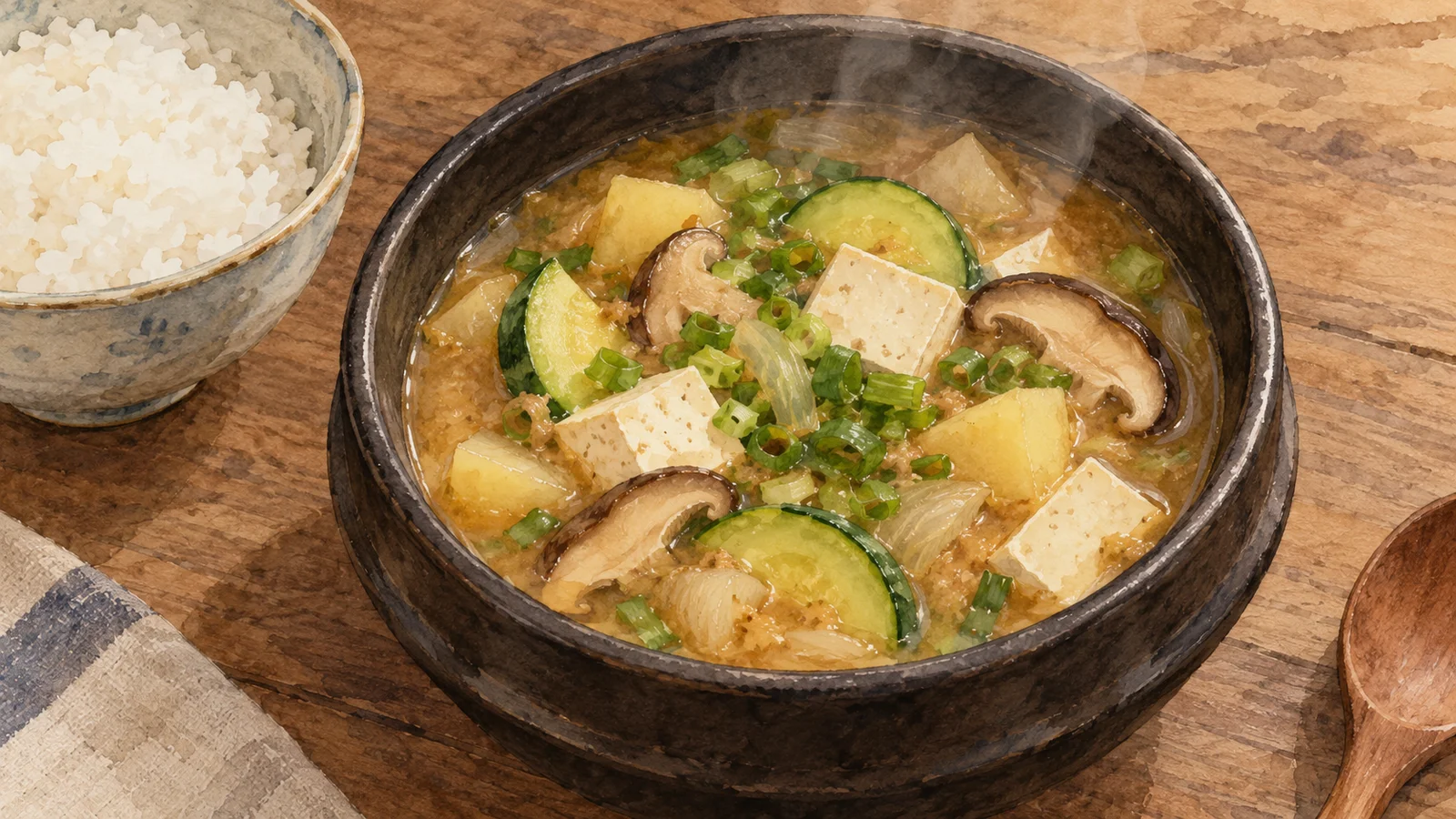
Doenjang gives this small pot of stew its deep, salty soybean flavor. Potato softens into the broth, zucchini stays in generous pieces, and tofu goes in near the end so it can warm without falling apart. Put rice alongside and let a spoonful of stew season each bite.
This version uses mushrooms and water, so there is no separate stock to make. The paste does much of the work. Start with the measured amount, let the vegetables cook, and taste before adding more: two tubs of doenjang can make noticeably different broths.
Choose doenjang for this pot
Look for doenjang, Korean fermented soybean paste. Ssamjang is a seasoned dipping paste, and gochujang is a red chili paste; neither is the ingredient measured in this recipe. Doenjang and Japanese miso are both soybean pastes, but they give different results. Save miso for a recipe such as miso soup with tofu and wakame.
Check the ingredient list, especially if you need the stew to be vegetarian or avoid wheat. Soy is already present in both the paste and tofu, and seasoned pastes may include other ingredients. Choose plain doenjang rather than assuming every brown paste is interchangeable. Once opened, follow the tub’s storage directions and use a clean utensil to take out what you need.
For a first pot, resist adding soy sauce or salt before tasting. A small addition of doenjang increases both soybean flavor and saltiness. If the broth tastes well seasoned but you want a more substantial meal, serve more rice alongside rather than making the stew progressively saltier.
Keep the vegetables spoon-sized
The potato needs more cooking time than the zucchini. Small, even cubes give it a head start without leaving you with a pot of collapsed squash. Pierce a potato piece before adding the tofu; a chalky center needs more time, whatever the clock says.
Use medium-firm tofu for pieces that are easy to lift with a spoon. It only needs draining here, not a long pressing session. If your package is labeled differently, the tofu guide explains how texture changes its use. Very soft tofu will break more readily when you stir, while extra-firm tofu gives a denser bite.
The sliced mushrooms add another texture without requiring meat preparation. Fresh shiitake caps fit this version; remove their tough stems. Do not add a handful of dry mushrooms straight into the pot as though they were fresh—their preparation and the liquid they absorb are different.
Make the broth fit the meal
Jjigae is a stew, so expect plenty of vegetables and tofu in a relatively small amount of liquid. You should still be able to ladle broth around them. If the pan boils hard and dries down, lower the heat and add a little water. A gentle simmer makes it easier to keep the tofu intact and control the concentration.
The optional gochugaru adds chili warmth. Leave it out for a milder pot, or add the measured amount with the zucchini. Heat is easier to increase at the table than to remove from a finished stew. Keep the first batch simple enough that you can taste the doenjang itself.
Rice turns the stew into a fuller meal. If you are cooking it from scratch, plan its separate cooking and resting time before starting the stew; jasmine rice in a saucepan has a complete method. Have bowls and a ladle ready before the final scallion goes in, so the vegetables do not keep simmering while you set the table.
Recipe sources and leftovers
The soybean-paste proportion and vegetable combination draw on Hyosun's doenjang jjigae at Korean Bapsang. Joanne Lee Molinaro's mushroom-and-tofu version supports a meatless pot with water as an option, while Maangchi's method adds tofu after the vegetables. This version omits meat, seafood and the separate chili-oil step; it is a gentler, small-pot variation.
Transfer extra stew to shallow containers promptly instead of leaving the saucepan on the stove to cool for hours. The storage limits in the card follow FDA food-handling guidance and the FoodSafety.gov soup-and-stew storage chart. Reheat only the portion you want, stirring gently so the center of the tofu heats along with the broth, and check for 165°F (74°C) with a thermometer.