Ingredients
Cut Fresh Ginger for the Texture You Want
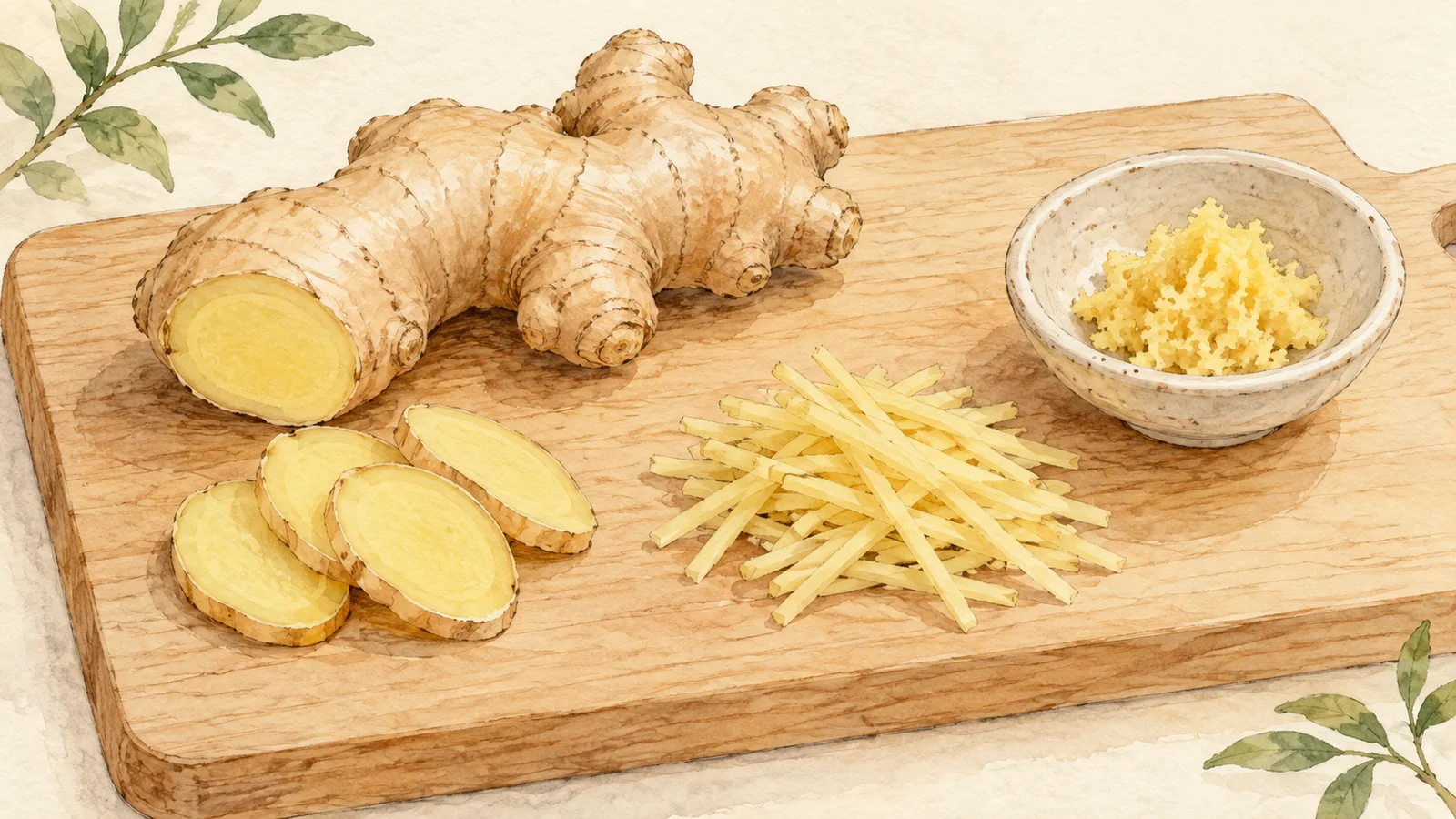
A spoonful of grated ginger will disappear into a sauce in a way that a few broad slices will not. Before cutting the knob on your board, read the verb in the ingredient line. Sliced, julienned, minced and grated ginger begin with the same ingredient, but leave different pieces in the finished dish.
Wash before peeling
Choose firm ginger with smooth skin. Very knobbly pieces are usable, though a broad section gives you more room to make even slices. Aneesha Gupta’s ginger preparation guide shows the progression from whole ginger to slices, strips and finer cuts.
Rinse the ginger under running water, rubbing away dirt before peeling or cutting. Dry it with a clean towel. The FDA’s produce guidance recommends washing before peeling so the knife does not carry dirt from the surface into the food. Use plain water, not soap or produce wash, and start with clean hands and utensils.
Scrape thin skin with the edge of a teaspoon, or use a vegetable peeler where it fits comfortably. Separate an awkward branch if it prevents you from reaching a crease. Peeling is useful when the skin would remain as noticeable bits in a fine sauce or garnish; the aim is to remove the outer layer without shaving away a thick portion of ginger.
Work from slices toward smaller pieces
Set the ginger securely on a cutting board. Make a flat resting surface if the piece rocks, and keep your guiding fingertips curled away from the blade. Work slowly enough to control each cut. Namiko Hirasawa Chen’s knife guide illustrates the curled guiding hand and the slice-to-strip method.
Slices: Cut across the lengthwise fibers into coins or short, flat pieces of the thickness your recipe requests. Broad pieces are easy to recognize in a broth or braise. If the recipe tells you to remove them before serving, count them as they go in rather than hiding tiny fragments throughout the pot.
Matchsticks: Lay a few thin slices flat, stack them only as high as you can control, and cut into narrow strips. Keep the strips reasonably even. These are useful when ginger should remain a distinct part of the dish, as in ginger fish-sauce chicken. A thick baton will give a different bite from a fine strand, even when the total ginger quantity is the same.
Mince: Turn the strips across your knife and cut them into small pieces. Gather those pieces and chop more finely if needed. Stop when their size suits the recipe; chopping longer is not automatically an improvement. The ginger-scallion sauce for seared tofu uses finely minced ginger. You can see small minced pieces, while grated ginger is wetter and more pulpy.
Grate for a sauce that needs fine ginger
Use a fine grater over a plate or bowl to catch the moist pulp. Keep a comfortable length to hold and stop before your fingers approach the teeth. Do not push the last tiny piece through just to avoid leaving a scrap.
Measure the prepared amount the recipe requests. An inch-long piece can be narrow or thick, so it is a poor substitute for a specified spoonful or weight. Likewise, do not replace a measured amount of slices with the same volume of tightly packed pulp and assume the dish will be unchanged.
Freeze the cut you reach for
If the remaining ginger has no near-term use, prepare it while it is still in good condition. Sarah Leung’s freezing guide uses peeled discs in a freezer bag with excess air pressed out. Dry the outside well before slicing; extra surface water can freeze the pieces into a clump.
Spread the slices in a thin layer in the bag, seal it and label the contents and date. Take out what the dish needs and return the rest to the freezer. Thin frozen slices can go directly into a simmering dish; follow the recipe’s cooking method. Preparing slices also leaves the option to chop them smaller later.
Keep a little unfrozen ginger for the fine cuts you want to make immediately. That way, tonight’s sauce gets its grated spoonful, and the rest has a clear use instead of becoming an unidentified bag of scraps.