Ingredients
Chinese Five-Spice Powder: Start with a Pinch
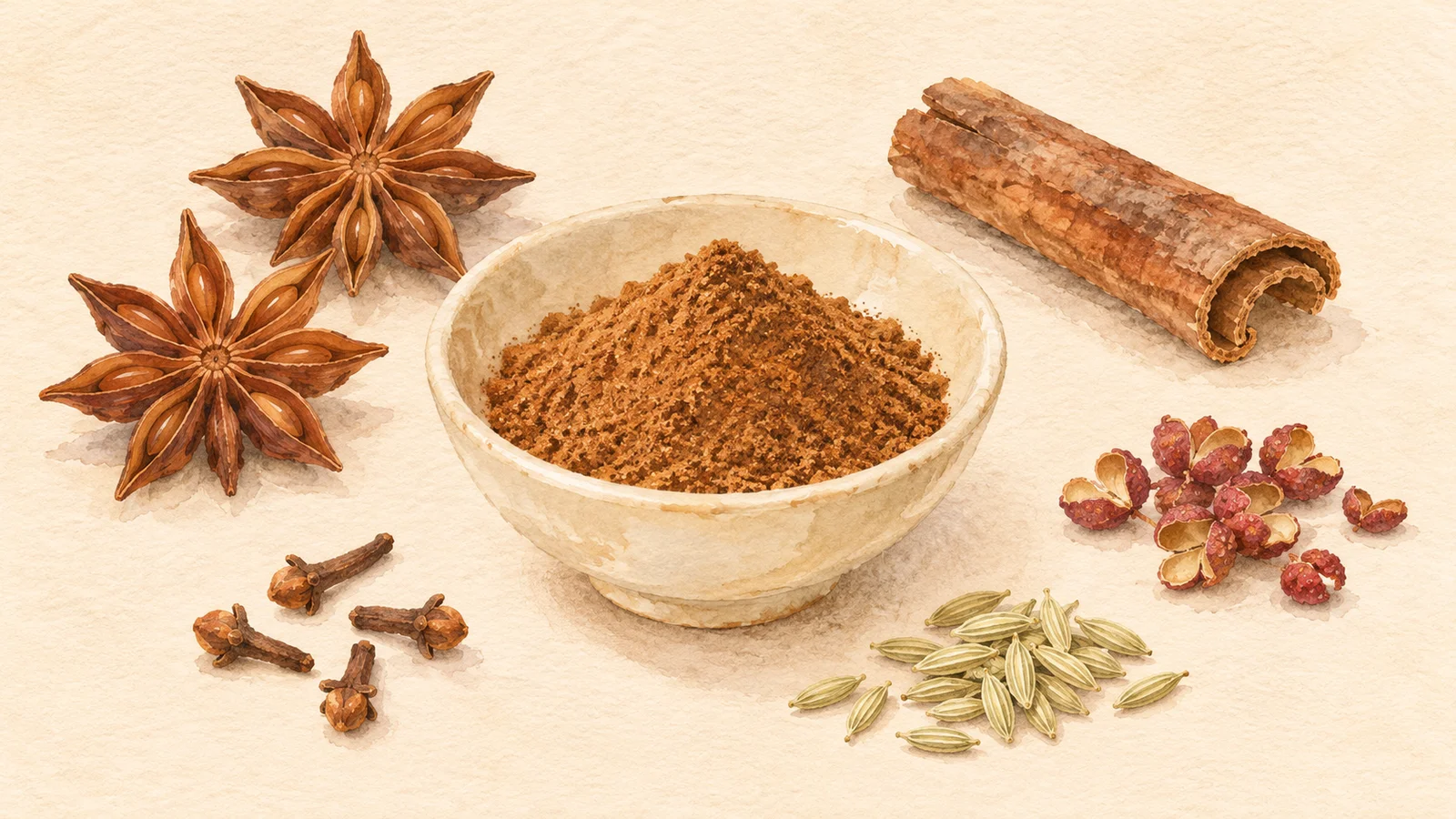
Open a jar of Chinese five-spice powder and the aroma arrives before the heat does: licorice-like star anise, warm cinnamon and the sharp edge of cloves. It can make a roast or braise smell wonderfully full with a small amount. A heavy hand can make every bite taste mainly of the spice jar.
Treat it as a concentrated seasoning. Begin with the amount in a recipe you trust, and get to know your particular blend before adding more.
Five spices, with room for variation
A familiar combination is cinnamon, cloves, fennel seeds, star anise and Sichuan peppercorns. The Woks of Life’s ingredient guide describes warm, sweet-smelling notes alongside floral pepper and pungent clove. “Sweet-smelling” does not mean the powder contains sugar, and five-spice is not primarily a chile seasoning.
The name is not a promise of one fixed formula. In their guide to making the blend, the Leung family notes that ginger or white pepper may take the fifth position. Other versions add further spices. Read the ingredients rather than assuming two brown powders will taste alike.
That matters when you replace an empty jar. A new blend may put cinnamon in front or give cloves more room. Use the first dish as a chance to recalibrate your seasoning, even if the package says the same thing as the old one. Our Sichuan peppercorn guide explains that ingredient’s citrusy aroma and tingle; a blend without it will have a different character.
Give it a job in the dish
Five-spice often belongs in a marinade or dry rub for pork, chicken or duck. It also appears in seasoned salt served with roasted or fried meat. Those uses are different: a seasoning mixed through food before cooking is not the same as a concentrated dip at the table.
Follow the recipe’s addition point and measure into a spoon. Avoid shaking an unfamiliar jar freely over a whole tray. If a sauce also contains soy sauce, count that as a separate seasoning decision; five-spice adds aroma, while soy sauces differ in saltiness, color and sweetness.
For improvising with an already cooked soup or sauce, try a tiny pinch in a spooned-out portion first. Stir and taste that sample before seasoning the pot. University of Delaware Extension recommends testing spice combinations in a separate portion and starting conservatively. Taste only food that is ready to eat, never a raw-meat marinade.
There is no universal spoonful-per-pound rule here. The blend, the food and the strength you enjoy all matter. If you want a complete starting point, the recipes linked in The Woks of Life’s guides give quantities and cooking instructions together.
Keep the jar fragrant
Close the lid after measuring and keep the powder somewhere cool, dry and shaded, away from the stove. Use a clean, dry spoon. The UCCE Master Food Preservers’ spice-storage guidance cautions against shaking spices straight over a steaming pot, which carries moisture back into the container.
Buy a size you can use while the aroma is lively. If the powder smells faint, adding more may bring a dusty mouthful without restoring the missing fragrance. Delaware Extension makes the same distinction between quantity and freshness. Check the label’s storage directions and replace a tired jar when its aroma no longer contributes much.
If you would rather mix your own, use a complete blend recipe instead of assuming “five” means equal parts. The proportions are what turn several forceful spices into one seasoning.