Ingredients
Sichuan Peppercorns: Aroma and Tingle Without the Grit
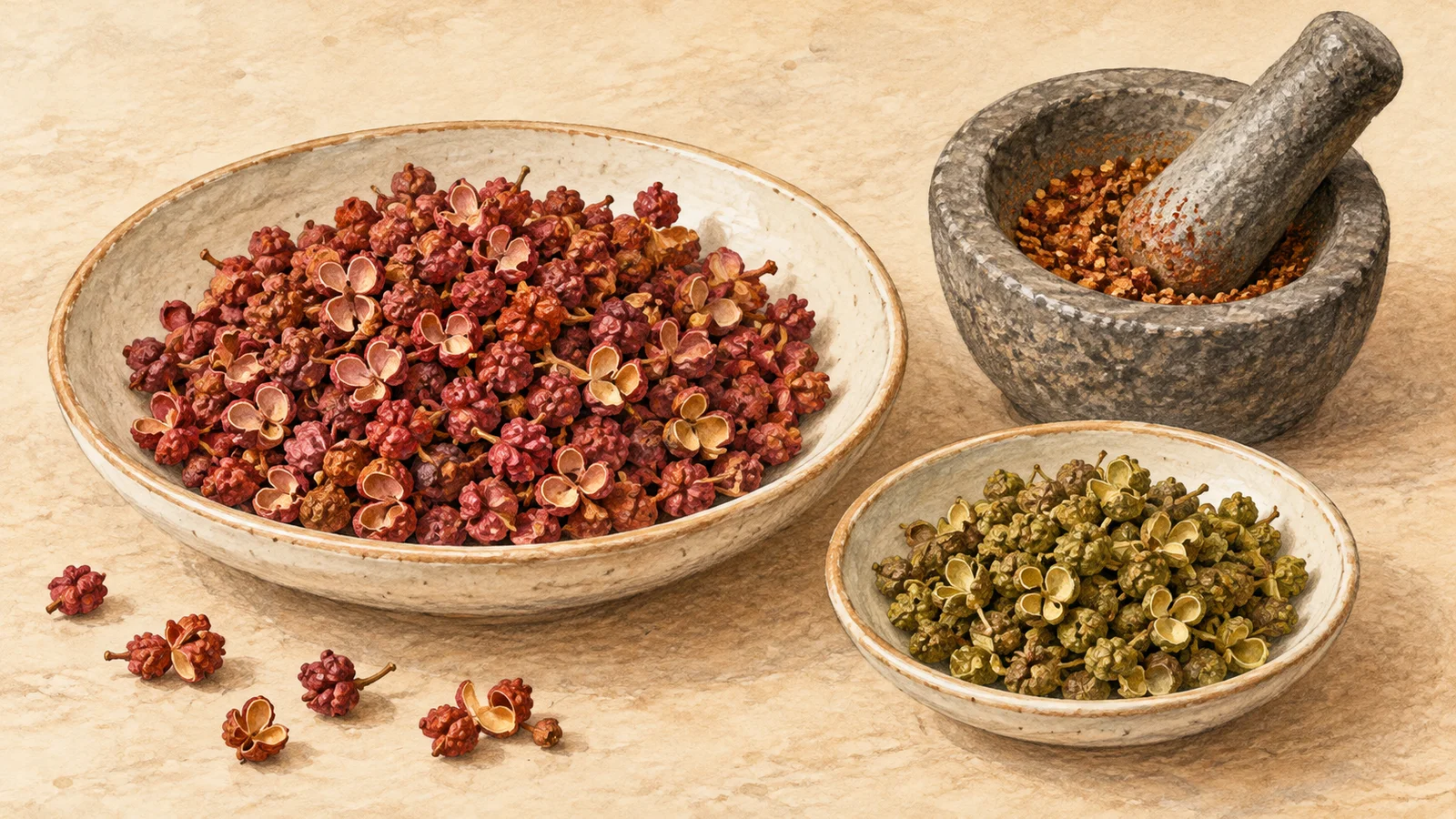
Look closely at a Sichuan peppercorn: the useful part is the little open husk. The shiny black seed sometimes tucked inside is hard and gritty. Sorting those seeds out before cooking makes a bigger difference to texture than grinding everything more finely.
Sichuan peppercorns, huā jiāo (花椒), bring a citrusy, floral aroma and a tingling sensation. They are different from both black pepper and chilies. In málà (麻辣) dishes, Sichuan pepper supplies the numbing side of “numbing-spicy”; chilies supply the heat. The Woks of Life’s ingredient guide explains that distinction and the role of the aromatic husks.
Choose red or green to suit the dish
Red Sichuan peppercorns are the familiar choice for many stir-fries, braises and málà dishes. Green ones have a brighter, more herbal citrus character. They are not simply red peppercorns picked early. Maggie Zhu’s guide describes the two types and their different flavor profiles.
Use the type named in your recipe when possible. If it just says “Sichuan peppercorns,” red is a practical starting point. You can experiment with green later, once you know how much tingle you enjoy. Color alone does not tell you how strong a particular packet will be.
Buy whole husks in a quantity you will use, rather than a large bag that will linger behind the stove. Look for open husks with relatively few black seeds and twig fragments. At home, crush a little between your fingers and smell it: the fragrance should be noticeable. A dull-smelling packet will not suddenly become aromatic because you double the quantity. Wei Guo’s buying guide covers appearance, aroma and sorting.
Match the form to the job
Whole husks can flavor the oil at the start of a stir-fry or season a braising liquid. Follow the recipe’s heat and timing. If it tells you to remove the peppercorns after infusing the oil, do that before adding the next ingredients. A whole husk left in the finished dish can deliver an unexpectedly concentrated bite; you can leave it on the plate.
Fine powder spreads through a sauce or dressing and works as a finishing seasoning. Start with the recipe’s amount. For an extra sprinkle at the table, put a little on one bite first instead of covering the whole bowl. Freshly ground spice and an older packet may differ noticeably in intensity.
Both forms have a place. Powder is useful when you want the seasoning distributed throughout the food; whole husks suit preparations in which they can flavor the dish and then be removed or avoided. Neither needs to be treated like the black pepper in a table grinder.
Toast gently, then cool before grinding
Spread the husks on a light-colored plate and remove the black seeds and stems. For ground spice, lightly toast the sorted husks in a dry pan over low to medium-low heat, moving them around. When they smell fragrant and look slightly glossy, tip them onto a plate. Do not keep cooking until they darken or smoke: overtoasting makes them bitter.
Let them cool completely, then use a mortar and pestle or spice grinder. Pass the powder through a fine sieve to catch coarse pieces. Wei Guo’s grinding method explains why sorting, cooling and sifting all matter. Grind only a small amount, especially when you need a finishing sprinkle.
Keep the fragrance in the jar
Seal the remaining whole husks in an airtight container, away from heat, light and moisture. Keep ground spice in a small closed container and use it promptly; its aroma fades faster than that of whole husks. Follow any storage directions on the package.
Black pepper can still season dinner if you have run out, but it will not recreate Sichuan pepper’s tingle. For a dish built around málà, replacing that missing ingredient with more chili changes the balance toward heat. Choose another dish or wait until you have the peppercorns the recipe calls for.