Ingredients
Cooking with Fermented Black Beans
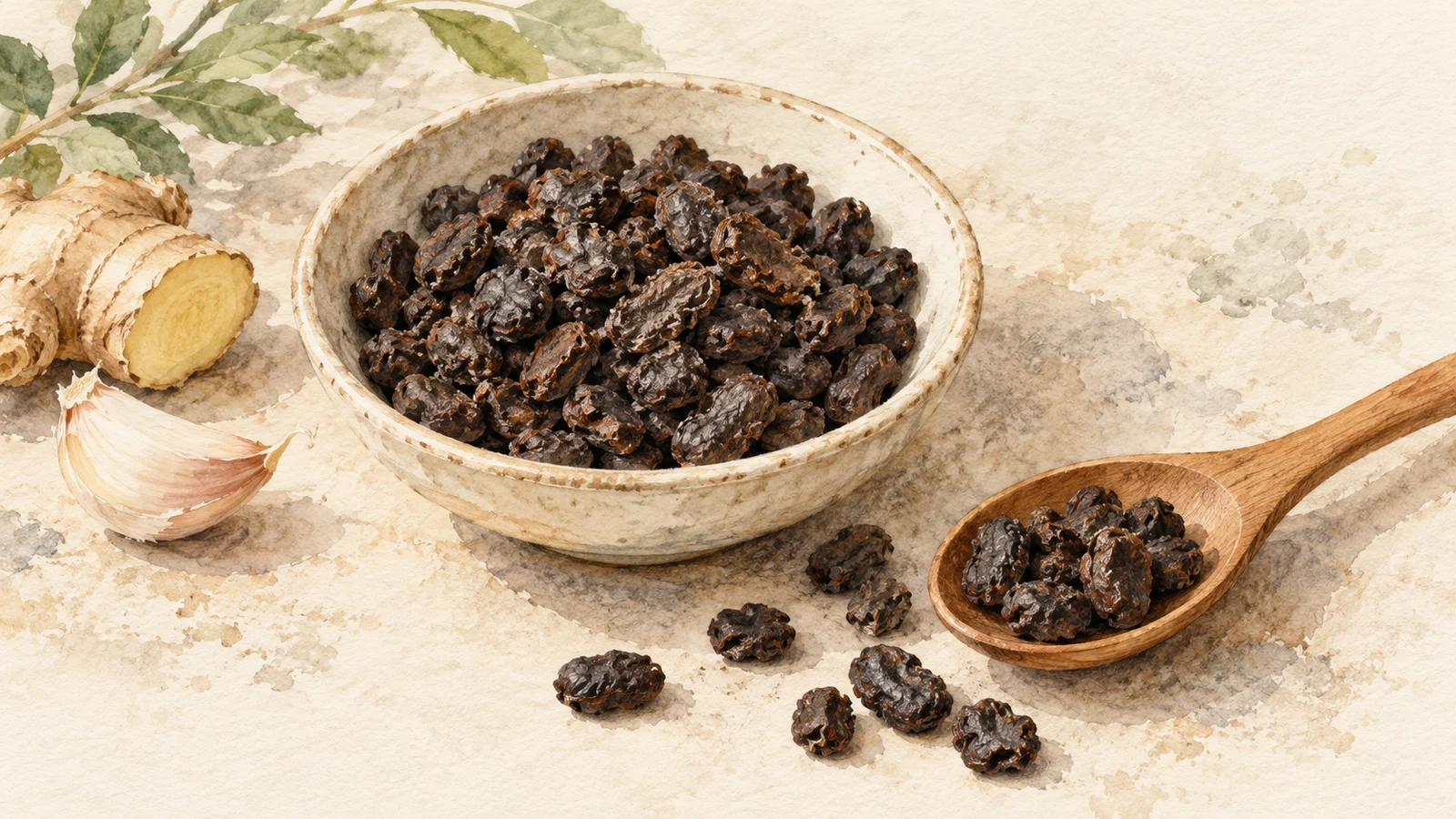
A few fermented black beans can give a sauce a deep, salty backbone. Open the package and the aroma is much stronger than an ordinary cooked bean: savory, earthy and unmistakably fermented. That intensity is useful. You are adding a seasoning, so you do not need enough beans to fill a bowl.
Look for douchi (豆豉), also sold as salted or preserved black beans. These are fermented soybeans. The small, dark, wrinkled beans are different from the canned or dried black beans used in rice and beans; those will not supply the same flavor.
Whole beans or a jar of sauce?
Whole douchi lets you decide how much garlic, ginger, chili and liquid to add. A prepared black bean sauce has already made some of those choices. Read its ingredient list before treating it as the same product, especially if your recipe separately adds garlic or salty sauces.
The Woks of Life’s ingredient guide describes whole beans as slightly soft and mostly dry, rather than a smooth paste. Packages may also contain added ginger. If you want a plain seasoning that can go into several different dishes, check the small print as well as the name on the front.
Douchi contains soy. The FDA identifies soybeans as a major food allergen. Check the complete ingredient and allergen information on both beans and prepared sauces for anyone you are feeding. An unfamiliar product name does not change the underlying ingredient.
Rinsing is a seasoning choice
Some recipes rinse the beans; others use them straight from the package. Omnivore’s Cookbook explains that a rinse can help with a saltier product, while a recipe using a less salty kind may not need one. Start with the preparation your recipe specifies rather than automatically soaking every batch.
For a brief rinse, measure out only the beans you need, rinse them in a small strainer and let them drain. Keep the rest dry in their container. If you skip rinsing, be particularly cautious with additional salt, soy sauce and other salty seasonings. Taste the fully cooked dish before making the final adjustment.
A rinse does not give you a known sodium reduction or turn the beans into a low-sodium ingredient. When sodium content matters, use the package’s nutrition information and the amount in your portion rather than estimating from how the rinsing water looks.
Choose the texture before cooking
Leaving the beans whole gives you distinct savory bites. Rough chopping spreads smaller pieces through a sauce. In her black bean sauce method, Maggie Zhu drains the rinsed beans and chops them coarsely, leaving some larger pieces. That is a useful texture to look for when a recipe asks for chopped douchi: uneven small pieces, not necessarily a completely smooth paste.
Prepare the beans alongside the recipe’s aromatics before heating the pan. Follow that recipe’s order for adding them; a steamed dish and a stir-fry do not use the same sequence. Chopping the beans is preparation, not a reason to improvise the cooking time of the food they season.
Let the dish decide how much
Douchi can be a prominent flavor in a garlic-rich steamed dish, or a smaller supporting seasoning alongside doubanjiang. China Sichuan Food describes both roles, including its use in mapo tofu and twice-cooked pork. Adding more is not always an improvement when another fermented seasoning already leads the sauce.
For a first use, choose a complete recipe written for whole fermented black beans. If you have a prepared sauce instead, look for a recipe that uses that sauce, or follow the author’s substitution guidance. Its concentration and added seasonings make a universal spoon-for-spoon exchange unreliable.
Save the label with the beans
Follow the package’s storage instructions after opening. An airtight container in the refrigerator is the storage approach described by Omnivore’s Cookbook and China Sichuan Food. Keep the opening date and original label with it, and use a clean, dry utensil to take out a portion. Do not give a homemade sauce the storage life of the dry beans it started with; once you add other ingredients, you have a different food to store.