Ingredients
Dried Wakame: A Small Pinch Becomes a Bowlful
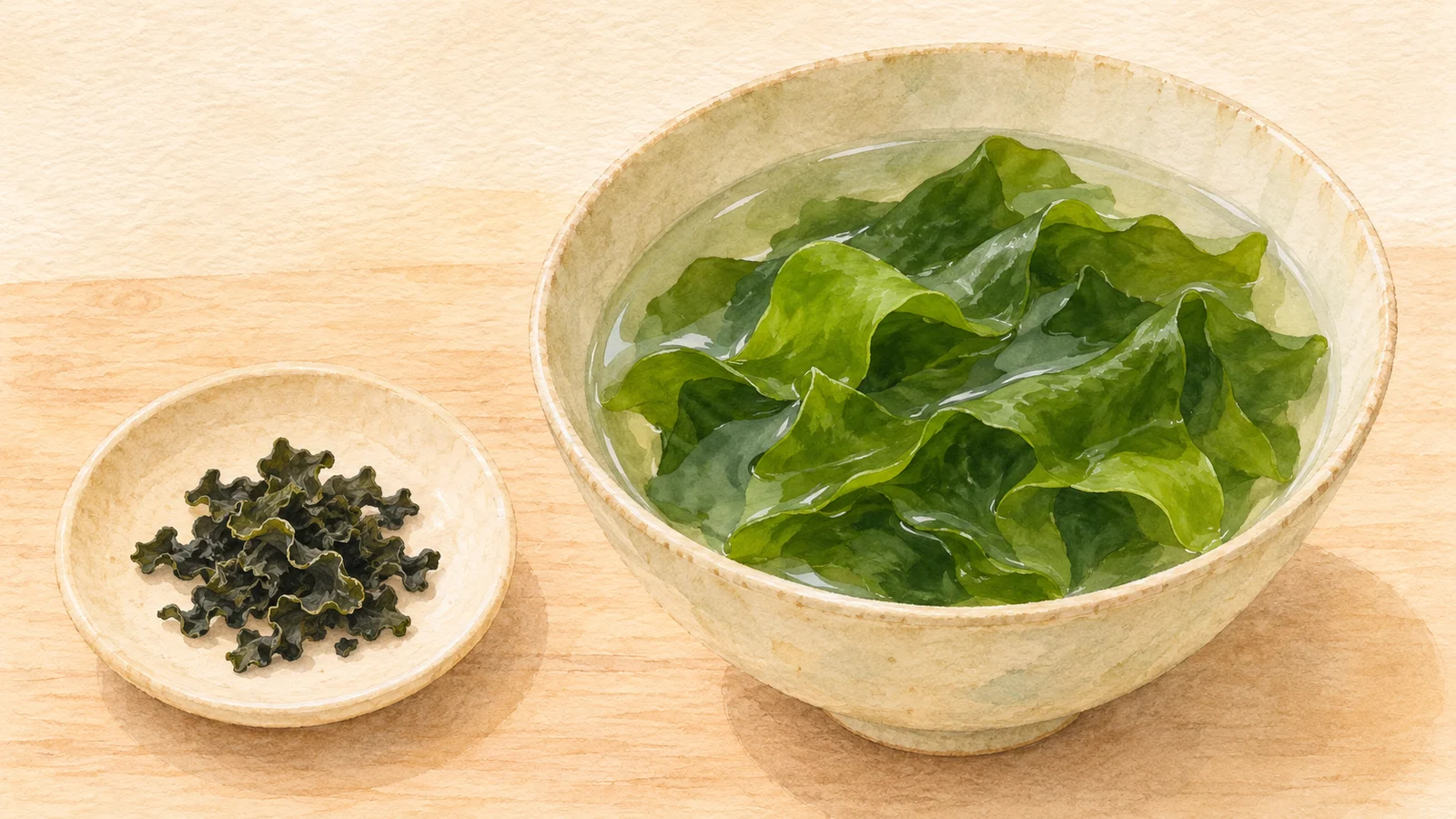
A few dark curls of dried wakame can look too small to matter. Give them water and they open into broad, slippery green pieces. Measure before soaking: adding another handful to make the bowl look generous is an easy way to prepare far more seaweed than dinner needs.
Wakame brings a tender, lightly chewy texture to soup and cold side dishes. It is the seaweed you want to eat in the bowl, rather than a sheet for wrapping rice or a thick strip for making stock.
Read the name and the form
Look for wakame on a Japanese packet or miyeok on a Korean one. Maangchi’s ingredient reference identifies dried miyeok as the same seaweed known as wakame in Japanese, and notes how much it expands. The size of the pieces still matters: a bag of small cut flakes and a bundle of long dried pieces may need different handling.
Plain dried wakame belongs in the dry-goods aisle. Salt-preserved wakame is a different purchase, usually refrigerated, and needs the packet’s desalting directions. Just One Cookbook’s wakame guide distinguishes these forms from fresh wakame. Do not treat a refrigerated pack as cupboard food simply because it contains salt.
Check the ingredient list as well as the large name. A seasoned seaweed snack or ready-made salad is not plain dried wakame. Nor are nori sheets or dried kombu direct substitutes: their shapes and jobs in a dish differ.
Measure dry, then let the pieces open
Use the amount and preparation method specified by your recipe and packet. Notice whether a recipe measures dried or rehydrated seaweed; those spoonfuls are not equivalent. For an unfamiliar packet, hydrate a small portion first so you can see its size before committing more.
For wakame that calls for soaking, use a clean bowl with enough cool water for the pieces to spread. Follow the packet’s timing, then check that the folds have opened and no dry, rigid centers remain. Drain, rinse if directed, and cut long pieces into manageable lengths. Small precut flakes may need no further cutting. Keep the unused dry portion away from wet fingers and utensils.
Do not apply one fixed soaking time to every form. The preparation printed on a packet of quick-hydrating cut wakame may differ from the directions for long dried pieces or salted seaweed. If the packet requires cooking, hydration does not replace that step.
Match the seaweed to the dish
Kikkoman’s ingredient guide lists soups, salads, dressed sides and simmered dishes among wakame’s uses. Pick a recipe written for the form you bought, especially for a cold dish where preparation needs to be complete before dressing.
For example, Maangchi’s sweet-and-sour seaweed salad blanches the soaked seaweed, then rinses and cuts it before adding the dressing. A cold serving temperature does not necessarily mean the seaweed skips cooking.
For a warm starting point, make miso soup with tofu and wakame. Its measured dry portion is soaked and drained separately, so you can see how much will enter the soup. Follow that recipe’s sequence instead of adding an extra unmeasured handful to the finished pot.
Drain hydrated wakame before combining it with a dressing. Otherwise, water clinging to the folds becomes part of the seasoning. Aim for pieces small enough to pick up comfortably with the other ingredients, rather than one long strand that pulls half the salad along with it.
Keep the rest dry
Reseal dried wakame and store it away from humidity according to the label. Kikkoman distinguishes dry storage for dried wakame from refrigeration for salted wakame. Keep the original packet or its directions with the ingredient if you transfer it to a jar.
Once hydrated, refrigerate wakame promptly if you are not using it immediately. Keep the refrigerator at 40°F (4°C) or below, following FDA’s storage guidance, and follow any shorter package limit. Prepare what you need for the meal rather than keeping a large wet batch. Its compact dry form is the convenient reserve.