Ingredients
Choose Dried Kombu for the Broth or the Bowl
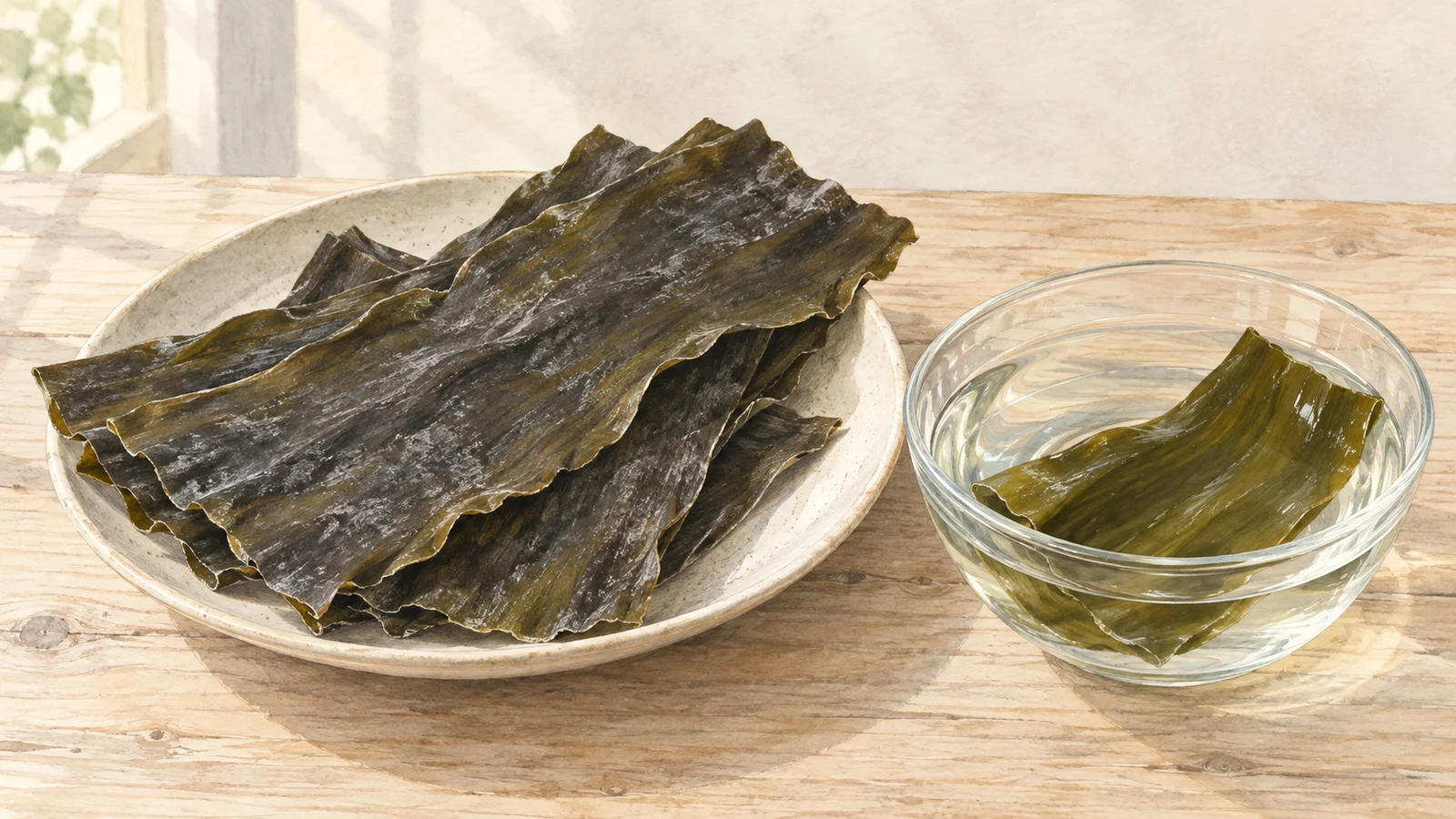
A broad, stiff strip of kombu can give a pot of broth its savory foundation. A fluffy handful of shaved kombu belongs somewhere else: on rice, in a bowl, or as a finishing ingredient. Before buying a packet, decide whether you want flavor in the liquid or kelp you will eat.
Kombu is edible kelp, commonly sold dried. It is different from the thin nori sheets used for wrapping and the wakame added to miso soup. Treat those names as ingredients with different jobs, rather than interchangeable bags of seaweed.
Read past the word kombu
For a recipe that calls for a piece of kombu to make stock, look for plain dried kombu in strips or sheets. Check the ingredient list as well as the picture. A seasoned rice topping, a broth concentrate and plain kelp may all put kombu prominently on the front.
Japan’s Ministry of Agriculture, Forestry and Fisheries describes several processed forms, including shaved tororo and oboro kombu. Those fine shavings are useful in their own dishes; buying them does not give you the same ingredient as a broad strip intended for stock. Keep the name on the recipe beside you while shopping, especially if the translated shelf label says only “seaweed.”
Dashi is also a broader name than kombu broth. It can contain bonito, sardines, mushrooms or combinations of ingredients, as Kikkoman’s dashi glossary explains. For a vegetarian meal, check every broth ingredient, including any instant powder or packet. A seaweed picture alone does not establish that a stock is fish-free.
Choose stock kelp or tender kelp
The Umami Information Center’s kombu guide identifies ma-kombu, rishiri-kombu and rausu-kombu as common stock choices. Hidaka-kombu is softer and also used for simmered dishes. These names can help you find the kind a recipe specifies without treating one expensive variety as necessary for every meal.
For your first purchase, a small package of plain kombu labeled for dashi is a useful starting point. If you want to simmer and eat the kelp itself, look for a cooking variety or a recipe that names the type. A strip that has flavored stock is not automatically tender enough to serve: Kikkoman’s ingredient guide distinguishes thick, fibrous stock kelp from thinner, softer kelp used as food.
Keep track of which variety you buy. If you change brands or types, compare the resulting broth before changing the rest of the dish. Seasonings can obscure the difference once they are in the saucepan.
Let the broth method set the heat
Kombu’s naturally occurring glutamate contributes umami, the savory quality that makes it useful in dashi. Extraction methods vary. The Umami Information Center gives different approaches for different kelps, including a conventional method that removes the kombu just before boiling. Follow the method written for your ingredient and dish rather than combining the soaking time from one recipe with the heat treatment from another.
For a clear, delicate stock, pay attention when the water begins to heat; leaving the pan at a rolling boil is not a substitute for following the recipe. Conversely, kombu used as an ingredient in a simmered dish needs a different treatment from kelp being removed after stock extraction. “Never cook kombu” would rule out many ordinary uses.
When making miso soup with tofu and wakame, prepare the chosen dashi first, then measure the finished broth for the soup. The wakame added later provides seaweed in the bowl; it does not replace the kombu’s earlier job. The same distinction helps with simmered daikon, whose cooking liquid starts with prepared dashi.
Keep the remaining strips dry
Reseal dry kombu in a clean, airtight container in a dry, dark cupboard, following the packet’s storage directions. Kikkoman recommends low-humidity storage for dried kelp. Keep the package label or a photograph of it so the variety, date and instructions stay with the ingredient.
Use dry hands or utensils to take out the next portion, then close the container before working over a steaming pot. If the packet arrived damaged or the contents appear spoiled, do not rely on the fact that kombu is dried; Just One Cookbook’s ingredient guide specifically recommends checking package condition. Buy an amount you can keep dry and use, rather than a large bag you cannot reseal well.