Kitchen skills
Give Frozen Dumplings Room to Cook
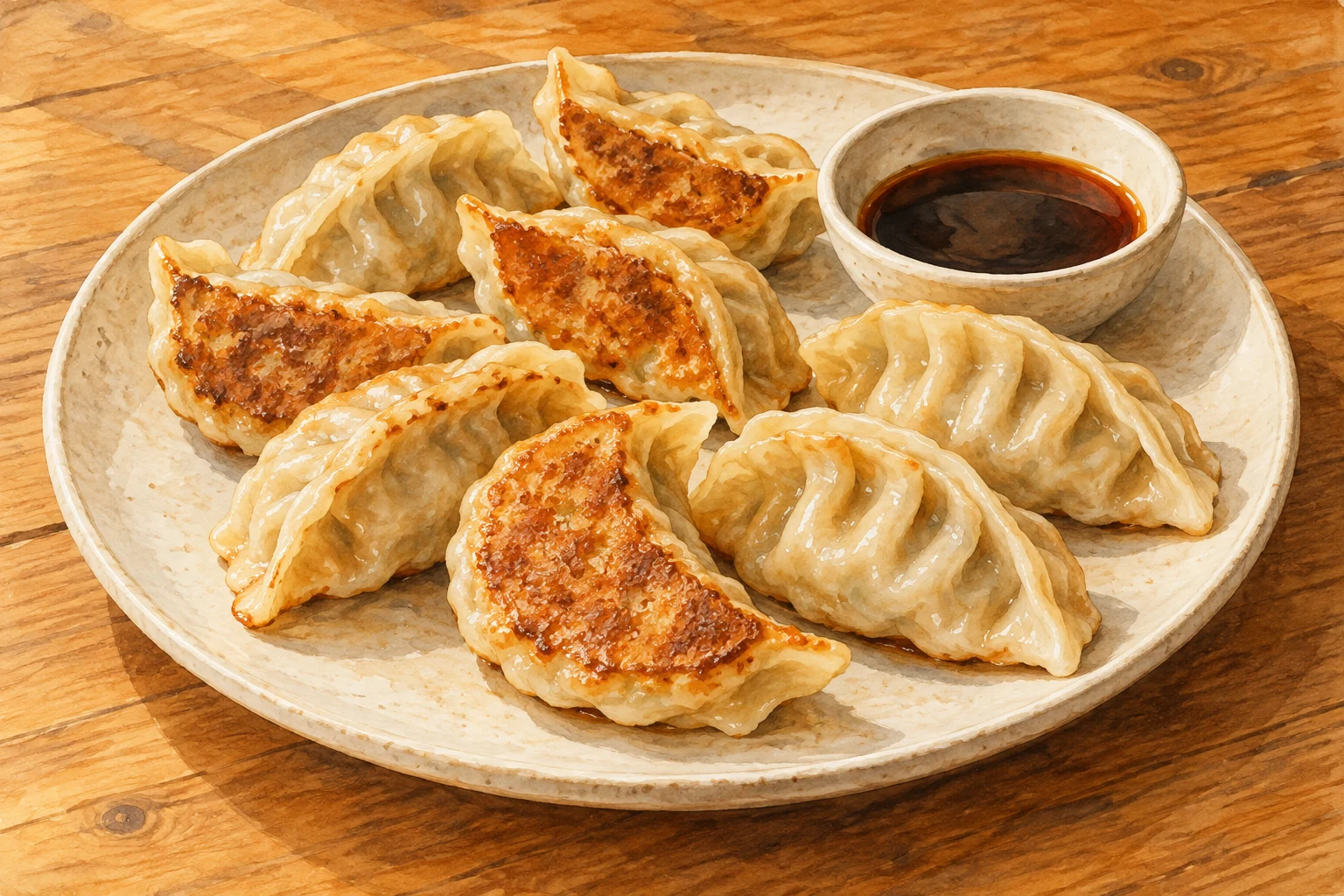
The extra three dumplings are often where the pan gets into trouble. They fit in the gaps when frozen, then soften against their neighbors. By the time you try to lift one, its wrapper is attached to the next.
Cook fewer at a time. A modest gap around each dumpling gives you room to move a spatula and lets the wrappers stay separate. A second batch is less frustrating than peeling a crowded first batch apart.
Before choosing a pan, read the bag. Is the filling raw or cooked? Does it allow boiling, steaming or pan-frying? Frozen crescent dumplings, delicate translucent wrappers and soup dumplings do not share one universal set of instructions. Use the method and timings for the product you have.
Choose the finish you want
A tender wrapper all over: use a package-approved boiling or steaming method. In a boiling pot, leave room for the dumplings to move and loosen them gently rather than stirring hard. In a steamer, space them on an appropriate liner, keep them above the water and prevent the pot from boiling dry. A steamer assembled from an ordinary pot may be enough; check that the lid closes properly.
A crisp base with a tender top: use a package-approved potsticker method. It combines frying with a covered steaming stage, then a final uncovered stage to evaporate water and crisp the base. Those stages have different jobs. Turning the heat higher cannot replace the time needed to cook the filling.
Kaitlin Leung’s frozen-dumpling guide explains the main cooking options. Namiko Hirasawa Chen’s gyoza method shows the fry, steam and crisp sequence for that style of dumpling. Follow your own packet for water quantity, heat and timing rather than transferring one recipe’s numbers to every bag.
Keep the bag frozen while the pan gets ready
For dumplings intended to cook from frozen, take out only the portion you are about to cook. Letting them thaw into a sticky pile makes separation harder. If the package specifically requires thawing, follow its directions instead.
Have the lid and measured cooking water ready before starting a potsticker batch. Add water carefully as instructed, keeping your face and hands back from steam and hot-oil splashes. Never pour a large jug in from a height. Lift the lid away from you when uncovering.
If the bases darken too quickly, reduce the heat. If the steaming stage has finished but water remains, allow it to evaporate before expecting a crisp underside. Do not pry repeatedly at a base that is still stuck; use a thin spatula gently once it has formed a crust.
Check the center before chasing more color
A browned wrapper can surround an undercooked filling. Floating in boiling water is not a reliable safety test either.
Use a thin-tip food thermometer in the center of the filling, checking several dumplings and avoiding contact with the pan. For raw ground pork or beef, the minimum is 160°F (71°C); for chicken or other poultry, 165°F (74°C). Follow a higher temperature if the package specifies one. These are the FoodSafety.gov minimum internal temperatures, not estimates based on wrapper color. USDA’s thermometer guidance explains probe placement and why appearance alone is insufficient.
Once cooked, move the dumplings to a plate without piling the crisp bottoms under a wet heap. Put dipping sauce alongside, not all over them. A bowl of garlicky smashed cucumbers gives you something cold and crunchy while the next batch cooks.