Kitchen skills
How to Fold Square Wonton Wrappers for Soup
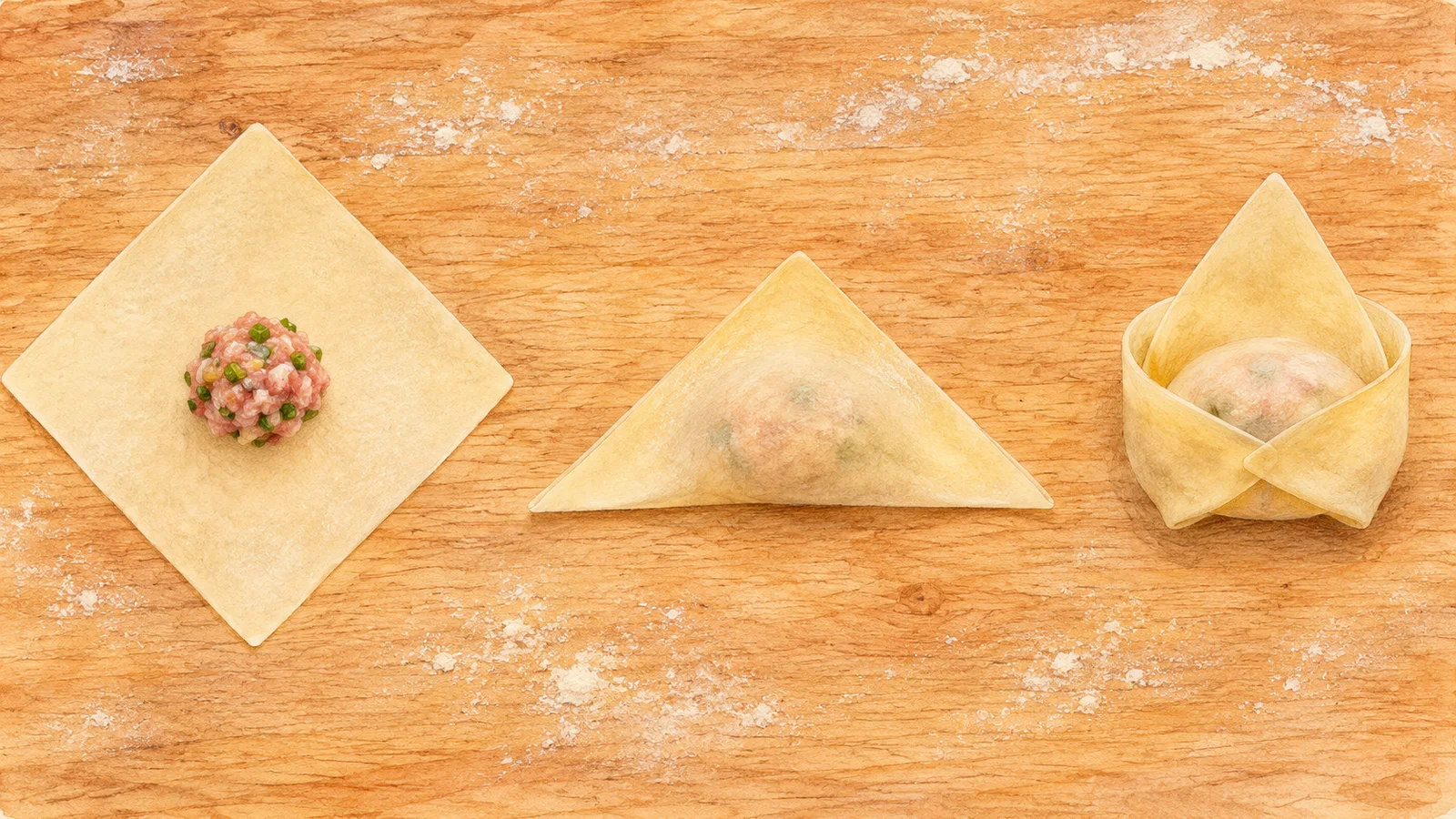
A square wonton wrapper only needs one fold to enclose the filling. Pick up the corner nearest you and bring it to the opposite corner. Before you press the tips together, look at the mound in the middle. If the wrapper has to stretch over it, take a little filling out now. Those two thin edges need enough room to meet.
Leave yourself a clean border
Start with thin, square wonton wrappers and the chilled filling from the wonton recipe you’re cooking. Set out a spoon, a small bowl of water and a tray. Cover the unused wrappers with a barely damp towel and take out one at a time. The edges of a thin skin can dry out while you’re still working on its neighbor. Bring only a small bowl of raw meat filling to the table and keep the rest refrigerated. Count the whole time the filling and folded wontons spend out of the refrigerator. Discard perishables left out longer than two hours, or one hour when the temperature is above 90°F.
Lay one wrapper on your palm or a clean board with a corner pointing toward you. Start with about a teaspoon of filling in the middle, adjusting for the size of the skin. The first wonton tells you how much the rest will hold. Fold the wrapper loosely over the mound to check the fit. If filling pushes out to the edge, open the wrapper, take some off and clear the border. A smear of pork between two layers of dough makes a poor seam.
Press from the belly toward the points
Run a damp fingertip along the edges that will meet. You want a fine film of water. Lift the near corner over the filling to the far corner and line up the two sloping sides of the triangle. With the dough still loose near the tips, cup it against the filling and ease the air toward the open edges. Then press along each seam from the mound outward. Keep your fingers on the flat margin so you don’t squeeze the filling into the seal.
Pick up the triangle by the folded side and inspect both sloping edges. A gap looks like two separate sheets of paper. Touch a dry patch with a little water and pinch it shut. If the middle has split, start again with a fresh skin and a smaller mound. Cover the tray as you go. Maggie Zhu’s wonton soup instructions show the triangle and the sealed corners close up.
Curl the two ends around the filling
For a more compact wonton, hold the triangle with the long folded side nearest you and the free point facing away. Bring the ends of that long side toward each other around the belly, like the ends of a scarf. Dampen one tip, overlap it with the other and pinch the overlap. The point at the top stays free. You can also stop at the sealed triangle if the skin is too delicate to bend again.
If the tips spring apart but the pouch stays sealed, only the finishing fold has come loose. Pinch the overlap again or leave the triangle as it is. If the pouch opens, fix the seam before the wonton goes in the water. The Woks of Life’s folding guide also shows a rectangular fold that makes a rounder, more compact shape.
Arrange the wontons in a single layer so wet seams don’t stick together. Follow your filling recipe for cooking. For raw meat fillings, a floating wrapper doesn’t tell you whether the center has cooked through. Ground pork needs to reach 160°F and ground chicken or turkey 165°F. Lift a large wonton out and slide a thin probe from the side into the middle of the filling. If it hasn’t reached the right temperature, keep cooking and check again. See the FDA’s food handling and temperature chart and how to position a food thermometer.