Recipes
Yakiimo: Japanese Sweet Potatoes from the Oven
Bake Japanese sweet potatoes whole for golden, tender centers. A plain oven snack with a skewer check, complete recipe and safe leftover guidance.
Jump to recipe ↓Recipe
- Total time
- About 1¾–2 hours
- Method
- Oven
- Difficulty
- Easy
- Allergens
- Consider individual allergies and any additions
About 4 snack portions
Allow roughly 1¾–2 hours including oven preheating and cooling; thick roots may need longer. The 90-minute timer is a first check, not a guarantee of doneness. Stay home while the oven is on.
Equipment: Oven, rimmed baking sheet, baking parchment rated for 325°F, clean vegetable brush, fork, skewer, oven mitts and a heatproof trivet; a food thermometer for reheating leftovers.
Ingredients
- 4 medium Japanese sweet potatoes (satsumaimo), about 300 g each, of similar thickness
- Running water for washing the sweet potatoes
Method
Wash and pierce the sweet potatoes
Wash hands with soap for 20 seconds. Heat the oven to 325°F (163°C). Scrub the sweet potatoes under running water without soap, then dry them. Leave the skins on. Pierce each root in a few places with a fork, keeping your other hand clear of the tines. Arrange on a parchment-lined rimmed baking sheet with space between them; leave them unwrapped.
Convert a measurement for this stepBake and check the thickest centers
Put the tray on the middle rack of the heated oven and start the 90-minute first-check timer. Stay nearby and check sooner if the potatoes appear ready. Wearing oven mitts, set the tray on a trivet to test each root with a skewer. If a center is firm, return that potato to the oven and check again in about 10 minutes.
Convert a measurement for this stepTurn off the oven and open carefully
Turn off the oven and remove the tray with oven mitts. Let the potatoes stand until you can handle them safely, then split them on a plate, keeping hands and face clear of steam. Serve plain. For leftovers, halve large roots and refrigerate promptly in shallow covered containers at 40°F (4°C) or below, within two hours or one hour above 90°F (32°C). Discard food left out longer. Use within three to four days; reheat to 165°F (74°C) throughout.
Convert a measurement for this step
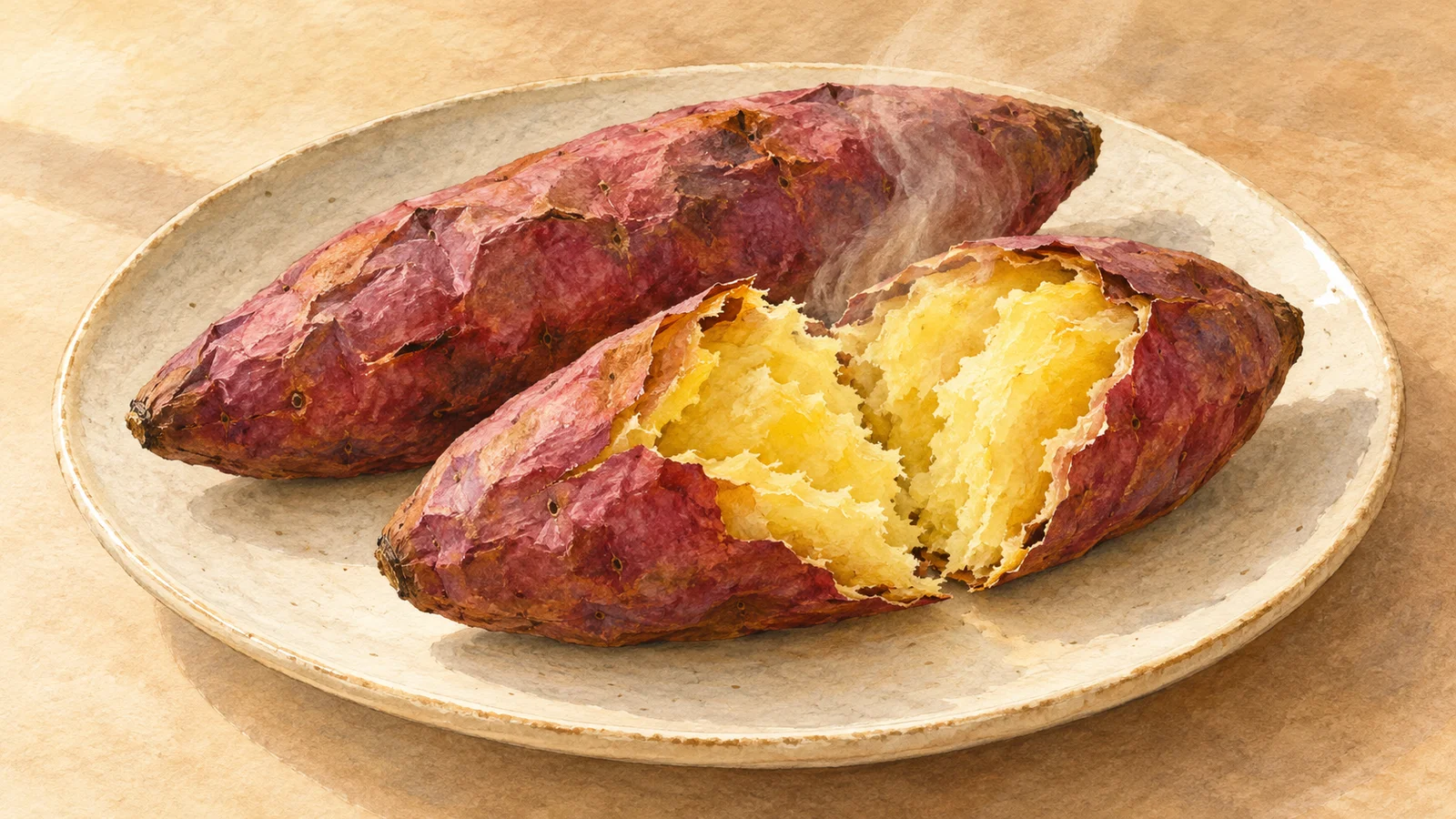
Split a warm yakiimo (焼き芋) and the red-purple skin opens onto golden flesh. There is no glaze to make and no pan to stir. This Japanese baked sweet potato is a snack you can eat plain, with a spoon if the center is too hot to hold comfortably.
Choose Japanese sweet potatoes sold as satsumaimo, with pale flesh that becomes yellow when cooked. A purple skin alone does not tell you what is inside. Shihoko Ura’s yakiimo guide describes the characteristic skin and flesh, along with the dish’s place as a snack in Japan. Orange-fleshed sweet potatoes are useful for other dishes, including sweet potato and ginger dessert soup, but give a different result here.
Choose a batch that can finish together
Look for firm, sound roots, without soft decay. Set similarly thick ones together on the tray. Length is less helpful than thickness when you are trying to judge whether the middle has softened: a short, round potato may need more time than a long, narrow one.
Use a rimmed sheet to catch any drips and keep the potatoes clear of the oven walls. Check that your parchment is rated for the oven temperature. You do not need to buy a special roasting pot, add oil or coat the skins with sugar.
The oven temperature, approximate 90-minute bake and skewer check follow Namiko Hirasawa Chen's baked Japanese sweet potatoes, using her unwrapped option. The four snack portions and overall planning time are estimates. Thickness and the individual roots determine when the tray is ready.
Let the center decide
A timer brings you back to the oven; it cannot feel the potato. Test the thickest part of each root. A skewer that meets a firm core means that potato needs more time, even if its neighbor is already soft. Move finished ones to a heatproof plate and continue baking the others as needed.
Use oven mitts to handle the tray and keep it on a stable trivet while checking. Do not try to support a hot potato in your bare palm while pushing a sharp skewer through it. Open the cooked roots away from your face, and give the escaping steam room before taking a bite.
If these came from your own garden, harvest and curing are separate jobs that happen before kitchen preparation. Baking is not a way to repair a decaying root.
Put the extra portions away promptly
Keep the portions for later separate from the ones you are serving. Halve large cooked roots so they can cool more readily in shallow containers; refrigerate without waiting for the whole tray to become cold. USDA recommends prompt refrigeration and three to four days of refrigerated storage. The card includes the time and temperature limits.
For a warm portion another day, USDA’s reheating guidance calls for 165°F (74°C) throughout. Use a food thermometer in the center; warmth at the skin is not the same check. If using an oven, set it no lower than 325°F (163°C).
Wash the roots before baking even if you intend to leave the skins on your plate. FDA’s produce-cleaning advice supports running water, a clean brush for firm produce and no soap on the food.