Recipes
Hojicha Latte with a Toasty Tea Base
Whisk roasted Japanese tea powder into a smooth base, then add gently warmed milk for a hojicha latte with optional sugar and foam.
Jump to recipe ↓Recipe
- Total time
- About 10 minutes
- Method
- Whisk and gently warm
- Difficulty
- Easy
- Allergens
- Milk if using dairy; check substitute labels
1 mug, about 210 ml before foam (estimated)
Allow about 10 minutes; time and volume are estimates. Uses US measuring spoons and cups. Dairy milk contains milk allergens; check the label of any substitute. Use ready-to-drink pasteurized milk or a packaged plant milk. The milk is warmed for serving, not pasteurized by this method.
Equipment: Fine-mesh strainer, small heatproof bowl, small whisk, measuring spoons and cup, electric kettle, food thermometer, small saucepan, spoon and a heatproof mug. A handheld milk frother is optional.
Ingredients
- 1½ teaspoons pure hojicha powder (finely milled roasted Japanese green tea, not a sweetened latte mix)
- 2 tablespoons (30 ml) drinking water at about 175°F (80°C), plus extra water to meet the kettle’s minimum fill
- ¾ cup (180 ml) pasteurized dairy milk or unsweetened oat milk
- ½ teaspoon sugar, optional
Method
Measure and sift
Wash hands with soap for 20 seconds and use clean utensils. Sift the hojicha powder into the heatproof bowl. Measure the milk into the small saucepan and keep the optional sugar beside the bowl.
Convert a measurement for this stepWhisk the tea base
Heat drinking water in the electric kettle, filling it to at least its minimum-fill mark, then switch it off. Check with a food thermometer; let it cool to about 175°F (80°C) if needed. Measure 2 tablespoons into the tea bowl and whisk briskly until no dry clumps remain. Whisk in the sugar if using. Set the bowl safely away from the stove edge.
Convert a measurement for this stepWarm the milk gently
Heat the measured milk over low to medium-low heat, stirring and staying at the stove. Turn off the burner when the milk reaches about 140°F (60°C); do not boil it. Remove the pan from the heat. If using a handheld frother, use a heatproof vessel with ample headroom and keep the spinning tip below the surface to avoid splashes. Foam is optional.
Convert a measurement for this stepPour, stir and sip
Pour the tea base into the heatproof mug, add the warm milk and stir. Let a small spoonful cool before tasting. Serve promptly. Refrigerate any portion you are saving at 40°F (4°C) or below within two hours, or one hour above 90°F (32°C); discard a milk drink left out longer.
Convert a measurement for this step
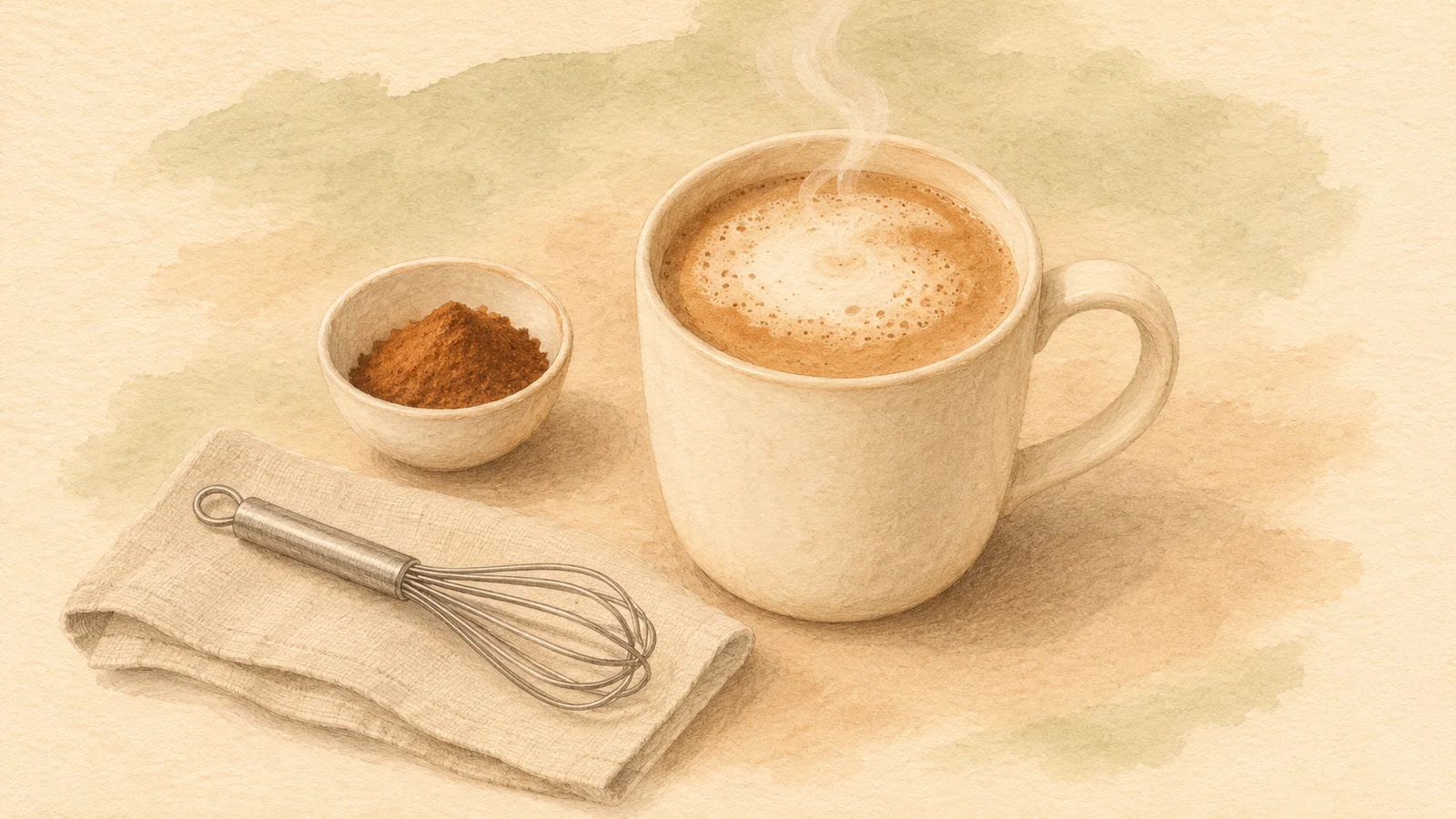
Hojicha makes a latte the color of milky cocoa, with the roasted aroma of tea. A little hot water turns the fine brown powder into a concentrated base; warm milk softens it without hiding the toastiness. You can make a single mug with a small whisk and saucepan. A cap of foam is pleasant, but it is not a requirement.
Start with plain hojicha powder
Look for finely milled roasted Japanese green tea, with no sugar or milk already mixed in. Loose hojicha leaves need a different brewing method; they will not whisk smoothly into this small amount of water. A sweetened instant latte blend also needs its own package directions because its proportions are different.
Sifting is useful even when the powder looks fine. Break up the dry lumps before they reach the water, then whisk the small tea base thoroughly. Pouring all the milk onto dry powder at once makes those lumps harder to reach. Hojicha Co.’s preparation guidance likewise starts with a small amount of water before the milk goes in.
Keep the milk below a boil
Stir while the milk warms, watching the thermometer rather than waiting for it to bubble. Gentle heat gives you a warm drink without needing to boil the milk. Use a small pan so the shallow quantity is easy to stir, and keep the handle away from the counter edge.
Dairy milk and unsweetened oat milk both work here, though their flavor and foam differ. Taste the finished drink before deciding it needs more sugar. If the milk overwhelms the tea, use a little less milk in the next mug. Change one amount at a time so you can find the balance you like.
This recipe's proportions are adapted from Namiko Hirasawa Chen's hojicha latte at Just One Cookbook.
For something to eat alongside it, black sesame shortbread brings a crisp, buttery texture to the table.
Make the latte close to when you want it. If plans change, chill it promptly rather than leaving the milk drink beside a warm stove. The FDA’s food-handling guidance sets the refrigeration limits used in the recipe card.