Ingredients
Match Tamarind to the Recipe: Pulp, Paste and Concentrate
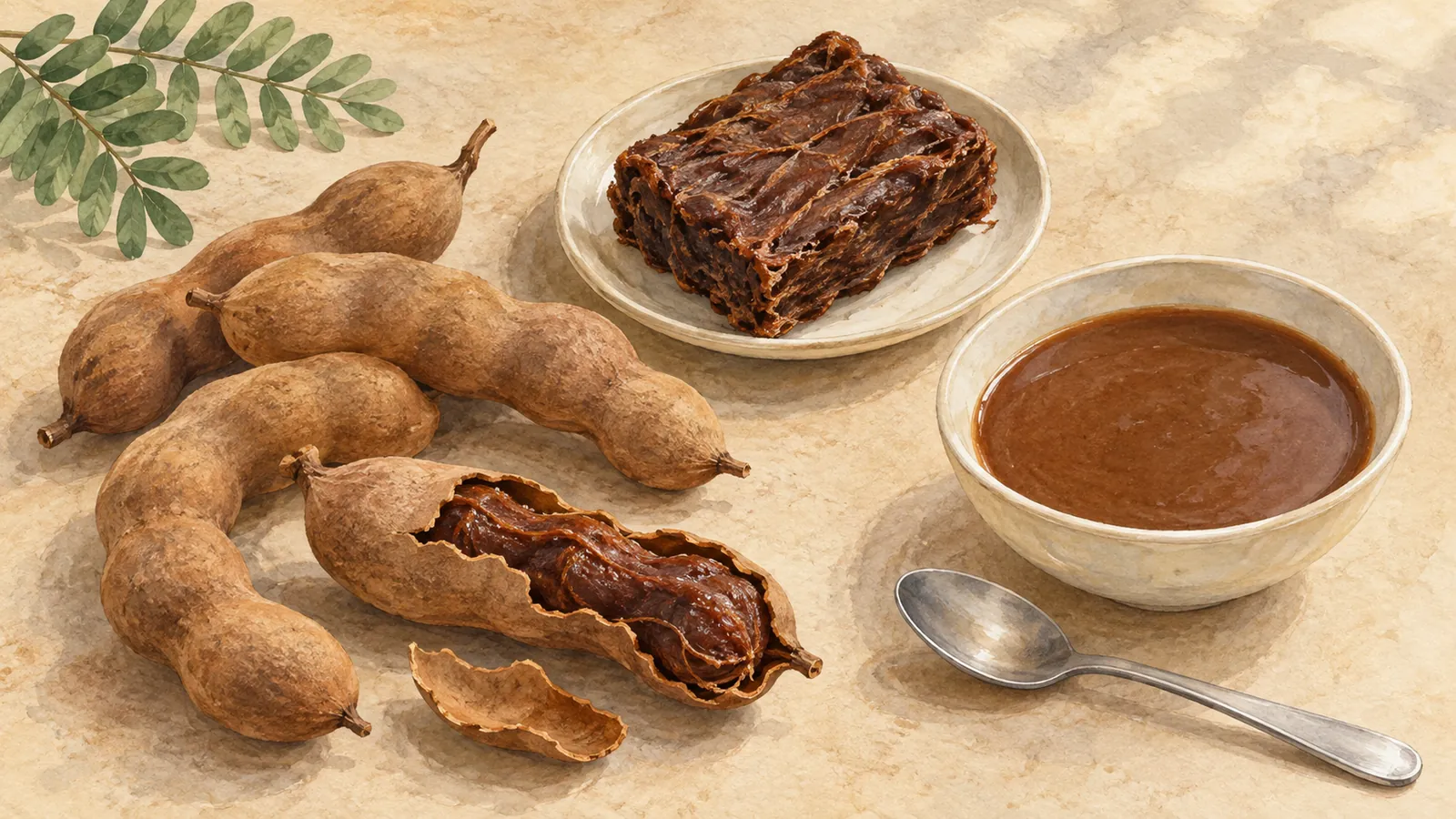
A tablespoon of tamarind can mean a spoonful of loose brown liquid or a sticky, intensely sour concentrate. Before it reaches the pan, find out which one the recipe means. That small check is easier than trying to rebalance an entire pot of soup.
Start with the ingredient line, then read the preparation step. A weight of pressed pulp followed by soaking and straining calls for a different purchase from a spoonful of ready-to-use paste. Keep the recipe open while shopping, including any photograph or note that identifies its intended form.
Three forms to recognize
Whole pods have a brittle brown shell around sticky fruit and hard seeds. They need peeling and preparation before the pulp becomes a smooth cooking liquid. Check that the fruit is the sour tamarind your recipe requests; sweet tamarind sold for snacking is a different choice. Andrea Nguyen’s tamarind guide explains the sour fruit, pressed slabs and prepared liquids found in Asian markets.
Pressed pulp is a compact block of fruit, sometimes labeled wet tamarind. It needs loosening in water and straining. Even when a package says seedless, straining removes coarse material that does not belong in the finished sauce. Weigh the pulp before soaking if that is how the recipe lists it; do not substitute the weight of the extracted liquid.
Prepared paste or concentrate is already processed into something you can stir into a dish. The names alone do not tell you its strength. Lauren Joseph’s Epicurious guide distinguishes thick, syrupy concentrate from looser preparations and cautions that labeling varies. Read the ingredient list and preparation directions, then match the texture and type described by the recipe. A spoon-for-spoon swap between unlike forms is an experiment, not a dependable conversion.
Give a block its own bowl
Set out a heatproof bowl, a strainer and a second bowl to catch the liquid before starting dinner. Follow the recipe’s pulp and water quantities: the water becomes part of what you add to the dish, so an unmeasured extra cup changes its concentration.
Break the pulp into smaller pieces and soften it in the specified water. If using hot water, let it cool enough to handle safely. Work the softened fruit with a spoon, then press the mixture through the strainer. Keep the liquid and fine pulp that pass through; discard hard seeds and coarse fibers. The Woks of Life’s ingredient guide describes this separation for both pods and blocks.
Do not drop an intact lump into a stir-fry and expect it to become a smooth seasoning before the vegetables finish cooking. Complete the preparation first, then measure what the recipe needs.
Check the finished dish before adding more
Tamarind brings its own fruity sourness. It is not simply brown-colored lemon juice. Color is also an unreliable strength guide: Nguyen shows liquids whose shade and tartness do not track together. Use the recipe’s specified form and starting amount, then assess the food where it is safe to taste.
In canh chua with fish and pineapple, the ingredient is unsweetened pulp from a block. The method reserves some strained liquid and adjusts the broth after the fish is cooked. That gives you a controlled place to add sourness without treating the whole prepared amount as compulsory.
Once you find a combination that works, note the form used and any adjustment beside that recipe. “Tamarind” on its own is not enough information to reproduce the choice next time.
Keep the opened ingredient clean
Follow the package’s storage instructions after opening and use a clean utensil each time. Homemade strained tamarind liquid belongs in the refrigerator or freezer, not on the counter as though it were an unopened commercial jar. Nguyen’s guide supports freezing it in small portions. Label those portions with the date and what they contain so a future recipe starts with a known ingredient.