Ingredients
Panko for Crisp Coatings and Toppings
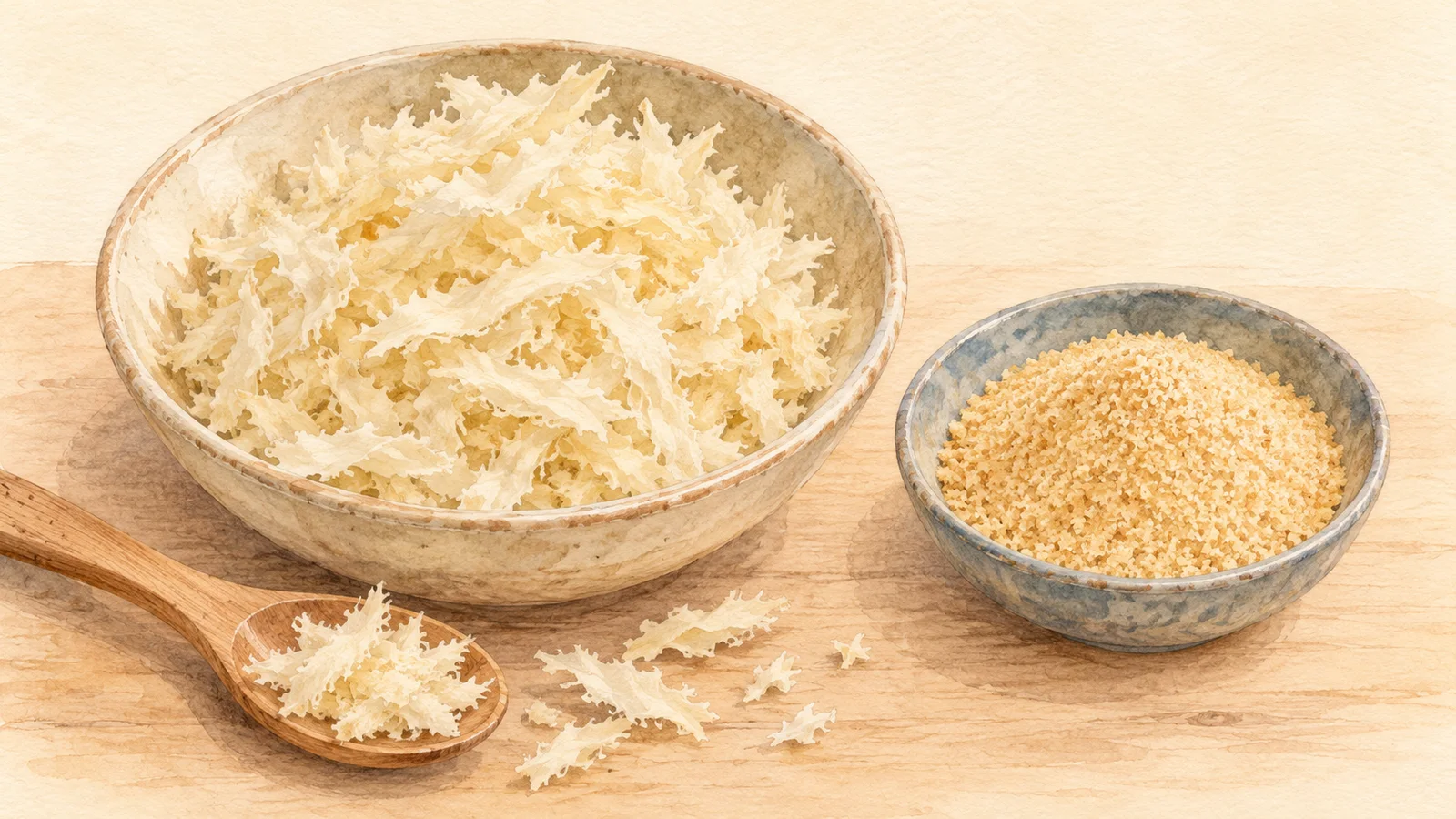
A packet of panko gives a cutlet its shaggy crust and a soft casserole a crisp top. The useful difference is visible before cooking: panko has irregular, airy flakes, while fine dry breadcrumbs look more like sand. Choose the texture you want on the finished food before reaching for either packet.
Read the crumbs and the label
Panko is Japanese-style bread crumbs made from crustless bread and dried into coarse flakes. The flakes leave a more open coating than finely ground crumbs. Plain panko has a mild bread flavor, making it useful when the seasoning should come from the rest of the dish.
Packets vary. Milk Street’s pantry comparison found substantial differences among products sold as panko. Look through a clear window in the packaging, if there is one, for uneven, wispy flakes rather than assuming every bag will give the same texture. Once opened, handle the crumbs gently; crushing them defeats the reason for choosing a coarse coating.
Check for added seasoning before salting your dish. Also read the allergen information: ordinary wheat-based panko is not gluten-free. Products made from rice or other ingredients need their own label check. “Japanese-style” describes a style of crumb, not an assurance about allergens.
Match it to the job
For a coating, panko suits foods where you want a distinct, rough crust. In Japanese cooking, familiar examples include tonkatsu, chicken katsu and korokke. A typical breading sequence is flour, beaten egg, then crumbs, with the crumbs pressed lightly onto the surface. Follow the recipe for the food’s thickness, oil and cooking method; changing the crumb does not establish a new cooking time.
For a topping, spread panko over a casserole or gratin according to its recipe, or toast it separately for a finished dish. For the latter, stir the crumbs in a skillet with a little butter or oil over moderate heat, watching for an even golden color. Move them out of the hot pan when ready. They can darken quickly near the end, so stay at the stove rather than relying on a fixed timer. Add a separately toasted topping close to serving when you want its crunch to stand out.
For a binder, use the amount and preparation specified in the recipe. Just One Cookbook’s panko guide includes hambagu among its uses. Crumbs mixed into a patty have a different job from crumbs on its surface; do not keep adding them until the mixture looks like a dry coating.
Fine dry breadcrumbs can stand in for panko when necessary, but expect a finer, more compact finish. They will not reproduce the same large flakes. Likewise, a seasoned substitute changes the flavor as well as the texture. Keep the original recipe’s measurement method, especially when it gives a weight, and avoid packing loose crumbs into a measuring cup.
Keep the clean packet separate
Pour a working portion into a shallow dish before breading. Keep the remaining bag away from raw meat, fish and egg, and add more with clean hands or a clean utensil. Discard crumbs left in a dish that has contacted those raw ingredients; do not tip them back into the pantry supply or use them as a ready-to-eat garnish.
A golden crust does not prove that the center is safely cooked. The FDA’s food-handling guidance calls for a thermometer to check meat, poultry and seafood, and a clean plate for cooked food. The temperature-checking guide explains where to place the probe.
Reseal unused, uncontaminated dry panko tightly and keep it in a cool, dry pantry, following the package’s storage directions. Keep steam and wet spoons out of the bag. A small clean portion toasted for tonight’s vegetables is a better use of the last handful than letting an open packet lose its texture beside the stove.