Ingredients
Lotus Root for Crisp Stir-Fries and Tender Soups
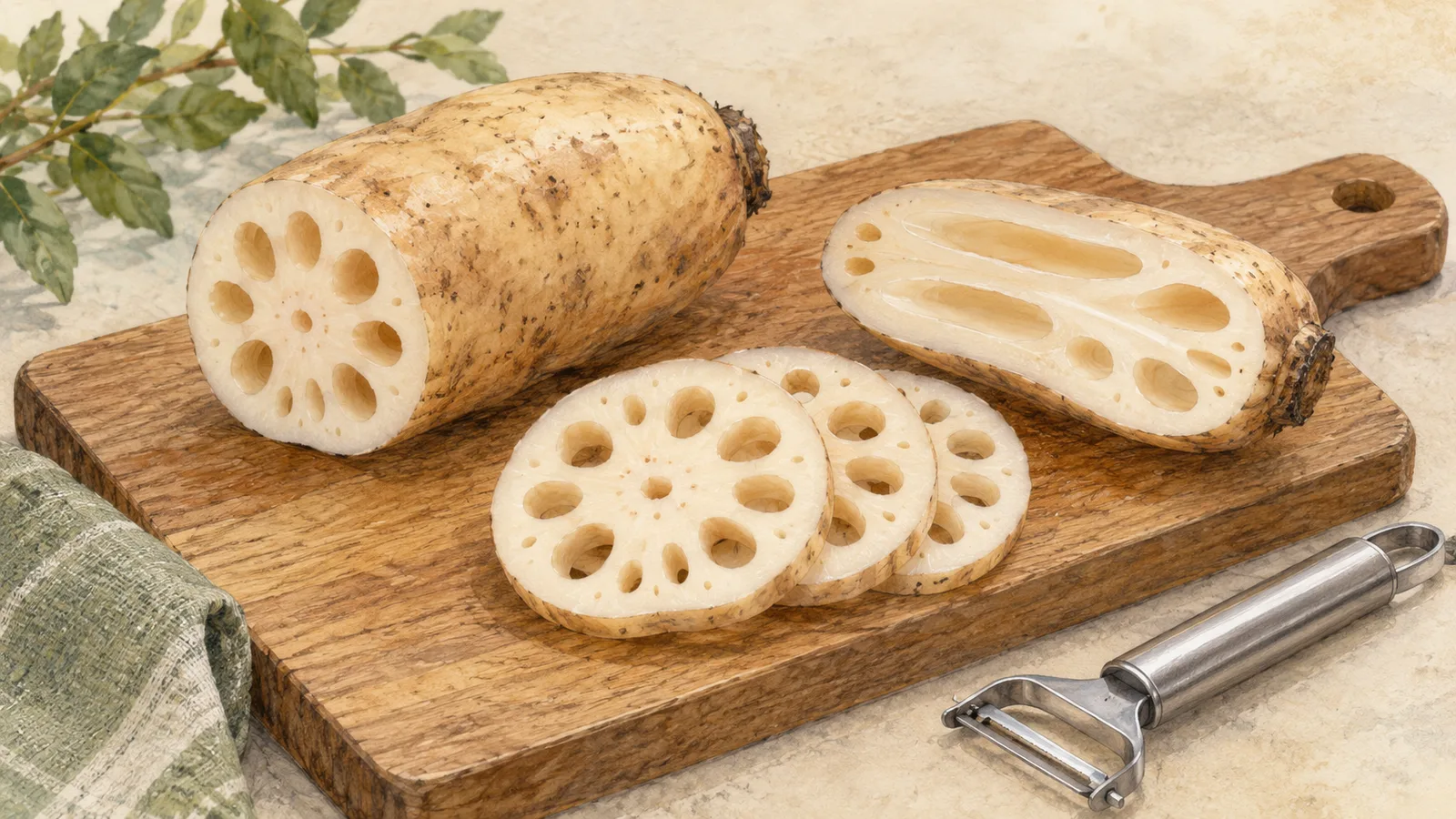
Cut across a lotus root and its plain beige exterior gives way to an ivory wheel of holes. Those openings make a slice distinctive, but the useful question at the stove is how you want it to feel: crisp in a stir-fry, or yielding in a bowl of soup.
Lotus root, also sold as renkon, is the edible underground stem of the lotus plant. Its mild flavor suits both savory and sweet dishes. Start with a recipe that calls for the form you can buy; a bag of cooked slices and a whole fresh segment do not need the same preparation.
At the market, check firmness and form
Choose fresh segments that feel firm and heavy, with sound beige skin. Avoid soft spots, mold or an unpleasant smell. A whole segment gives you control over the cut; ready-sliced lotus root saves knife work, but check whether it is raw, parboiled, fully cooked or pickled. Follow the package’s storage and cooking directions rather than treating every pale slice as ready to eat.
Namiko Hirasawa Chen’s lotus-root guide describes both fresh roots and boiled, packaged forms. Parboiled pieces can be less crunchy than fresh ones. If a dish depends on a firm bite, check that detail before buying. Pickled slices also bring their own seasoning, which changes the dish before you add any sauce.
Refrigerate fresh lotus root and all refrigerated packaged or cut forms promptly. Keep a whole fresh segment wrapped in a damp paper towel inside a plastic bag. Cover a remaining cut surface tightly; Kikkoman suggests using refrigerated cut lotus root within four to five days. That is a planning window, not a reason to keep a root that is already deteriorating. A package’s shorter instruction takes precedence.
Peel it, look through the holes, then slice
Wash your hands and clean the knife and board. Scrub the unpeeled root under running water with a clean produce brush, then trim the ends and peel the thin skin. Rinse away loosened dirt and inspect the exposed channels. If grit remains, rinse through the openings before making the final cuts. Discard a rotten segment rather than trying to rescue it by soaking.
The FDA recommends washing produce before peeling, using running water without soap or produce wash. Keep the prepared root separate from raw meat and its utensils, and keep your refrigerator at 40°F (4°C) or below.
For rounds, slice across the segment at an even thickness. If it rolls on the board, halve it lengthwise and put the flat side down to make half-moons. For a soup or braise, cut manageable chunks as the recipe directs. Consistent thickness matters more than making every piece a perfect circle: a thick wedge left among thin rounds will cook differently.
Cut surfaces can darken in air. Put freshly cut pieces into cold water while finishing the knife work; a brief soak of five to ten minutes is enough for ordinary preparation. Some recipes add vinegar to limit discoloration. This is a color step, not a way to preserve the root or make it safe to eat raw. Drain well before the next cooking step.
Cook it fully, then judge the texture
Do not eat fresh lotus root raw or undercooked, including in a cold salad. The CDC warns that contaminated freshwater plants can transmit the intestinal parasite Fasciolopsis and advises cooking them well in boiling water. Peeling, washing and a vinegar soak do not replace cooking. Choose a complete lotus-root recipe and follow its cooking sequence; do not turn a brief blanch into the entire method.
For a crisp dish, thin slices are useful. Sarah Leung’s lotus-root stir-fry uses a blanch followed by further cooking in the wok. Have the sauce and other vegetables ready before heating the pan. Our skillet stir-fry guide explains how batch size helps vegetables cook without a crowded pan filling with steam.
For tenderness, follow a soup or braise that gives the root time in liquid. Test a thick piece with a skewer or fork for the texture that recipe describes. A cooked slice can retain a pleasant bite; it does not have to dissolve to be useful. At the softer end, Maggie Zhu’s rice-stuffed lotus root becomes tender during a long simmer in sweet liquid.
Pick the dish before slicing the whole purchase. Thin wheels suit one job, chunky pieces another, and an intact segment is essential for a stuffed preparation. The holes will still look good on the plate; the cut and cooking method determine whether each bite is the one you wanted.