Ingredients
Fuyu or Hachiya? Pick a Persimmon for Slices or Pulp
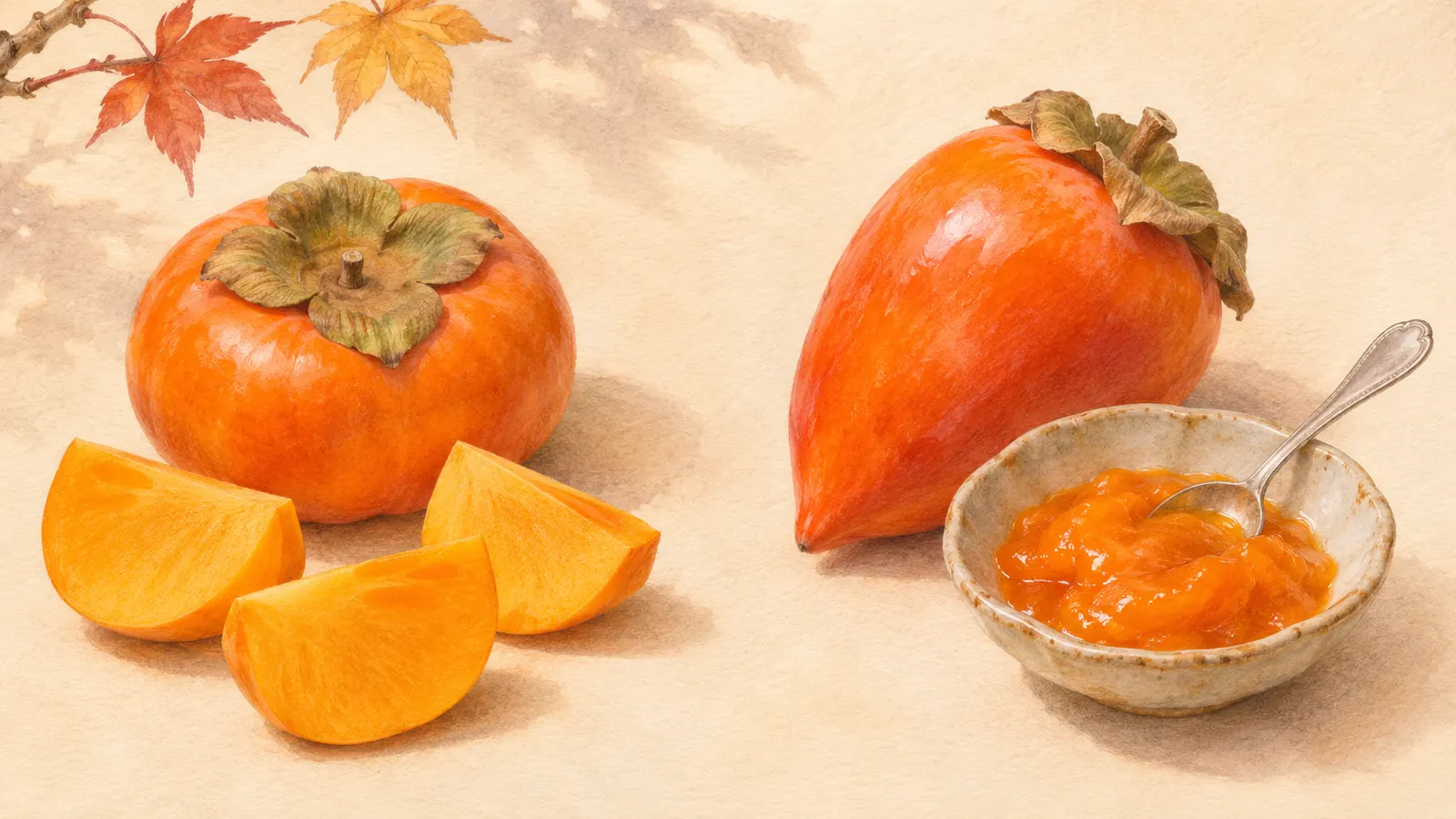
For persimmon slices to eat tonight, look for a Fuyu. A fully orange Fuyu can still feel as firm as an apple and cut neatly into wedges. For a bowl of sweet, spoonable pulp, pick a Hachiya that has softened all the way through. Two fruits the same shade of orange can be weeks apart in their readiness for dessert.
Look at the base, then check the name
Set a Fuyu stem-side up and it sits low and broad, much like a flattened tomato. A Hachiya tapers at the blossom end, giving the fruit an acorn shape. Both have a leafy cap. Shape is a helpful clue when comparing these two, but other cultivars reach the market too. If the bin just says “persimmons,” ask which kind it holds before buying firm fruit for a salad.
The distinction is easiest to taste in an underripe Hachiya. Its soluble tannins leave the mouth feeling dry and puckered. The skin can already be a handsome deep orange while the flesh is still too firm to enjoy. The UC Master Food Preservers’ persimmon guide describes the ready stage as soft throughout, with the pulp turning gel-like beneath the skin.
For clean slices, keep the Fuyu firm
Look for full color and intact skin. Handle the fruit gently as you choose it. A firm Fuyu is easy to tuck into a lunch bag whole, and the edible skin holds a thin wedge together. Rinse it, remove the cap and slice it on a steady cutting board. Leave the skin on if you like its bite, or peel the fruit for a softer edge.
Cut slender crescents to scatter among salad greens, thicker wedges to eat with your fingers, or small dice for a sweet addition to salsa. If you bought several ripe Fuyus for their crunch, refrigerate the ones you want to keep firm. UC Cooperative Extension’s persimmon guide has more serving and storage ideas. A Fuyu that has softened a little can still be good to eat, even when thin slices will no longer hold their shape.
Give a Hachiya a place to finish ripening
Carry a soft Hachiya at the top of the bag. If the only ones on offer are firm, buy one for later and leave it at room temperature on a shallow dish. Gently cradle the whole fruit to judge its texture. One soft spot under your thumb can be a bruise. A ripe Hachiya gives all over, almost as if its skin alone is holding the pulp together. The change can take days or weeks. Ask Extension’s ripening guidance explains why a fixed number of days on the counter can leave you with a puckery fruit.
Rinse the ripe fruit, halve it over a bowl and scoop out the flesh. Remove any seeds. Eat it with a spoon, swirl it into plain yogurt, or measure it for a bake that calls for ripe persimmon pulp. Firm Fuyu cubes hold pockets of fruit in a batter. They won’t supply the moisture or consistency of a measure of pulp.
Wash either kind under running water before cutting, even if you plan to discard the peel. Use clean hands and utensils and discard rotten fruit, following the FDA’s fresh produce guidance. Keep cut fruit or scooped pulp covered in the refrigerator. If a guest is coming for lunch and all you have is a firm Hachiya, set it aside for another day and serve a fruit that’s ready.